
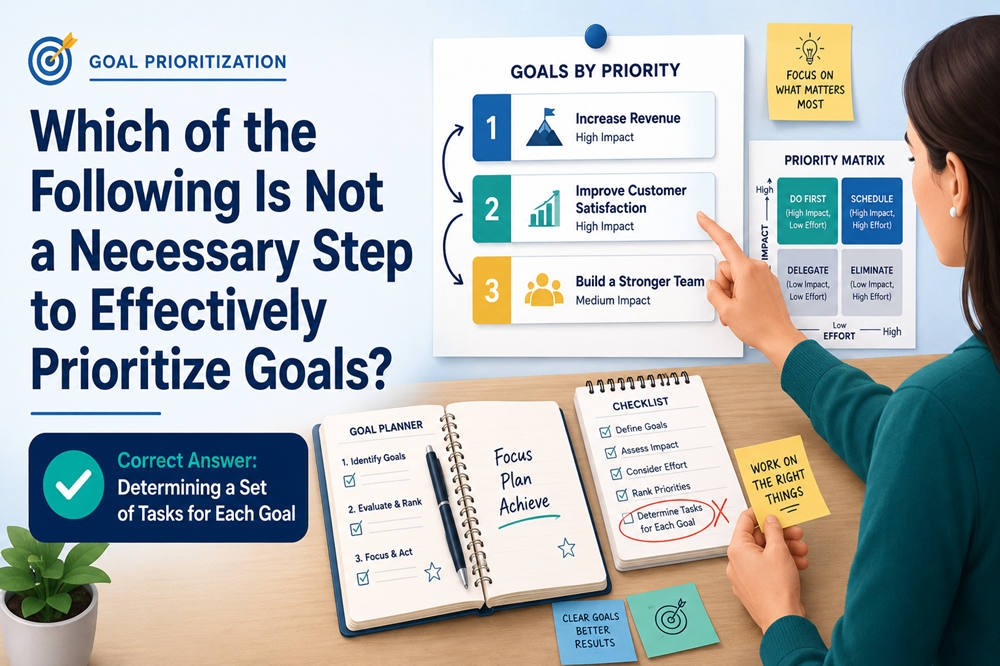
Which of the following is not a necessary step to effectively prioritize goals?
A. Determining a set of tasks for each goal
B. Deciding which goals are most important
C. Outlining goals
D. Organizing goals into categories
The correct answer is A. Determining a set of tasks for each goal.
Determining tasks is useful when you are ready to work toward a goal, but it is not required to prioritize goals. Prioritization is about deciding which goals matter most and which ones should receive your attention first. Creating a task list comes later, during the planning stage.
Why Determining Tasks Is Not Part of Prioritization
Prioritizing goals and planning how to achieve them are related, but they serve different purposes.
Prioritization answers:
Which goal should I focus on first?
Task planning answers:
What do I need to do to achieve that goal?
Suppose you want to improve your grades, save money, exercise regularly, and learn a new language. You could create a detailed task list for all four goals, but those lists would not tell you which goal is most urgent.
If an important exam is approaching, improving your grades may deserve your immediate attention. Saving money could come next if you have an upcoming expense. Learning a language may still be valuable, but it might not need to be your main focus right now.
After ranking the goals, you can create specific tasks for the ones you choose to pursue first.
What Does It Mean to Prioritize Goals?
Prioritizing goals means comparing them and arranging them according to their importance or urgency. It helps you decide how to use your limited time, energy, and resources.
When comparing goals, you might consider:
- Whether the goal has a deadline
- How important the result is
- What may happen if you delay it
- How the goal supports your future plans
- Whether you have the time and resources to begin
A lower ranking does not mean a goal is unimportant. It simply means another goal needs attention sooner.
For example, submitting a college application before the deadline is likely more urgent than reorganizing your bedroom. Both tasks may be worthwhile, but delaying the application could have much greater consequences.
Why the Other Choices Help You Prioritize Goals
The remaining answer choices are connected directly to the prioritization process.
Deciding Which Goals Are Most Important
This is the heart of prioritization. When you decide which goals matter most, you give yourself a clear direction.
People often have several goals at the same time, but trying to treat all of them as top priorities can make it difficult to focus. Ranking them helps you put your effort where it is most useful.
The most important goal may not always be the easiest or most enjoyable one. It may be the goal with the closest deadline, the greatest consequences, or the strongest connection to your long-term plans.
Outlining Goals
Before comparing goals, you need to understand what each one involves.
A broad goal such as “be healthier” is difficult to evaluate because it does not describe a clear result. A better outline might explain that you want to exercise several times a week, improve your sleep, or prepare more meals at home.
Outlining does not mean listing every action you will take. It simply gives each goal enough detail to make it clear and measurable.
Organizing Goals Into Categories
Organizing goals into categories can make them easier to review. Common categories include:
- Education
- Career
- Health
- Finances
- Relationships
- Personal development
Categories can help you see which areas of your life need the most attention. They may also reveal that two goals are closely connected.
For example, completing a professional course and qualifying for a promotion could both belong to the same career plan. Grouping them together makes it easier to understand their relationship and decide where they belong in your priorities.
A Simple Example
Imagine a student has four goals:
- Improve a math grade
- Find a part-time job
- Exercise more often
- Save for a laptop
A major math exam is two weeks away, so improving the math grade becomes the first priority. Finding a job may come second because earning money will support the laptop goal. Exercise remains important, but it may not require the same immediate attention.
Once the student has chosen the math goal as the top priority, they can create tasks such as reviewing class notes, completing practice questions, and asking the teacher for help.
Those tasks help the student reach the goal, but they are created only after the student decides which goal should come first.
A. Determining a set of tasks for each goal is therefore the choice that is not necessary for prioritizing goals. Outlining, organizing, and comparing goals help establish priorities, while task creation helps put those priorities into action.