Many businesses try to grow by adding more: more tools, more tasks, more campaigns, more spending. But adding more does not always solve the real problem. Sometimes the smarter move is to use what the business already has in a better way.
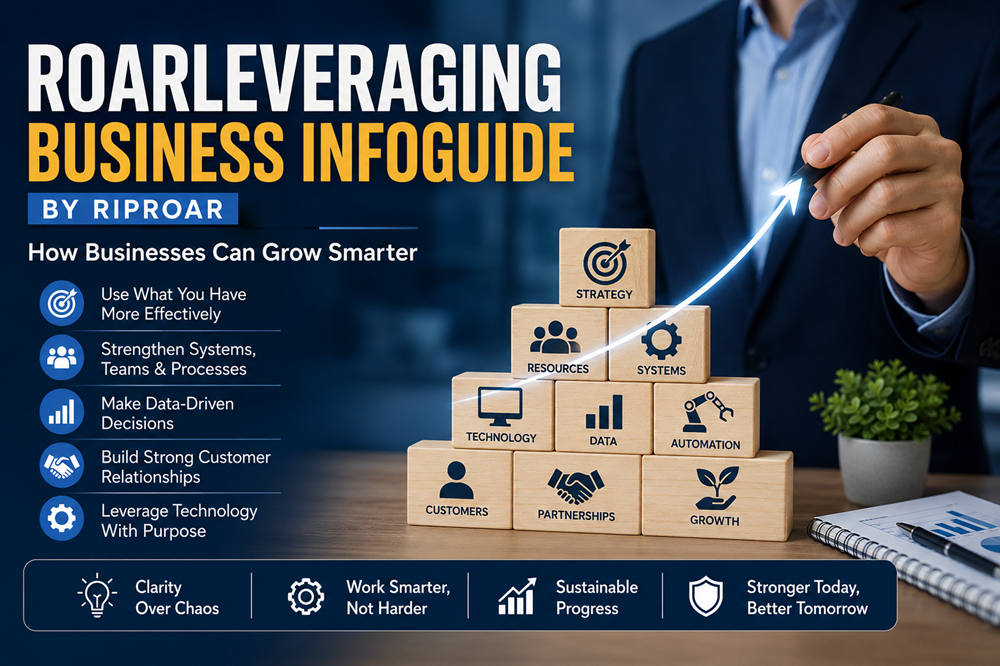
That is the idea behind Roarleveraging Business Infoguide by Riproar. The term is not a common academic business model, but it points to a useful strategy: growth through better leverage. In simple words, it means using your people, systems, technology, customer trust, data, and market position more effectively.
For small businesses, startups, and growing teams, this approach can be practical. It helps you stop chasing every new idea and focus on the strengths already inside your business.
What Is Roarleveraging Business Infoguide by Riproar?
Roarleveraging Business Infoguide by Riproar describes a way of thinking about business improvement through leverage. In business, leverage means using one resource to create a larger result.
That resource could be:
- A skilled team
- Loyal customers
- A strong brand reputation
- Useful technology
- Customer data
- Partnerships
- Existing content
- A proven product or service
The point is not to do everything at once. The point is to find what already works and build around it.
For example, a business may not need a bigger marketing budget right away. It may need clearer messaging. A service provider may not need more clients immediately. It may need a better follow-up process so fewer leads are lost. A retail business may not need more products. It may need to understand which products bring the strongest profit and repeat buyers.
Roarleveraging is useful because it turns attention back to the basics: what do we already have, what is underused, and what can create better results with less waste?
The Main Idea Behind Roarleveraging
The main idea is simple: before trying to expand, look at what can be improved.
Many businesses stay busy but not focused. They post on social media, launch offers, buy software, adjust prices, and test new ideas without a clear direction. Activity feels like progress, but it can create confusion if every task pulls the business in a different direction.
Roarleveraging encourages a more thoughtful approach. It asks business owners to pause and review the foundation first.
That may include:
- Improving daily workflows
- Making better use of customer feedback
- Strengthening the sales process
- Training the current team
- Updating old content or product pages
- Using technology to reduce repetitive work
- Building partnerships instead of handling everything alone
This is not a shortcut. It is a way to make business decisions with more clarity.
Why This Approach Matters
Competition is high in almost every industry. Customers compare options quickly, costs can rise without warning, and small teams often have limited time. A business that wastes energy on scattered ideas can fall behind even when the team is working hard.
That is why leverage matters. It helps a business get more value from its best assets.
A strong customer relationship can lead to repeat sales. A helpful blog post can become an email, video, checklist, or sales page. A trained employee can improve service quality across the whole company. A simple automation can save hours each week.
Good leverage does not make a business lazy. It makes the work more intentional.
Key Parts of a Roarleveraging Mindset
Strategic Clarity
A business cannot use its strengths well if it does not know where it is going. Strategic clarity means knowing your main goal, your best customer, and your strongest offer.
Before making big changes, ask:
- Who are we really serving?
- What problem do we solve best?
- Which product or service deserves more focus?
- What makes us different from similar businesses?
- Which activities are creating results, and which are just noise?
This is where market research and competitive analysis can help. When you understand your customers and competitors, it becomes easier to make decisions that fit your business instead of copying what everyone else is doing.
Better Use of Existing Resources
A business often has more value inside it than it realizes. Old content, past customers, staff knowledge, customer reviews, supplier relationships, and internal processes can all become useful assets.
For example, customer reviews can support sales pages. Frequently asked questions can become blog posts. A high-performing product can be bundled with another offer. A strong employee can help train others. A useful internal checklist can become a repeatable system.
The goal is not to squeeze people harder. It is to use resources more intelligently.
Technology With a Clear Purpose
Technology can help a business move faster, but only when it solves a real problem. Buying software just because it is popular can create more work, not less.
A better approach is to identify the friction first.
Where is the business losing time? Where are mistakes happening? Where are leads being missed? Where are customers waiting too long?
Once the problem is clear, technology becomes easier to choose. A CRM may help manage leads. An email tool may improve follow-up. Scheduling software may reduce back-and-forth messages. Analytics may show which pages or campaigns are working.
The rise of small business technology shows how important digital tools have become, but the best tool is still the one your team can actually use well.
Data-Driven Decisions
Instinct matters in business, but it should not be the only guide. Data helps you see what is really happening.
Useful data can come from:
- Sales numbers
- Website traffic
- Customer reviews
- Email performance
- Repeat purchase rates
- Support questions
- Product returns
- Social media engagement
You do not need a complicated dashboard to begin. Start with a few numbers that connect directly to your goals.
For example, if you want more repeat customers, track repeat purchases. If you want better marketing, track which channels bring real leads. If you want stronger profit, look at margins, not just revenue.
Data gives you a clearer picture before you invest more time or money.
Stronger Customer Relationships
Customer trust is one of the most powerful forms of leverage. A satisfied customer can buy again, leave a review, refer a friend, or give feedback that improves the business.
Instead of only chasing new customers, businesses should also ask how they can serve current customers better.
That may mean:
- Faster replies
- Better onboarding
- Clearer instructions
- Follow-up emails
- Loyalty offers
- Helpful educational content
- Easier ways to ask questions
- A simple referral process
Strong customer relationships can make growth steadier because the business is not always starting from zero.
How Businesses Can Apply Roarleveraging
1. Review What Is Already Working
Start with a simple audit. Look at your products, services, customers, marketing, team, systems, and tools.
Ask yourself:
- What brings the best results?
- What do customers praise most?
- What creates the most stress?
- What takes too much time?
- What is useful but underused?
- What should we stop doing?
This review gives you a clearer starting point.
2. Find One High-Value Area to Improve
Do not try to fix the whole business at once. Choose one area that can create a noticeable difference.
That could be:
- Lead follow-up
- Customer service
- Website conversion
- Team training
- Product delivery
- Content planning
- Review collection
- Email marketing
Small improvements in the right place can create a big effect.
3. Turn Repeated Tasks Into Systems
If your team repeats a task often, turn it into a process. This could be a checklist, template, script, calendar, or step-by-step guide.
Systems help reduce mistakes and make work easier to repeat. They also make training smoother when the business grows.
A simple process is better than no process. It does not need to be perfect. It only needs to make the work clearer.
4. Use Technology to Save Real Time
Before adding a new tool, name the problem it should solve.
For example:
- If leads are being forgotten, use a CRM.
- If appointments are hard to manage, use scheduling software.
- If customers ask the same questions, create a help page or automated reply.
- If reports take too long, use a dashboard or spreadsheet template.
- If content planning feels scattered, use a shared calendar.
Technology should support the business, not distract from it.
5. Build Around Your Best Customers
Not every customer group brings the same value. Some customers buy once and disappear. Others return, refer people, and understand your value.
Roarleveraging means paying attention to the customers who are the best fit.
Study what they buy, why they trust you, what questions they ask, and what problems they still have. This can guide your offers, content, service, and messaging.
6. Test Before Scaling
Scaling too quickly can make small problems bigger. Before putting more money behind an idea, test it.
You can test:
- A new offer
- A landing page
- A pricing change
- An email sequence
- A referral program
- A new service package
- A content format
Track the results, adjust, and then scale what works. This is also where broader business growth strategies can help you think beyond quick wins and focus on long-term value.
Benefits of Roarleveraging
A roarleveraging approach can help a business become more focused and less reactive.
The main benefits include:
- Better use of time
- Less wasted spending
- Stronger systems
- Clearer priorities
- Smarter use of technology
- Better customer retention
- More confident decision-making
- Easier scaling over time
It can also reduce pressure on the team. When a business has clearer systems and better priorities, people spend less time guessing what matters.
For smaller companies, this is especially important. Research on small business productivity shows how much opportunity exists when smaller firms improve efficiency and performance.
Common Mistakes to Avoid
Roarleveraging is helpful, but only when it is used honestly. It should not become another buzzword for doing too much with too little.
Avoid these mistakes:
- Treating leverage as a shortcut
- Buying tools without a clear need
- Ignoring customer feedback
- Trying to copy competitors exactly
- Scaling before systems are ready
- Tracking data but never acting on it
- Expecting instant results
- Asking employees to do more without improving the process
Good leverage should make the business stronger, not more chaotic.
Is Roarleveraging Right for Every Business?
Most businesses can use the idea, but the best approach will look different for each one.
A startup may use it to stretch a limited budget. A local business may use it to improve customer loyalty. A service provider may use it to create better systems. An online brand may use it to improve content, email marketing, or customer data.
The concept works best when a business is willing to look closely at what is already happening. That includes the good, the bad, and the messy parts.
A business does not need to be perfect before it grows. But it does need to know which strengths to build on and which weak spots to fix first.
Summary
Roarleveraging Business Infoguide by Riproar is best understood as a practical approach to smarter business improvement. It focuses on using existing resources better instead of rushing to add more.
The idea is useful because many businesses already have valuable assets: customer trust, team knowledge, content, data, tools, relationships, and proven offers. When those assets are used with more intention, the business can become stronger without wasting energy on scattered ideas.
Growth does not always begin with a bigger budget. Sometimes it begins with a clearer look at what is already working and a better plan for using it.