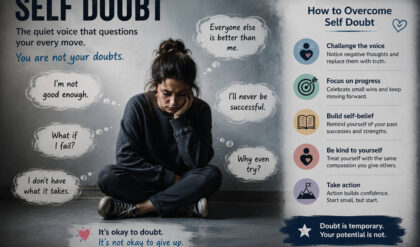

Everyone gets stuck sometimes. A child gives up on a math problem. A student feels embarrassed after a low grade. An adult avoids a new skill because they do not want to look inexperienced.
Growth mindset activities help you respond to those moments differently. They teach you to see effort, mistakes, feedback, and challenges as part of learning—not proof that you are not capable.
What Are Growth Mindset Activities?
Growth mindset activities are exercises that help you practice better learning habits. They are built around the idea that abilities can improve with practice, feedback, support, and useful strategies.
These activities are not about pretending everything is easy. They also are not about telling someone to “just try harder” when they feel stuck. A real growth mindset is more practical than that.
It helps you ask better questions, such as:
What strategy could I try next?
What did this mistake show me?
Where do I need help?
How can I improve one small part?
That is why growth mindset activities work best when they are simple, repeatable, and connected to real situations.
Why Growth Mindset Activities Actually Help
A mindset does not change just because you read an inspiring quote. It changes through small repeated choices.
When you practice growth mindset activities, you learn how to pause before giving up. You begin to notice fixed thoughts like “I am bad at this” or “I will never get it.” Then you replace them with thoughts that leave room for learning.
This matters for kids, students, and adults because everyone faces moments that test confidence. You may struggle with schoolwork, parenting, sports, work, creativity, or personal goals.
The activity itself does not have to be complicated. What matters is that it helps you build a better response to difficulty.
1. The Power of “Yet” Activity
The word “yet” is small, but it can change the meaning of a sentence.
Start with a fixed mindset thought:
“I cannot do this.”
Then add one word:
“I cannot do this yet.”
The first sentence sounds final. The second sentence reminds you that learning is still possible.
To use this activity, write down three things that currently feel difficult. Then rewrite each one with “yet.”
Examples:
“I do not understand this lesson yet.”
“I am not confident speaking in front of people yet.”
“I have not learned how to stay organized yet.”
This activity works well for children, but adults can use it too. It helps you catch discouraging thoughts before they turn into permanent labels.
2. Mistake Reflection Journal
Mistakes are easier to learn from when you slow down and look at them clearly.
For this activity, choose one mistake from the day. It could be a wrong answer, a poor choice, a missed deadline, or something you wish you handled better.
Then answer three questions:
What happened?
What can this teach me?
What is one thing I can do differently next time?
The goal is not to shame yourself. The goal is to turn the mistake into useful information.
For students, this can be used after quizzes, assignments, projects, or class discussions. For adults, it can help after work challenges, conversations, parenting moments, or personal setbacks.
A mistake reflection journal teaches you to respond with curiosity instead of embarrassment. It also supports the idea that learning from mistakes can shape how children and students view future challenges.
3. Challenge of the Week
Growth happens when you choose something just outside your comfort zone.
For this activity, pick one challenge to work on for a week. It should feel slightly uncomfortable but still realistic.
A student might choose to ask one question in class.
A child might choose to keep practicing a tricky skill for ten minutes a day.
An adult might choose to start learning a new tool, speak up in a meeting, or try a new routine.
At the end of the week, reflect on what changed. Did the challenge feel easier after a few tries? Did you discover a helpful strategy? Did you learn where you need more support?
This activity builds courage because it shows that confidence often comes after action, not before it.
4. Fixed Mindset to Growth Mindset Rewrite
Many fixed mindset thoughts sound true in the moment. That is why it helps to write them down and challenge them.
Start with a sentence like:
“I always mess this up.”
Now rewrite it in a way that gives you a next step:
“I need to figure out which part keeps causing trouble.”
Try more examples:
“I am not smart enough” becomes “I may need more practice, clearer instructions, or a different approach.”
“Everyone is better than me” becomes “I can learn from what others are doing well.”
“I failed, so I should stop” becomes “This attempt showed me what needs work.”
This activity is not fake positivity. You are not pretending the problem disappeared. You are simply choosing language that helps you move forward.
5. Effort and Strategy Tracker
Effort matters, but effort without direction can become frustrating.
This activity helps you connect hard work with better methods.
Choose one skill or subject you want to improve. Each time you practice, write down:
What did I do?
How focused was my effort?
What strategy did I use?
What result did I notice?
What should I change next time?
For example, a student may realize that rereading notes is not enough before a test. They may need flashcards, practice questions, or a study partner.
An adult learning a new skill may notice that watching tutorials is helpful, but practicing for twenty minutes afterward creates better progress.
This activity teaches an important lesson: growth mindset is not only about trying again. It is about learning how to try better.
6. Famous Failures Activity
Success stories often look smooth from the outside. In reality, most successful people deal with rejection, mistakes, bad timing, and slow progress.
For this activity, choose a well-known person who had to keep improving. It could be an athlete, scientist, writer, musician, entrepreneur, inventor, or leader.
Then answer:
What challenge did this person face?
What did they do after the setback?
Which habits helped them improve?
What lesson can you take from their story?
This activity is especially useful for students because it helps them see that struggle is normal, even for talented people.
It also keeps success from looking like magic. Behind most achievements, there is practice, feedback, patience, and repeated adjustment.
7. Feedback Practice Activity
Feedback can sting, even when it is helpful. This activity teaches you how to use feedback without taking it as a personal attack.
After receiving feedback, pause before reacting. Then write down:
What is the useful part?
What is one change I can make?
Do I need clarification?
For example, if a teacher says your essay needs stronger examples, your next step could be adding one specific example to each body paragraph.
If a coach says you are rushing, your next step could be slowing down and focusing on form.
If a manager says your report is unclear, your next step could be organizing it with headings and bullet points.
Feedback becomes less overwhelming when you turn it into one clear action. In classrooms, practice and feedback also help create a stronger learning culture where students understand that improvement is expected.
8. Learning Goal Board
A performance goal focuses on the result. A learning goal focuses on the skill.
Performance goal:
“I want to get the highest score.”
Learning goal:
“I want to improve how I explain my answers.”
Performance goal:
“I want to win.”
Learning goal:
“I want to improve my timing, focus, and consistency.”
For this activity, create a small board, notebook page, or digital note with three learning goals. Make each goal specific enough to guide your behavior.
Examples:
“I want to ask better questions when I am confused.”
“I want to improve my reading stamina.”
“I want to practice staying calm during difficult tasks.”
“I want to get better at revising my work.”
Learning goals reduce pressure because they shift attention from proving yourself to building a skill.
9. Brain Stretch Challenge
A brain stretch challenge gives you practice with healthy difficulty.
Choose an activity that feels unfamiliar or mentally demanding. It could be a puzzle, memory game, logic problem, drawing exercise, new recipe, coding task, musical skill, or creative prompt.
Set a short timer, such as ten or fifteen minutes. During that time, notice what your brain does when the task feels hard.
Do you rush?
Do you shut down?
Do you guess?
Do you look for patterns?
Do you try a new method?
Afterward, write one sentence about what helped you make progress.
This activity teaches you to pay attention to your learning process. Over time, you become better at staying calm when something feels confusing.
10. Peer Encouragement Circle
Growth mindset is easier to practice in an environment where people are allowed to be honest about struggle.
In this activity, each person shares three things:
One thing they are working on
One strategy they are using
One next step they plan to take
The group can respond with support, ideas, or encouragement.
For example, a student might say, “I am working on reading longer chapters. My strategy is taking notes after each section. My next step is reading for fifteen minutes without stopping.”
This activity works well in classrooms, study groups, families, and teams. It helps people understand that learning is not always private or perfect.
It also builds a healthier group culture. Instead of hiding difficulty, people learn to talk about progress honestly.
11. Before-and-After Skill Reflection
Progress is easy to miss when you only focus on what still needs work.
For this activity, save an early version of something you are learning. It could be a writing sample, drawing, worksheet, project draft, recording, test, or practice video.
After more practice, compare the early version with a newer one.
Look for specific changes:
What is clearer now?
What is stronger?
What took less effort than before?
What still needs attention?
This activity gives you visible proof that practice matters. It is especially helpful for students who feel like they are “not improving” when progress is happening slowly.
Adults can use it too. If you are learning design, writing, fitness, public speaking, cooking, or a work skill, looking back can remind you how far you have come.
12. Growth Mindset Sentence Starters
When frustration hits, it can be hard to find helpful words. Sentence starters give you something better to say in the moment.
You can write these on a classroom wall, notebook page, sticky note, or desk card:
“I can try a different strategy, such as…”
“The part I understand is…”
“The part I need help with is…”
“One thing I learned from this is…”
“My next small step is…”
“I improved when I…”
These sentence starters help because they move your attention toward action. Instead of stopping at “This is hard,” you learn to name the next useful step.
For kids, sentence starters make growth mindset language easier to remember. For adults, they can interrupt harsh self-talk before it takes over.
13. Comfort Zone Map
Growth mindset does not mean throwing yourself into overwhelming situations. You need the right level of challenge.
A comfort zone map helps you sort activities into three areas:
Comfort Zone: things that feel easy or familiar
Learning Zone: things that feel challenging but possible
Panic Zone: things that feel too stressful right now
For example, a student may place “reading short passages” in the comfort zone, “reading a chapter book” in the learning zone, and “reading a long classic novel alone” in the panic zone.
The best growth activities usually happen in the learning zone.
This activity is helpful because it teaches self-awareness. You can stretch yourself without pushing so hard that you shut down.
14. Three Strategies Before Help
Asking for help is a strength, but it is useful to think through a problem first.
In this activity, you try three strategies before asking someone else to step in.
For a school assignment, the three strategies might be:
Reread the directions.
Look at an example.
Try the first step on your own.
For a work task, they might be:
Review the instructions.
Search your notes.
Break the task into smaller parts.
After trying three strategies, you can ask for more specific help.
Instead of saying, “I do not get it,” you can say, “I tried these three things, and I am stuck on this part.”
That makes support more useful and builds independence at the same time.
15. End-of-Day Growth Reflection
This activity turns growth mindset into a daily habit.
At the end of the day, answer three short prompts:
One challenge I faced today was…
One thing I learned was…
One thing I want to try next is…
This does not need to take more than five minutes. The value comes from noticing patterns.
You might discover that you avoid asking questions. You might notice that you work better after taking a break. You might realize that you give up faster when you feel tired or rushed.
Daily reflection helps you understand yourself as a learner. Once you see your patterns, you can start changing them. Reflection can also help students better understand their learning habits, especially when it becomes part of the classroom routine.
Growth Mindset Activities for Kids
Growth mindset activities for kids should be short, visual, and easy to repeat.
The best choices are usually:
The Power of “Yet”
Growth mindset sentence starters
Comfort zone maps
Mistake reflection
Brain stretch challenges
Kids also learn a lot from adult modeling. When a parent or teacher says, “This is tricky, so I am going to try another way,” children hear what healthy problem-solving sounds like.
Stories are also useful. After reading a book or watching a character struggle, ask:
What was hard for the character?
What did they try?
Who helped them?
What changed by the end?
This helps kids connect growth mindset to real situations instead of abstract advice.
Growth Mindset Activities for Students
Students need activities that connect mindset with school habits.
The most useful options include:
Mistake reflection journals
Effort and strategy trackers
Feedback practice
Learning goal boards
Before-and-after skill reflections
These activities help students look beyond a single grade. A grade shows one result, but reflection helps students understand the process behind that result.
For example, a student may realize they studied a lot but did not use the right method. Another student may see that they improved because they asked more questions, practiced earlier, or reviewed mistakes after each assignment.
Growth mindset becomes more useful when students can connect it to specific learning behaviors. Teachers can also support this by choosing classroom practices that model a growth mindset instead of only talking about it.
Growth Mindset Activities for Adults
Adults often carry quiet beliefs about what they are and are not good at.
You may tell yourself you are not creative, not organized, not confident, not athletic, or not good with technology. Sometimes those beliefs come from old experiences that were never questioned.
Growth mindset activities help you test those beliefs.
For adults, the best activities are usually practical and private. Try a weekly challenge, a feedback reflection, a before-and-after skill review, or an effort and strategy tracker.
These work well for career growth, parenting, fitness, creative projects, leadership, and personal habits.
The point is not to become great at everything. The point is to stop treating your current skill level as your permanent limit.
Tips for Making Growth Mindset Activities Work
Growth mindset activities are most effective when they are specific.
Do not stop at “try harder.” Ask, “Which strategy will you try?”
Do not only praise results. Notice preparation, focus, persistence, revision, problem-solving, and improvement.
Do not ignore emotions. Frustration, disappointment, and embarrassment are real. A growth mindset helps you work through those feelings, not pretend they are not there.
Do not use too many activities at once. Choose one or two and practice them consistently.
Most importantly, connect every activity to action. A growth mindset is not just something you believe. It is something you practice in the way you study, work, ask questions, handle mistakes, and respond to challenges.
Small Mindset Shifts Can Change How You Learn
You do not need a perfect attitude to build a growth mindset. You only need small moments where you choose a better response.
Add “yet” to a discouraging thought.
Reflect on one mistake.
Try one new strategy.
Ask for clearer feedback.
Choose one challenge that stretches you.
These small actions may not seem dramatic, but they build stronger learning habits over time. The more you practice them, the easier it becomes to face difficulty without giving up too soon.
Growth mindset activities work because they turn an idea into behavior. They help you move from “I cannot do this” to “I can learn what to try next.”
Meta description: Explore practical growth mindset activities for kids, students, and adults that build confidence, resilience, effort, reflection, and better learning habits.