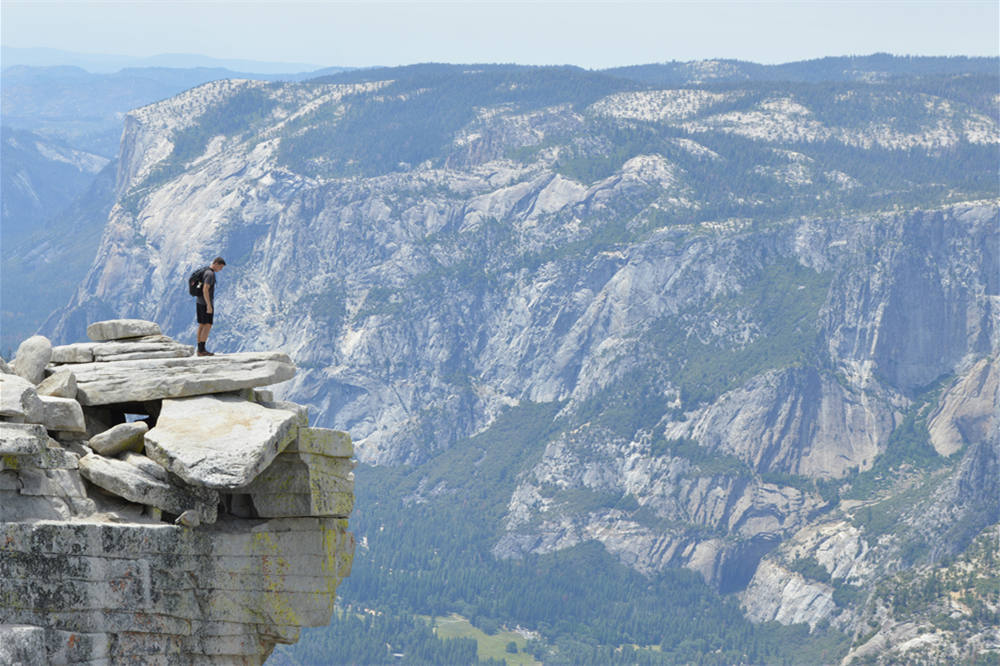
Fear of heights can make ordinary places feel stressful. A staircase, balcony, bridge, ladder, escalator, glass elevator, or high window may trigger panic even when you know you are protected.
The good news is that this fear can become easier to manage. You do not have to force yourself into terrifying situations or pretend you are not scared. A better approach is to move gradually, calm your body, and help your mind respond to height with more control.
What Fear of Heights Really Means
Fear of heights is more than simple nervousness. It can create real physical symptoms, such as shaky legs, sweating, dizziness, a racing heart, tight muscles, or a strong urge to move away.
Some caution around heights is normal and useful. The problem starts when safe situations, like standing behind a railing or looking out a secure window, feel far more dangerous than they really are.
Why Heights Can Feel So Scary
Heights feel scary because your brain sees a drop and reacts quickly to protect you. Your body may go into alarm mode before you have time to think clearly.
The fear can also become stronger when you avoid heights. Avoidance gives quick relief, but it can make your brain treat height as something you can never handle. This is one reason many phobias can grow stronger when you keep avoiding the thing that scares you.
Common reasons heights trigger anxiety include:
- Your brain treats height as a possible threat.
- Your body reacts with adrenaline and tension.
- Looking down may cause dizziness or imbalance.
- A past scary experience may make heights feel unsafe.
- Avoidance keeps the fear from improving.
How to Overcome Fear of Heights Step by Step
Overcoming fear of heights is not about proving you are brave. It is about building confidence in a safe and steady way. The more calmly you practice, the more your body learns that not every height is a real danger.
Separate Real Danger From Anxiety
The first step is learning the difference between actual risk and anxious feelings. Some height situations are truly unsafe. Standing near an open edge, climbing an unstable ladder, leaning over a balcony, or walking on a slippery high surface should make you cautious.
But many situations only feel unsafe. Standing behind a strong railing, looking out a closed window, walking across a protected bridge, or using stairs with a handrail may trigger fear even when the real risk is low.
When anxiety rises, pause and ask yourself:
“Am I actually in danger, or is my body reacting as if I am?”
This question helps you slow down. You are not trying to deny the fear. You are checking whether the fear matches the facts.
For example, instead of thinking, “I’m going to fall,” you can tell yourself, “I am behind a railing. My body feels scared, but I am protected.”
That kind of thought gives your mind something steadier to hold onto.
Start With Small, Safe Height Situations
You do not need to begin with rooftops, mountain trails, or tall observation decks. Starting too big can make the fear stronger. Begin with situations that feel slightly uncomfortable but still manageable.
This gradual approach is similar to the idea behind exposure therapy, where people face feared situations in a planned, safe, and controlled way instead of avoiding them completely.
You might look at a photo taken from a high place, stand on a low step, walk up one flight of stairs, or look out from a secure second-floor window. The goal is not to feel fearless. The goal is to stay calm enough to practice.
Good starting points may include:
- Looking at pictures or videos of heights.
- Standing on the first step of a staircase.
- Walking across a low pedestrian bridge.
- Looking out a secure upstairs window.
- Standing a few feet away from a balcony railing.
- Riding an escalator while looking forward.
- Sitting near a high window without looking straight down.
Choose a step that feels like a 3, 4, or 5 out of 10 in fear. If it feels like a 10, it is probably too much for now.
Small practice may not seem dramatic, but it works because it gives your mind new experiences. Each safe moment helps reduce the fear little by little.
Stay Long Enough for the Fear to Drop
When fear hits, your first instinct may be to leave immediately. That reaction is natural because your body wants relief. But leaving too quickly can teach your mind that escape was the only reason you stayed safe.
When you are in a safe height-related situation, try to stay until the fear lowers a little. You do not have to wait until you feel completely relaxed. Even a small drop matters.
For example, if your fear starts at a 6 out of 10, stay until it drops to a 5 or 4. That small shift teaches your body that anxiety can rise and fall on its own.
This is important because fear often feels permanent in the moment. But when you stay safely for a short time, you prove to yourself that the feeling can pass.
Use Breathing to Calm the Body
Fear changes the way you breathe. You may breathe fast, hold your breath, or take short breaths from your chest. This can make dizziness, tightness, and panic feel worse.
Slow breathing exercises can help your body settle. They will not erase fear instantly, but they can make the fear easier to manage.
Try breathing in slowly through your nose, then breathing out a little longer than you breathed in. Let your shoulders drop. Keep your feet steady on the ground.
You can also repeat a calm phrase while breathing, such as:
“I am safe enough right now.”
“My body is anxious, but I can handle this.”
“I can stay here for one more moment.”
Keep it simple. When anxiety is high, your body does not need a complicated technique. It needs a steady rhythm and a clear signal that you are not in immediate danger.
Focus on Stable Objects Instead of Looking Straight Down
Looking straight down can make fear and dizziness worse. Your eyes may lock onto the drop, and your mind may start imagining the worst.
Instead, focus on something steady. Look at a wall, railing, floor line, building, tree, sign, or the horizon. This gives your eyes and body a stable point.
If you are on a bridge, look ahead instead of down. If you are near a window, look across the room first, then slowly toward the view. If you are on stairs, focus on each step instead of the full height.
This does not mean you must avoid looking down forever. It simply helps you stay grounded while your body calms.
Your posture also matters. Stand with both feet planted. Keep your knees relaxed. Avoid leaning over edges. When your body feels steady, your mind often feels steadier too.
Challenge Scary Thoughts Gently
Fear of heights often comes with frightening thoughts. You may think, “I’m going to fall,” “I’ll lose control,” “The railing won’t hold,” or “I can’t handle this.”
These thoughts feel convincing because your body is already anxious. But a scary thought is not always a true warning.
Start by naming the thought:
“My mind is telling me I will fall.”
Then answer it with something calmer and more realistic:
“I am standing behind a secure railing.”
“I feel dizzy, but I am not falling.”
“I can take one slow breath.”
“I have handled anxious feelings before.”
You do not need to force fake positivity. If you do not love heights, do not tell yourself that you do. Choose thoughts that feel believable, steady, and simple.
Practice Often, Not Intensely
It is better to practice for a few calm minutes several times than to push yourself into one overwhelming situation. Repetition builds confidence more effectively than pressure.
You might spend two minutes near a staircase, three minutes looking out a secure window, or a short time walking across a low bridge. Once one step feels easier, you can make the next step slightly harder.
Progress may not be the same every day. Stress, tiredness, caffeine, poor sleep, or a crowded place can make fear feel stronger. That does not mean you are back at the beginning.
The goal is not perfect confidence every time. The goal is to keep returning to safe practice until your fear becomes less controlling. Simple tools for managing anxiety and worry can also support this process.
Avoid Turning Safety Habits Into Dependence
It is normal to use support when you are starting. Holding a railing, standing farther back, going with someone you trust, or focusing away from the drop can help you feel more stable.
The problem starts when you believe you cannot cope without those habits. For example, you may feel that you can only cross a bridge if you grip the railing tightly or only stand near a window if someone keeps reassuring you.
Use support at first if you need it. Then, as your confidence grows, reduce it little by little. You might loosen your grip, stand a little closer, or practice for one minute without asking for reassurance.
You do not have to remove every comfort at once. The goal is to slowly show yourself that you can handle more than you expected.
What Not to Do When Trying to Overcome Fear of Heights
- Do not force yourself into extreme height situations too soon. Starting with something too scary can overwhelm your body and make the fear harder to face later.
- Do not shame yourself for being afraid. Fear of heights is a real anxiety response, not a personal weakness.
- Do not rely only on avoidance. Avoiding every height may feel easier in the moment, but it usually keeps the fear strong.
- Do not practice in unsafe places. Choose secure stairs, bridges, balconies, windows, or public spaces with proper protection.
- Do not expect instant results. Fear usually improves through small, repeated steps, not one dramatic breakthrough.
- Do not depend on safety habits forever. Holding a railing or bringing someone with you can help at first, but slowly build confidence without relying on them every time.
Summary
Fear of heights can feel powerful, but it can become more manageable with the right approach. You do not need to rush, shame yourself, or prove anything.
Start with safe situations that feel only mildly uncomfortable. Stay long enough for your fear to ease a little. Use steady breathing, focus on stable objects, and answer scary thoughts with calmer ones.
Over time, these small moments can change how your body responds. Heights may still feel uncomfortable sometimes, but they do not have to control your life.