
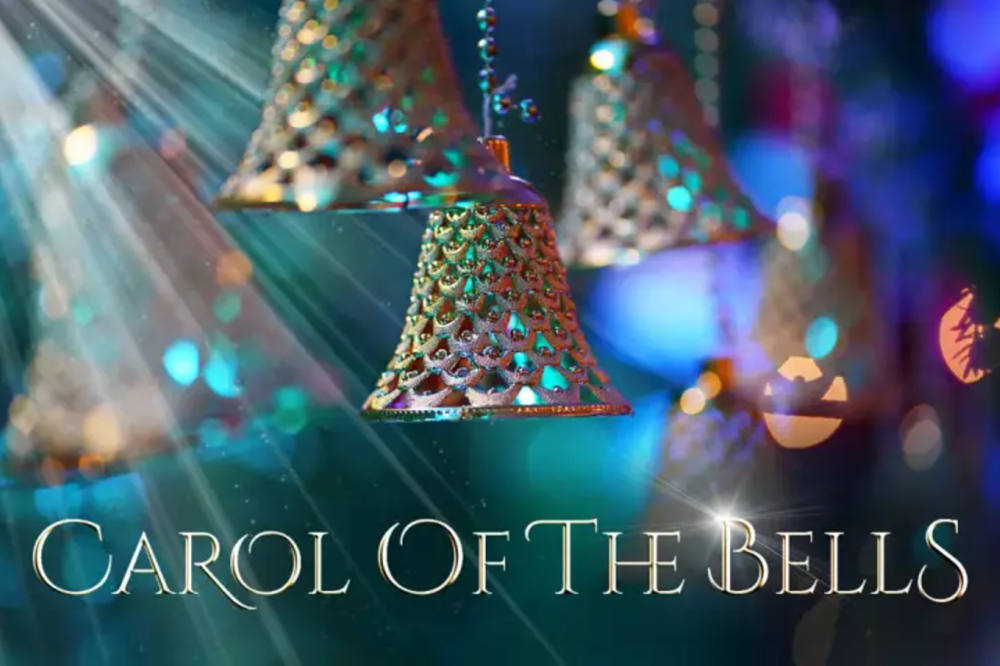
“Carol of the Bells” is one of the most recognizable Christmas songs ever written. Its fast rhythm, repeating notes, and layered voices make it sound exciting, dramatic, and sometimes a little eerie.
The English lyrics are about bells spreading Christmas joy. However, the melody comes from a much older Ukrainian song called “Shchedryk,” which tells a different story about good fortune and the new year.
What Are the “Carol of the Bells” Lyrics About?
The English version begins with the line, “Hark! How the bells, sweet silver bells.”
The lyrics imagine Christmas bells ringing across a town and carrying a cheerful message to everyone who hears them. They encourage people to put their worries aside and enjoy the holiday season.
The main ideas are simple:
- Christmas has arrived.
- Bells are spreading good news.
- People of all ages are joining the celebration.
- The sound of the bells fills homes with holiday cheer.
The song does not tell the Nativity story. Instead, it focuses on the energy and excitement of Christmas.
What Does “Carol of the Bells” Mean?
The song is mainly about shared happiness.
The bells act like messengers, carrying Christmas joy from one home to another. As more voices enter the music, the song begins to sound like an entire community celebrating together.
The lyrics also suggest taking a break from everyday concerns. They do not promise that every problem disappears, but they invite listeners to pause and enjoy the moment.
The Ukrainian Origin of the Melody
The melody was originally part of the Ukrainian song “Shchedryk,” arranged by composer Mykola Leontovych in the early 20th century.
The original song was not about Christmas bells. It tells the story of a swallow flying into a household and announcing that the family will enjoy prosperity in the coming year.
The bird predicts healthy animals, successful crops, and growing wealth. In Ukrainian tradition, the swallow represented spring, renewal, and good fortune.
Although the English and Ukrainian versions use the same melody, their lyrics have different themes:
| Version | Main Image | Meaning |
|---|---|---|
| “Shchedryk” | A swallow visiting a household | Prosperity and a successful new year |
| “Carol of the Bells” | Bells ringing through a town | Christmas joy and celebration |
Both songs are built around the arrival of good news.
How “Shchedryk” Became a Christmas Carol
Leontovych’s arrangement was first performed in Kyiv in 1916. The Ukrainian National Chorus later introduced the song to audiences across Europe and North America.
The choir performed “Shchedryk” at Carnegie Hall on October 5, 1922. That performance marked its North American premiere and helped the melody become better known in the United States.
American composer and conductor Peter J. Wilhousky later wrote new English lyrics. He thought the repeating melody sounded like ringing handbells, so he replaced the original story about the swallow with a Christmas theme.
His version became the song most English-speaking listeners now know as “Carol of the Bells.”
Why Does the Song Sound Joyful and Haunting?
The melody is built around a short four-note pattern that repeats almost constantly. New voices enter one after another, making the music feel faster and more intense.
That structure can sound bright and festive in a traditional choir performance. In slower or heavier arrangements, the same melody can sound mysterious or threatening.
This is why “Carol of the Bells” works in so many styles, including:
- Choir performances
- Orchestral arrangements
- Rock and metal versions
- Holiday movies
- Suspenseful television scenes
- Instrumental Christmas albums
The melody remains easy to recognize even when the arrangement changes completely.
Is “Carol of the Bells” a Religious Song?
“Carol of the Bells” is widely treated as a Christmas carol, but the best-known English lyrics are not strongly religious.
They do not mention Jesus, Mary, Bethlehem, angels, or the Nativity. The song celebrates Christmas through bells, singing, and a shared sense of excitement.
Because of that, it is often performed in churches, schools, public concerts, movies, and secular holiday events.
Other writers have created religious lyrics for the same melody, but those are separate versions.
Why Is “Carol of the Bells” Still So Popular?
The song is short, dramatic, and instantly recognizable. Its repeating pattern creates momentum, while the layered voices make even a simple performance sound powerful.
It is also easy to adapt. A small choir can sing it without instruments, while a large orchestra can turn it into a major holiday production.
Its history adds another layer of meaning. What many people know as an American Christmas favorite began as a Ukrainian song about renewal, abundance, and hope for the coming year.
“Carol of the Bells” has changed over time, but its central feeling remains the same: something joyful is arriving, and the music is spreading the news.
Featured image source: https://www.cantilena18.fr/chants/chants-en-langue-etrangere/carol-of-the-bells