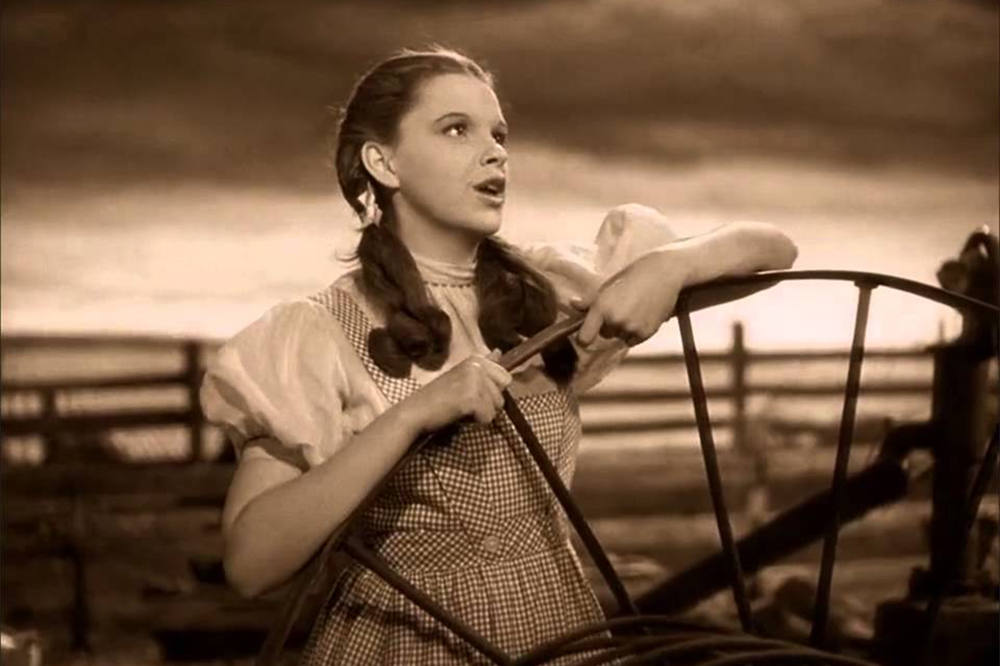
“Somewhere Over the Rainbow” is one of the most recognizable songs in film history. Judy Garland first performed it as Dorothy in the 1939 movie The Wizard of Oz, and its message has stayed meaningful for generations.
The song is often remembered as a gentle expression of hope, but there is also sadness underneath it. Dorothy is dreaming of a place where life feels safer, easier, and more beautiful than the world around her. That mix of longing and optimism is what gives the song its emotional power.
Who Wrote “Somewhere Over the Rainbow”?
The official title of the song is “Over the Rainbow.” Harold Arlen composed the music, and E. Y. Harburg wrote the lyrics for The Wizard of Oz.
Judy Garland performed the song as Dorothy Gale, a young girl living on a Kansas farm. Dorothy loves her family, but she feels frustrated and unheard, especially when her dog, Toto, is threatened.
The song appears early in the movie, before Dorothy travels to Oz. It introduces her wish to escape her troubles and find a place where she can feel free.
“Over the Rainbow” later won the Academy Award for Best Original Song and became closely associated with Garland throughout her career.
What Do the “Somewhere Over the Rainbow” Lyrics Mean?
The song is about wanting to believe that a better life exists beyond present difficulties.
Dorothy imagines a distant place where worries disappear and dreams can come true. She does not describe exactly what that place looks like. Instead, it represents whatever she feels is missing from her current life: safety, freedom, happiness, and understanding.
This is why the song connects with so many people. The place beyond the rainbow can mean something different to every listener. It may represent:
- A fresh start
- A peaceful home
- Freedom from fear or stress
- A loving relationship
- Recovery after loss
- The hope that life will improve
The song is hopeful, but it is not purely cheerful. Dorothy believes a better world may exist, yet she does not know how to reach it. Her dream feels close enough to imagine but still far away.
What Does the Rainbow Symbolize?
The rainbow is the song’s central symbol.
Rainbows often appear after storms, so they naturally suggest hope, change, and renewal. In the song, the rainbow separates Dorothy’s difficult present from the happier future she imagines.
It also represents possibility. Dorothy can see the rainbow, but she cannot simply walk across it. This makes it a fitting image for a dream that feels real but remains out of reach.
The rainbow is not only about escaping. It also reflects the courage to imagine that life could be different. Hope does not solve Dorothy’s problems immediately, but it gives her something to hold onto.
What Does the Bluebird Represent?
The bluebird represents freedom.
Dorothy sees birds flying beyond the rainbow and wonders why she cannot do the same. Birds are able to rise above the landscape and travel without the limits that hold her back.
Her question expresses both frustration and hope. She can see freedom around her, but she has not yet found her own way toward it.
That feeling remains relatable. People often see others moving forward, changing their lives, or finding happiness and wonder why they cannot do the same. The bluebird becomes a simple image of the freedom Dorothy wants.
The Song’s Meaning in The Wizard of Oz
Within the movie, “Over the Rainbow” introduces Dorothy’s main emotional struggle.
At the beginning of the story, she believes happiness must exist somewhere far from Kansas. Oz seems to offer everything she has imagined: color, excitement, adventure, and magic.
However, Oz is not free from danger. Dorothy faces fear, uncertainty, and loss along the way. Her journey teaches her that a new place does not automatically remove every problem.
By the end of the movie, she understands home differently. She realizes that the love, comfort, and belonging she wanted were already connected to the people waiting for her in Kansas.
This does not mean her original dream was foolish. Wanting more helped her begin a journey that changed her perspective. The movie suggests that dreams can lead us outward, but they can also help us recognize what matters most.
Is “Somewhere Over the Rainbow” a Happy or Sad Song?
It is both.
The idea of dreams coming true is hopeful, but Dorothy’s performance carries loneliness. She is imagining happiness because she does not feel completely happy where she is.
That emotional contrast makes the song more memorable. It does not pretend that hope and sadness are opposites. In real life, they often exist together.
People may feel hopeful because they are going through something difficult. They may dream of freedom because they feel trapped. They may long for home because they have lost it.
The melody supports this feeling. It begins with a large musical leap that sounds like reaching toward something distant. The softer parts feel more private and vulnerable, as if Dorothy is sharing a wish she has not told anyone else.
Why Judy Garland’s Performance Became So Famous
Judy Garland was still a teenager when she filmed The Wizard of Oz, but her performance feels emotionally mature.
She sings with a sense of innocence that fits Dorothy, while also expressing sadness and vulnerability. The performance is not overly dramatic. Its quietness makes it feel honest.
The song remained part of Garland’s live performances for many years. As she grew older, audiences often heard new emotion in it. The words were still Dorothy’s, but Garland’s voice and life experience gave later performances a deeper sense of longing.
The song was not written about Garland’s personal life, but it became strongly connected to her public image and career. Her 1939 recording was added to the National Recording Registry in 2017.
Israel Kamakawiwoʻole’s Version
Hawaiian singer Israel Kamakawiwoʻole recorded one of the most popular modern versions of the song.
His medley combines “Over the Rainbow” with “What a Wonderful World.” The arrangement is simple, built mainly around his voice and ukulele.
This version feels warmer and more peaceful than Judy Garland’s original. Garland’s performance sounds like someone reaching for a distant dream. Kamakawiwoʻole’s recording feels more like a quiet reminder to notice beauty in the world around us.
His version has appeared in films, television shows, weddings, memorial services, and personal tributes. It helped introduce the song to younger listeners while giving it a new emotional tone.
Why Is the Song Played at Funerals and Memorials?
“Somewhere Over the Rainbow” is often chosen for funerals because its images can be interpreted as peace beyond suffering.
A place where troubles disappear may comfort people who are grieving. The rainbow can also suggest a connection between this life and whatever may come after it.
Israel Kamakawiwoʻole’s version is especially common at memorials because it sounds calm, gentle, and reflective.
However, the song was not originally written about death or the afterlife. Its connection to funerals developed because listeners found personal comfort in its message of peace and hope.
Why the Song Still Connects With Listeners
The song remains popular because the desire behind it is universal.
Most people have experienced a time when they wanted to be somewhere else. That “somewhere” may be a real place, but it can also be an emotional state. It may mean feeling safe, loved, understood, or free from pressure.
Children may hear the song as a dream about a magical world. Adults may connect it with lost innocence, missed opportunities, grief, or the hope of starting again.
Its meaning also changes with the listener’s situation. During a difficult time, it can offer encouragement. At a wedding, it may represent a hopeful future. At a memorial, it may bring comfort.
Because the song does not describe the place beyond the rainbow in detail, each person can imagine their own version of it.
Is the Song About Escaping Reality?
Partly, but that is not its full meaning.
Dorothy wants to leave because she feels powerless. Her dream gives her temporary relief from a situation she cannot control.
Wanting to escape is not always a sign of weakness. Sometimes imagining a different life helps us understand what needs to change. Dreams can reveal our unmet needs, even when they are not practical plans.
Dorothy eventually learns that happiness is not found simply by traveling far away. She still has to face fear, make decisions, and depend on others.
The story does not tell us to stop dreaming. It shows that dreams are only the beginning. What matters is what we learn while trying to reach them.
Final Thoughts
“Somewhere Over the Rainbow” endures because it expresses a simple wish with unusual emotional depth: the hope that life can become better.
The song speaks to people who feel stuck, lonely, or uncertain, but it never loses its sense of wonder. It recognizes sadness without surrendering to it.
Dorothy’s dream begins as a wish to escape, yet her journey eventually teaches her about courage, love, and home. That is why the song continues to matter. It reminds us that hope can point us toward a new future, while also helping us see the value of what we already have.
Featured image source: https://www.youtube.com/watch?v=zSWG80dkwIE