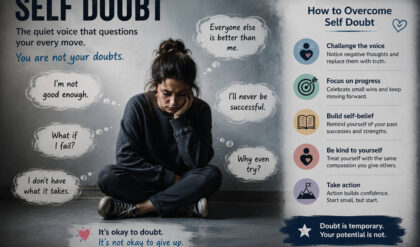

Mistakes can feel frustrating in school. A wrong answer, a low test grade, or critical feedback on an essay can make a student feel embarrassed or discouraged.
Students with a growth mindset see mistakes as part of learning, not proof that they are not smart. They use errors to understand what went wrong, adjust their approach, and keep improving.
Students See Mistakes as Useful Information
Students with a growth mindset treat mistakes as information. A mistake can show where they got confused, which skill needs more practice, or which strategy did not work.
For example, a student who misses several math problems may notice that the errors all happened during the same step. Instead of thinking, “I am bad at math,” the student can see the real issue: one part of the process needs more attention.
That makes the mistake useful. It points to a specific place to practice.
This does not mean students enjoy being wrong. They may still feel disappointed. The difference is that they do not stop at the disappointment. They look at the mistake and ask what it can teach them.
Mistakes can also help teachers. When students make errors, teachers can see what needs to be explained again, practiced more, or taught in a different way. In that sense, mistakes are not just problems to correct. They are clues that help guide the next step.
They Do Not Let Mistakes Define Their Intelligence
A fixed mindset often turns mistakes into labels. A student may think, “I failed, so I am not smart,” or “I got this wrong, so I will never understand it.”
A growth mindset separates the mistake from the student’s identity. Getting something wrong does not mean a student is incapable. It simply means they have not mastered that skill yet.
That word “yet” matters.
A student might say, “I do not understand this chapter yet,” instead of, “I will never get this.” They might say, “I need more practice with writing introductions,” instead of, “I am a terrible writer.”
This kind of thinking gives students room to grow. It reminds them that ability is not fixed in one moment. A quiz, worksheet, or class discussion does not decide what they are capable of becoming.
School becomes less scary when students understand that one mistake is not a final judgment. It is a snapshot of where they are right now.
They Ask Questions Instead of Shutting Down
One major difference is what students do after they make a mistake. Some students shut down, avoid the subject, or hope nobody notices. Growth-minded students are more likely to ask questions that help them move forward.
They may ask:
What part did I misunderstand?
Did I read the directions carefully?
Where did my thinking go off track?
What strategy could I try next time?
Who can help me understand this better?
These questions turn a mistake into a learning moment. Instead of staying stuck in “I got it wrong,” the student begins looking for a way to improve.
For example, if a student gets a science question wrong, they may realize they misunderstood one important vocabulary word. If a student loses points on an essay, they may discover that their ideas were strong but their examples were too weak.
The goal is not to feel perfect. The goal is to understand the mistake clearly enough to do something about it.
They Use Mistakes to Change Their Strategy
A growth mindset is not just about having a positive attitude. It also means changing what you do.
When students learn from mistakes, they adjust their strategy. They may study differently, practice more deliberately, ask for feedback, or slow down when completing work.
For example, a student who gets a poor grade after only rereading notes may realize that rereading was not enough. Next time, they might make flashcards, answer practice questions, or explain the topic out loud to check their understanding.
A student who keeps losing points for careless errors may start reviewing answers before turning in an assignment. A student who forgets deadlines may begin using a planner or calendar.
These changes matter because effort alone is not always enough. Students also need effective strategies. A mistake can reveal which habit needs to change.
That is why growth-minded students do not simply say, “I will try harder.” They ask, “What should I try differently?”
They Stay Resilient After Setbacks
Students with a growth mindset can still feel upset after a mistake. They may feel embarrassed after giving the wrong answer in class. They may feel frustrated after studying hard and still receiving a disappointing grade.
A growth mindset does not erase those feelings. It helps students recover from them.
Instead of giving up, they pause, reflect, and try again. They may talk to a teacher, review their notes, correct missed problems, or make a new plan for the next assignment.
This resilience is important because learning is rarely smooth. Every student faces hard lessons, confusing directions, difficult tests, and feedback that is not always easy to hear.
Students who recover from setbacks are more willing to keep trying. They are also more likely to take on challenging work because they know mistakes do not have to stop them.
They begin to understand that struggle is not always a warning sign. Sometimes, it is part of building a stronger skill.
They Become Less Afraid of Effort
Some students believe that being smart means understanding everything quickly. When a subject takes effort, they may feel ashamed or assume they are not good at it.
Students with a healthier mindset see effort differently. They understand that practice, repetition, and correction are normal parts of learning.
A student learning a new language will probably mispronounce words. A student learning algebra may need to solve many problems before the pattern becomes clear. A student learning public speaking may need several awkward presentations before feeling confident.
In each case, effort is not proof that the student is failing. It is the process that helps skill grow.
This view can make school feel less intimidating. Students do not have to hide the fact that they are trying. They can see practice as something productive, not embarrassing.
Examples of Growth Mindset Thinking After Mistakes
Real classroom situations make this easier to understand. Here are a few examples of how students can respond to mistakes in a more helpful way.
1. A Student Fails a Math Quiz
A fixed mindset response might be, “I am terrible at math.”
A growth mindset response looks more specific. The student reviews the quiz and sees that most mistakes happened with word problems. Now the student knows what to practice.
Instead of avoiding math, they ask for help, complete extra examples, and learn how to break word problems into smaller steps.
The mistake shows the student where to focus.
2. A Student Gets Essay Feedback
A student may feel discouraged when an essay comes back with many comments. But feedback does not have to mean the writing is hopeless.
A growth-minded student reads the comments carefully. Maybe the teacher liked the main idea but wanted clearer evidence. Maybe the paragraphs needed better transitions.
Now the student has a practical goal for the next draft. They are not just “bad at writing.” They are learning how to revise.
3. A Student Gives the Wrong Answer in Class
Answering incorrectly in front of classmates can feel embarrassing. Many students want to disappear in that moment.
A student with a growth mindset may still feel uncomfortable, but they stay open to learning. They listen to the explanation and compare it with their original thinking.
They might even ask, “Can you explain how you got that answer?”
That question shows confidence. It also helps the student understand the mistake instead of only feeling embarrassed by it.
4. A Student Struggles With a Science Lesson
Sometimes a lesson does not make sense the first time. A student may read the textbook and still feel confused.
Instead of deciding the subject is impossible, a growth-minded student tries another route. They may watch a video, draw a diagram, ask a classmate, or meet with the teacher.
The student is not ignoring the struggle. They are looking for a better way through it.
5. A Student Makes a Mistake During a Presentation
A presentation mistake can feel very public. A student may forget a line, speak too quickly, or lose their place.
Afterward, a growth-minded student reflects on what happened. Maybe they needed to practice out loud instead of silently reading their notes. Maybe they needed shorter note cards or a slower pace.
That mistake can help them prepare better next time.
How Teachers Can Help Students Learn From Mistakes
Teachers can shape how students feel about mistakes. If errors are treated as shameful, students may hide confusion or stop participating. If errors are treated as part of learning, students are more likely to ask questions and keep trying.
One helpful approach is to focus on the thinking behind the answer. Instead of only saying an answer is wrong, teachers can ask, “How did you get there?” or “Where do you think the mistake started?”
This helps students slow down and understand the process.
Teachers can also make revision a normal part of learning. When students get chances to correct work, improve drafts, or practice again, they see that mistakes are not the end of the assignment. They are part of the learning path.
The type of praise teachers use also matters. Instead of only praising being “smart,” teachers can praise strategy, focus, persistence, and improvement.
For example, “Your new method helped you solve that problem” is more useful than a general compliment. It shows the student what worked and why it mattered.
How Parents Can Support This Mindset at Home
Parents can help students respond to mistakes in a calmer, more productive way. This starts with how adults react when a child brings home a disappointing grade or struggles with homework.
A helpful first step is to stay calm. Instead of jumping straight to criticism, parents can ask what happened and what the child noticed.
A useful response might be, “Let’s look at what was hard and figure out what you can try next.”
This keeps the focus on learning instead of blame.
Parents can also remind children that mistakes happen outside school too. Adults make mistakes at work, in conversations, while learning new technology, or while managing responsibilities. When children see that everyone learns through correction, mistakes feel less shameful.
The goal is not to pretend mistakes do not matter. The goal is to teach children that mistakes can be handled, studied, and improved from.
Fixed Mindset vs Growth Mindset Responses to Mistakes
The difference between a fixed mindset and a growth mindset is often clearest after something goes wrong.
A fixed mindset says:
“I am not good at this.”
“I always mess up.”
“There is no point in trying.”
“Everyone else is smarter than me.”
A growth mindset says:
“What can I learn from this?”
“What part needs more practice?”
“What strategy should I change?”
“Who can help me understand this?”
The mistake may be the same, but the response is very different. One response closes the door. The other looks for the next step.
That next step is where learning continues.
Why This Matters Beyond the Classroom
The way students handle mistakes in school can affect how they handle challenges in life. Everyone makes mistakes in friendships, jobs, sports, hobbies, and personal goals.
Students who learn to reflect instead of quit build a skill they can use for years. They become better at receiving feedback, solving problems, and trying again after disappointment.
They also become more comfortable being beginners. That matters because every new skill starts with uncertainty.
A student who understands mistakes as part of growth is less likely to avoid hard things just because they might not do them perfectly. They learn that progress often comes through practice, correction, and patience.
Final Thoughts
Students with a growth mindset see mistakes as learning signals. They do not ignore them, and they do not let them define their intelligence.
Instead, they ask questions, adjust their strategies, seek help, and use stronger study strategies. They understand that one wrong answer, one difficult lesson, or one disappointing grade is not the end of the story.
Mistakes become less frightening when students know how to use them. They are not proof that learning has failed. They are often the place where real learning begins.