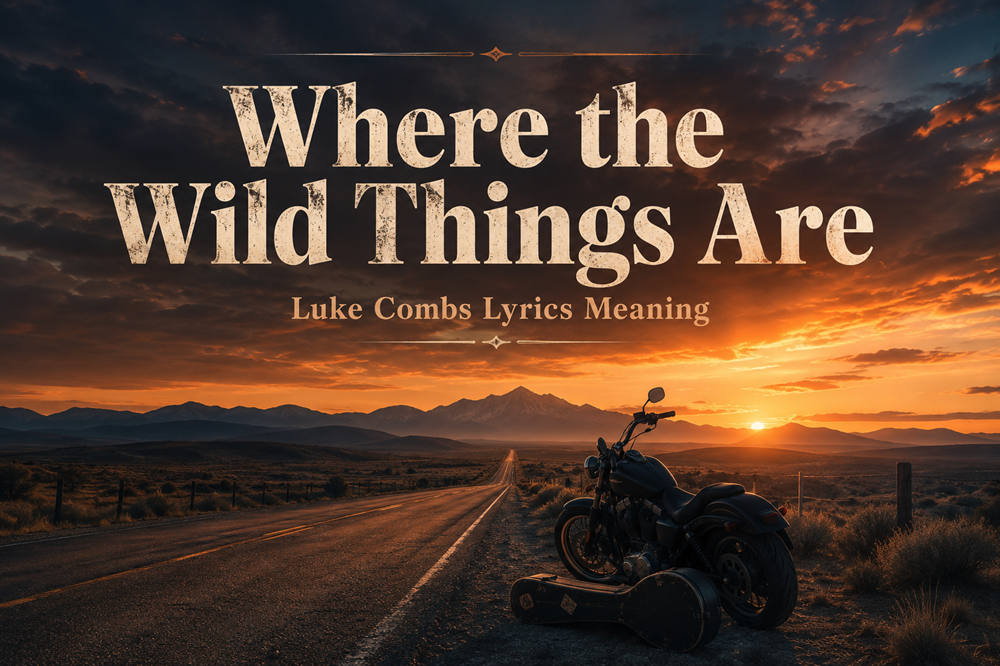
Luke Combs’ “Where the Wild Things Are” tells a moving story about two brothers who choose very different lives. One stays close to home, while the other heads west on a motorcycle in search of freedom, excitement, and a place where he can live by his own rules.
What begins as an adventurous road story eventually becomes a song about loss, memory, and the difficult emotions that come with loving someone who refused to slow down. You can read the complete lyrics on Luke Combs’ official song page.
What Is “Where the Wild Things Are” About?
The song is narrated by a younger brother who looks up to his rebellious older brother.
The older brother leaves home on an Indian Scout motorcycle and travels west. He eventually settles in Southern California, where he lives in an Airstream trailer, plays guitar, parties, meets new people, and spends his nights beneath the desert sky.
He regularly calls home and tells his younger brother about his adventures. His stories make California sound exciting and almost unreal—a place filled with open roads, burning dreams, and none of the limits they knew growing up.
The younger brother eventually visits him. They spend a wild summer together, but the narrator later returns home while his brother stays in California.
The song then reveals its tragic ending: the older brother dies in a motorcycle crash. He is buried beneath the West Coast sky, in the place where he had chosen to build his life.
Is the Song Based on a True Story?
“Where the Wild Things Are” is not based on Luke Combs’ own family.
The song was written by Randy Montana and Dave Turnbull. Montana explained in an interview about the song’s creation that the original idea was influenced by a story involving an older brother who disappeared for several years. The writers used that starting point to create a fictional story about two brothers and a life-changing trip west.
Combs did not write the song, but his emotional performance makes it sound personal. He sings from the narrator’s point of view without overacting the tragedy, allowing the details of the story to carry most of the emotion.
The song had also been around Nashville for years before Combs recorded it. According to Combs, Eric Church once considered cutting it, but it eventually found its way onto Combs’ 2023 album, Gettin’ Old.
The Older Brother’s Decision to Leave Home
The first verse introduces the older brother as someone who was never likely to settle into a predictable life.
He dresses in black, rides a motorcycle, and leaves home even though he knows his departure will upset his mother. These details show that he is independent, impulsive, and willing to disappoint others if it means following his own path.
His decision to travel west is important. In many American stories, the West represents escape, reinvention, and the promise of a larger life. For this character, California offers everything his hometown cannot: desert roads, music, strangers, parties, and the freedom to wake up without a plan.
His mother sees the danger in his choices, but the narrator mostly sees the excitement. To a younger brother watching from home, he appears fearless.
What “Where the Wild Things Are” Means
The title refers to more than a physical location.
For the older brother, “where the wild things are” is Southern California—the place where people stay out all night, chase unlikely dreams, and live without worrying too much about tomorrow.
More broadly, the phrase represents life outside ordinary expectations. It is the place where someone goes when a safe, conventional future feels too small.
The title carries both excitement and danger. Living wildly can mean being brave enough to follow your dreams. It can also mean taking risks without considering how quickly everything could end.
The song never treats the brother as simply foolish. His wildness is exactly what makes him so fascinating to the narrator.
“Hearts on Fire and Crazy Dreams”
The chorus captures the romantic appeal of the older brother’s world.
The images of fire, gasoline, sleepless nights, and ambitious dreams make his life sound intense and full of possibility. He is surrounded by people who want something bigger, even if they do not know where their choices will lead.
At first, this imagery feels celebratory. It describes a place where everyone seems young, fearless, and ready for another adventure.
After the motorcycle crash is revealed, the same imagery takes on a darker meaning. Fire and gasoline no longer suggest only energy and freedom. They also hint at a life that could burn out suddenly.
The chorus does not change, but the listener’s understanding of it does.
The Brothers’ Summer in California
The younger brother eventually stops listening to the stories from a distance and travels west to experience that life himself.
The two brothers drink, explore Los Angeles, visit the Sunset Strip, and end up at a party in the Hollywood Hills. For one summer, the narrator enters the world he has spent years imagining.
This part of the song shows the closeness between them. The older brother does not simply disappear and forget his family. He continues calling home and invites his younger brother to join him.
Their time together becomes especially meaningful once the ending is revealed. What first sounds like a wild vacation becomes the narrator’s final collection of memories with someone he deeply admired.
Why the Younger Brother Goes Home
Although the narrator enjoys his summer in California, he eventually returns east.
He may admire his brother’s freedom, but he realizes that visiting this world is different from permanently living in it. He enjoys the parties, open roads, and lack of structure, yet he still feels connected to home.
The older brother is different. California is not a temporary adventure for him. It is where he believes he belongs.
Their separate choices reveal the main contrast at the center of the song. One brother is curious about the wild life but still wants stability. The other cannot imagine giving up his independence, even when it comes with serious risks.
Neither choice is presented as completely right or wrong. The younger brother lives more cautiously, while the older brother experiences the kind of freedom he always wanted.
The Motorcycle Crash and Tragic Ending
Near the end of the song, the narrator reveals that his brother crashed into a guardrail early one morning.
The song does not explain exactly what caused the accident. It does not say whether speed, alcohol, exhaustion, weather, or simple bad luck was responsible. That uncertainty keeps the focus on the loss rather than turning the story into a warning about one specific mistake.
The motorcycle becomes a painful part of the ending because it had always represented the brother’s independence. It carried him away from home and toward the life he wanted. It was also involved in the accident that ended that life.
He is buried beneath the West Coast sky, surrounded by the landscape he loved. Although he left his family behind, California had become his home.
Freedom, Risk, and Different Ways of Living
One of the song’s strongest ideas is that freedom and safety do not always exist comfortably together.
The older brother refuses to follow the usual path. He accepts uncertainty because it allows him to live on his own terms. His younger brother respects that courage, even though he cannot make the same choice.
The song does not suggest that everyone should live recklessly. It also does not reduce the older brother to his accident. Instead, it presents him as a complicated person whose greatest strength and greatest weakness may have come from the same place.
His refusal to be controlled gave him an exciting life. It also worried the people who loved him.
That tension makes the story feel honest. We can admire someone’s boldness while wishing they had been more careful.
The Song’s Meaning of Grief
The narrator remembers his brother with affection rather than anger.
He does not spend the song blaming him for leaving home or judging his decisions. He remembers the phone calls, the motorcycle, the California nights, and the summer they shared.
This reflects how grief often works. Losing someone does not erase the difficult parts of their personality, but it can change how we see them. Habits that once caused worry may become part of the memories we hold closest.
The younger brother understands that he could not have turned his brother into a safer, more conventional person without changing who he was.
His grief comes from accepting both sides of him: the loving brother who stayed in touch and the restless man who always needed another road to follow.
Why the Song Connects With Listeners
Many people recognize the relationship described in the song.
Most families have someone who seems less afraid of risk than everyone else. That person may move far away, choose an unusual career, reject expectations, or constantly search for the next adventure.
They can be exciting to know and difficult to worry about.
The song also connects with anyone who has lost someone before they were ready. The narrator is left with a short period of shared memories and the knowledge that his brother died in the place where he had felt most alive.
Luke Combs’ restrained performance makes the ending even more effective. He allows the story to unfold naturally instead of telling listeners how they should feel.
Final Meaning
“Where the Wild Things Are” is a story about brotherhood, freedom, and the lasting influence of someone who lived without limits.
The older brother travels west and creates the adventurous life he always wanted. His younger brother briefly joins him but ultimately chooses a different path. When the older brother dies, the narrator is left to remember both the beauty and the danger of the life he led.
The song’s message is not that freedom is wrong or that safety always leads to a better life. It is about how deeply we can love people whose choices we do not fully understand—and how their stories continue to shape us after they are gone.