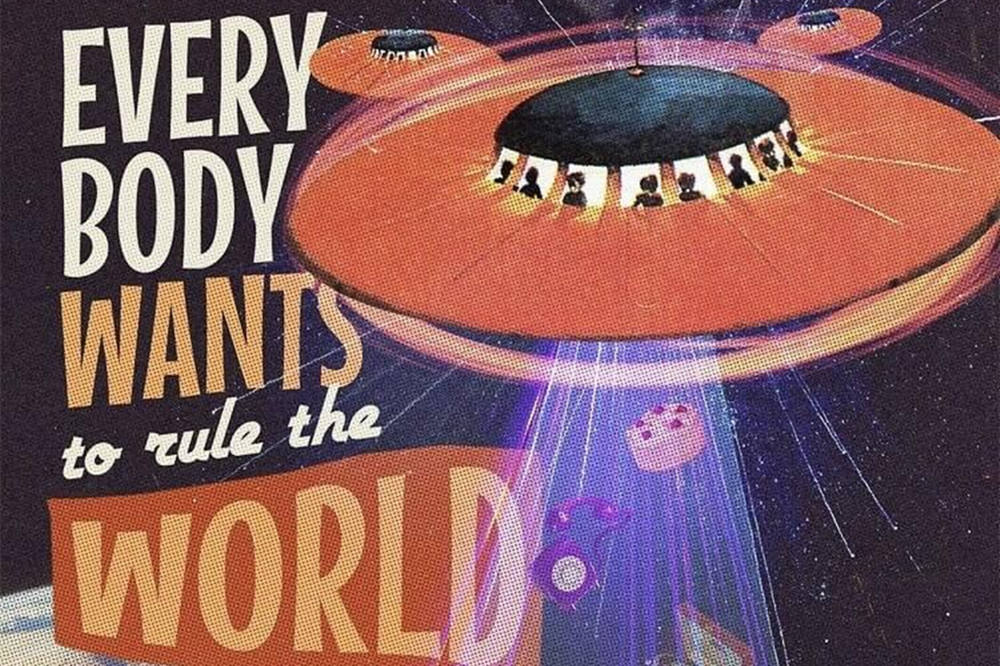
“Everybody Wants to Rule the World” by Tears for Fears is one of those songs that sounds carefree until you pay attention to what it is saying. Its bright guitars, relaxed rhythm, and smooth vocals hide a much darker subject: the human desire for power.
The song explores why people try to control countries, communities, relationships, and even one another. It also looks at how quickly the search for security can turn into competition, conflict, and oppression.
You can read the complete “Everybody Wants to Rule the World” lyrics. This article explains the song’s meaning without reproducing its copyrighted lyrics.
What Does “Everybody Wants to Rule the World” Mean?
The title refers to the widespread desire to have power and control.
It does not mean that every person secretly wants to become a dictator or political leader. “Ruling the world” can also mean wanting to control your surroundings, protect your position, or make other people follow your plans.
That impulse can appear in many places:
- Governments competing for global influence
- Leaders refusing to give up authority
- Companies trying to dominate an industry
- People fighting for status or recognition
- Partners attempting to control a relationship
Wanting some control over your own life is natural. The problem begins when personal freedom depends on limiting someone else’s freedom.
The song does not point to one villain. By saying that “everybody” wants power, it suggests that the temptation exists in ordinary people as well as presidents, generals, and business leaders.
Power and Freedom
One of the song’s main ideas is that power and freedom are often in conflict.
People want the right to make their own choices, yet they may also support systems that restrict the choices of others. Leaders promise order and safety, but those promises can be used to justify surveillance, violence, or tighter control.
The song captures that contradiction without turning into a political speech. Its wording is broad, allowing listeners to connect it to different situations.
Power can offer protection, but it also creates fear. Once someone reaches a powerful position, they may worry constantly about losing it. That fear can lead to broken promises, manipulation, and aggressive decisions.
Instead of creating peace, the need to stay in charge often produces more conflict.
The Cold War Influence
“Everybody Wants to Rule the World” was released in 1985, during the final decade of the Cold War.
At the time, the United States and the Soviet Union were competing for military, political, and economic influence. The threat of nuclear war was still part of everyday public anxiety, and conflicts around the world were often connected to the rivalry between the two superpowers.
The song does not mention either country directly. However, its focus on authority, war, unstable systems, and the fear of losing freedom fits the mood of that period.
This political background helps explain why the song feels larger than a personal story. It describes a world where powerful groups compete for control while ordinary people live with the consequences.
Roland Orzabal has also explained that an earlier version of the title involved the idea that everybody wanted to go to war. The wording was changed because it did not work musically, but the finished title kept the same concern with conflict and ambition.
“Rule the world” was ultimately a stronger phrase because it covers more than war. It includes political influence, social control, wealth, status, and the need to be obeyed.
Why Does the Song Sound So Upbeat?
The contrast between the music and the message is a major reason the song remains memorable.
The instrumental feels warm and open. The rhythm is easygoing, the guitar has a bright tone, and the chorus feels made for singing along. Nothing about the production immediately sounds threatening.
Underneath that pleasant surface, the song deals with fear, corruption, conflict, and the loss of freedom.
That difference makes the message more effective. A heavy or dramatic arrangement would have made the warning obvious. Instead, the music draws listeners in before they notice how serious the subject is.
The sound also reflects the way power is often presented in real life. Control does not always arrive looking cruel. It can be hidden behind attractive promises, polished speeches, confident leaders, and claims that everything is being done for the public good.
The music feels comfortable while the words quietly question who is in charge and what they are willing to do to stay there.
Is the Song About a Relationship?
The song is mainly understood as a reflection on political and social power, but its message can also apply to personal relationships.
A relationship becomes unhealthy when one person tries to manage the other person’s choices, friendships, emotions, or independence. In that setting, the desire to “rule” is not about controlling a country. It is about controlling another person’s life.
This does not appear to be the song’s only or primary meaning. Still, the theme is broad enough to fit any situation where trust is replaced by authority.
Healthy relationships require cooperation. Problems begin when one person believes that love gives them the right to dominate the other.
Who Wrote “Everybody Wants to Rule the World”?
“Everybody Wants to Rule the World” was written by Roland Orzabal, Ian Stanley, and producer Chris Hughes.
It appeared on Tears for Fears’ second album, Songs from the Big Chair, released in 1985. The album also included well-known songs such as “Shout” and “Head Over Heels.”
The track was reportedly completed late in the album’s recording process. Its famous rhythm developed from a relatively simple idea, but it became one of the band’s biggest and most recognizable songs.
The recording helped Tears for Fears reach a much wider international audience. Its combination of thoughtful writing and accessible pop production made it work both as a radio hit and as a song listeners could continue interpreting years later.
More background on the album and its production can be found in Pitchfork’s retrospective review of Songs from the Big Chair.
Lorde’s Darker Version
Lorde recorded a cover of “Everybody Wants to Rule the World” for The Hunger Games: Catching Fire soundtrack in 2013.
Her version is slower, heavier, and far more threatening than the original. It removes the warm pop feeling and brings the song’s themes of rebellion, fear, and political control to the front.
The cover fits The Hunger Games because the story centers on an authoritarian government that uses violence, entertainment, and propaganda to keep people under control.
The two recordings reveal different sides of the same song.
Tears for Fears make power sound appealing on the surface, reflecting how control can be hidden inside pleasant promises. Lorde makes it sound openly dangerous, as though the struggle for authority is already turning violent.
Her version did not change the meaning. It simply made the darkness harder to miss.
Why the Song Still Feels Relevant
The Cold War may have shaped the song, but its message was never limited to the 1980s.
Countries still compete for territory, resources, technology, and political influence. Leaders continue to use fear to gain support. Businesses fight for market control, while social media encourages people to measure their value through attention, followers, and public approval.
Power has also taken on new forms. Controlling information can now be as important as controlling land. Algorithms influence what people see, companies collect personal data, and online platforms can shape public conversations on a massive scale.
The song remains relevant because the basic human problem has not changed. People want freedom for themselves, but they are not always willing to offer the same freedom to others.
It also encourages a little self-reflection. The desire for control is easy to criticize when it appears in politicians or institutions. It can be harder to recognize in our own arguments, workplaces, friendships, and relationships.
The Meaning Behind the Song
“Everybody Wants to Rule the World” is a warning about the cost of unchecked ambition.
It shows how the need to feel secure can become a need to dominate. The more people compete for power, the more freedom, trust, and peace are placed at risk.
Its upbeat sound keeps the song from feeling like a lecture. Instead, Tears for Fears deliver a serious idea through one of the most inviting pop songs of the 1980s.
The central message is simple: wanting control is human, but believing we have the right to control everyone else can quickly become dangerous.
Featured image source: https://genius.com/albums/Sammy-rae-and-the-friends/Everybody-wants-to-rule-the-world