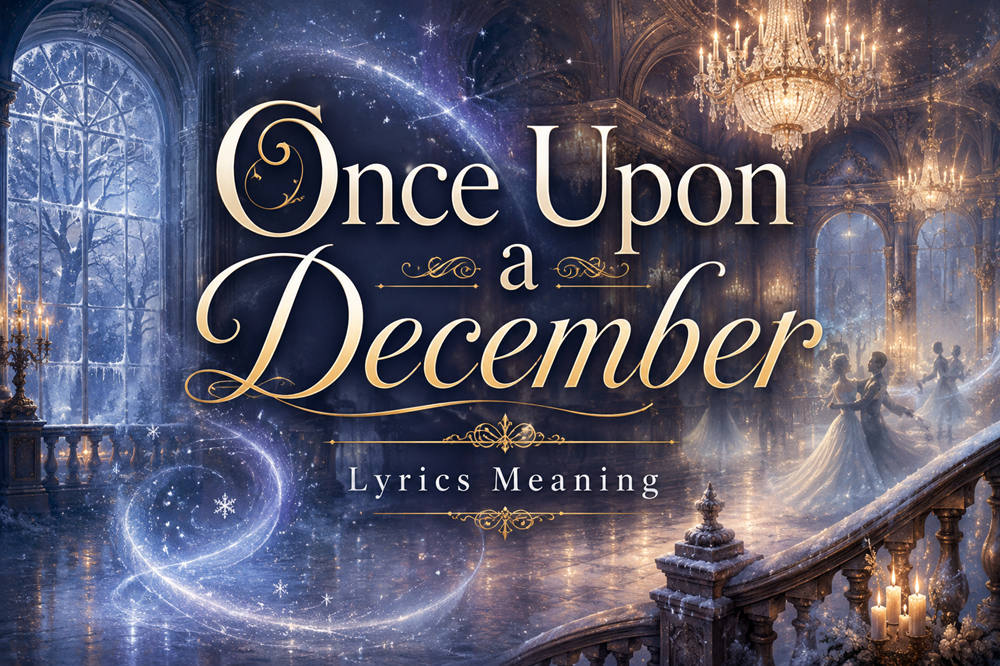
“Once Upon a December” is a haunting song from the 1997 animated musical Anastasia. You can read the complete lyrics on Genius before exploring their meaning. The song plays when Anya enters an abandoned palace and begins to sense that she has been there before. You can also watch the official “Once Upon a December” scene to see how the music, animation, and ballroom setting work together.
The performance is sung by Liz Callaway, who provided Anastasia’s singing voice in the film. She does not recover her childhood in one clear moment. Instead, memories return through music, movement, and emotion. She imagines a warm ballroom filled with familiar people, even though the real palace is cold and empty.
The song is about more than remembering a forgotten place. It explores family, identity, grief, and the longing to return to a life that no longer exists.
What Does “Once Upon a December” Mean?
“Once Upon a December” describes Anastasia’s forgotten childhood beginning to return.
Known as Anya for most of the film, she has grown up without understanding who she is or where she came from. When she enters the old palace, something about it feels deeply familiar. The rooms appear abandoned, but she can almost hear music and see people dancing.
These images are not complete memories. They come to her as brief impressions: warmth, elegant clothing, loving faces, and the feeling of belonging.
Her mind cannot explain the palace, but her emotions recognize it. This is why the scene feels both magical and sad. She is getting closer to the truth about herself while also sensing how much she has lost.
The Meaning Behind the Title
The title sounds like the beginning of a fairy tale. Instead of the familiar phrase “once upon a time,” the song uses “once upon a December.”
That change gives the title a dreamlike quality while connecting the story to winter and the distant past.
December can represent family celebrations, music, decorated rooms, and childhood traditions. It can also suggest coldness, silence, and endings. Both meanings appear in the song.
Anastasia remembers a world that once felt warm and secure, but she is standing in its empty remains. December becomes a symbol of beauty touched by loss.
The title suggests that her former life now exists almost like a fairy tale—beautiful, distant, and difficult to separate from imagination.
Memory Returns Through Feelings
The song presents memory as something emotional rather than exact.
Anastasia does not suddenly remember names, dates, or a complete sequence of events. She first remembers how the past felt. The palace gives her a sense of safety and familiarity before she understands why.
This reflects how distant childhood memories often return. A melody, scent, room, or object can create a powerful feeling without bringing back every detail.
The song’s soft images capture that uncertain space between remembering and forgetting. Anastasia feels close to her past, but it remains slightly out of reach.
Her vision may contain real memories, but it is also shaped by longing. The graceful dancers and welcoming family figures represent the home and connection she has been missing throughout her life.
Family and the Need to Belong
At the heart of “Once Upon a December” is Anastasia’s desire for family.
She has spent years without knowing where she belongs. Although she cannot clearly remember her relatives, she senses that she was once known, loved, and protected.
Inside the imagined ballroom, she is surrounded by people who appear happy to see her. She is not treated like a stranger or an orphan. She moves among them as though she has finally returned home.
That feeling matters more than the beauty of the palace itself. Anastasia is not simply attracted to wealth or royal life. She is drawn to the possibility that she once had a family and a place in the world.
The scene briefly gives her the connection she has been searching for. Its sadness comes from knowing that the vision cannot last.
Why the Song Sounds Like a Lullaby
The gentle melody gives “Once Upon a December” the feeling of a lullaby.
Lullabies are closely tied to childhood, comfort, and the voice of someone who once cared for us. Even when the words are forgotten, a familiar tune can stay in the memory for years.
In the film, the melody acts as a bridge between Anastasia’s present and her early childhood. It is first introduced as a lullaby and later returns as an important clue connecting her to the Dowager Empress.
Anastasia may not fully understand why the song feels familiar, but she responds to it naturally.
Its waltz-like rhythm also matches the ballroom setting. The music seems to guide her into the past, allowing her to move through the vision as if she already knows the dance.
The softness of the tune contrasts with the painful truth behind it. The song feels comforting, yet it leads her toward memories of people and a life she can never completely recover.
The Ballroom Scene Explained
The ballroom scene turns an empty palace into a living memory.
As Anastasia walks through the room, ghostly figures appear around her. Couples dance, lights glow, and the palace briefly returns to its former elegance. The figures are not presented as frightening ghosts. They feel warm, graceful, and welcoming.
Anastasia joins them without hesitation. For a moment, she appears to step back into the life she lost.
The scene is powerful because the audience can see both realities at once. We understand the beauty of what Anastasia remembers, but we also know that she is physically standing in an abandoned building.
When the vision fades, the contrast becomes painful. The people disappear, the warmth is gone, and the ballroom is empty again.
The moment shows that memory can make the past feel alive, but it cannot truly bring it back.
A Song About Identity
Anastasia’s main journey is not simply about proving that she belongs to a royal family. It is about understanding who she is.
Other characters can give her information about her past, but facts alone are not enough. She must feel a personal connection to that identity.
“Once Upon a December” marks one of the first moments when her past becomes emotionally real. The palace and the music awaken something that cannot be explained by coaching or coincidence.
The song suggests that identity can survive in small, hidden ways. Names and details may be forgotten, but feelings, habits, and familiar sounds can remain.
Recovering her past does not instantly solve everything. It does, however, give Anastasia a stronger sense that her life began before the orphanage and that her lost memories are still part of her.
Why December Is Symbolic
December adds both warmth and sadness to the song.
It is a month associated with gatherings, celebrations, and family traditions. Those ideas match Anastasia’s vision of music, dancing, and loved ones welcoming her.
December is also the end of the year. Winter can make the world feel quiet, frozen, and empty. This reflects the abandoned palace, where the remains of an earlier life have been preserved but cannot continue.
The song brings these opposite emotions together:
- Warm family memories and present loneliness
- Celebration and loss
- Beauty and sadness
- Recognition and uncertainty
- The comfort of remembering and the pain of change
That contrast is one reason the song feels nostalgic rather than simply cheerful or tragic.
Remembering Is Not the Same as Returning
One of the song’s most moving ideas is that remembering a place does not mean we can return to it.
Anastasia may discover who she was, but she cannot restore her childhood exactly as it happened. The people in the ballroom belong to the past, and the world she remembers has already changed.
Her memories still matter. They help her understand herself and reconnect with the love she once experienced. However, she eventually has to decide how to carry that history into a new life.
This makes the song relatable beyond the film. Many people have returned to a childhood home, heard an old song, or remembered someone they lost. The memory can feel vivid, but the moment itself cannot be recreated.
“Once Upon a December” captures that bittersweet truth with unusual gentleness.
Historical Context
Although the film uses the name and setting of Grand Duchess Anastasia Nikolaevna of Russia, its story is a fictional fantasy rather than an accurate account of her life.
The real Anastasia was the youngest daughter of Tsar Nicholas II and Tsarina Alexandra. She was killed with her family in 1918. Later rumors that she had escaped inspired impostors, books, plays, and films, but DNA evidence eventually confirmed that no member of the immediate imperial family survived.
The animated movie builds on the survival legend while adding fictional characters, romance, magic, and a greatly altered version of historical events. The 1997 film’s background also shows how the filmmakers transformed the legend into a musical fantasy.
Understanding this difference does not weaken the song. “Once Upon a December” works because of its emotional themes, not because it presents history literally.
Why the Song Still Connects With Listeners
The song continues to resonate because it expresses a familiar feeling: remembering something that seems both close and far away.
You do not need to share Anastasia’s story to understand the emotional pull of an old melody or a place that brings back childhood. The song leaves enough space for listeners to connect it with their own memories of family, home, change, and loss.
Its emotional power also comes from its restraint. The song does not explain every image or tell the listener exactly how to feel. The music and ballroom sequence allow happiness and grief to exist together.
Final Meaning
“Once Upon a December” is about Anastasia reconnecting with a forgotten part of herself. Through music and emotion, she begins to remember family, love, and the home she lost.
The song is comforting because it shows that meaningful memories can survive even after many years. It is heartbreaking because remembering the past cannot bring it back unchanged.
Ultimately, the song suggests that our earliest experiences remain part of us, even when we cannot clearly name them. They may return through a melody, a familiar place, or a sudden feeling—and help us understand where we came from.