
Simple habits to protect your focus, manage your time, and work better outside the office.
Remote work gives you freedom, but it also asks for more self-direction. Without a commute, office routine, or coworkers nearby, the day can easily become scattered. One minute you are answering emails. The next, you are doing laundry, checking your phone, or trying to work through background noise.
Remote work productivity is not about being busy from morning to night. It is about building a workday that helps you focus, finish important tasks, and still have a real life when work is done.
What Is Remote Work Productivity?
Remote work productivity means doing meaningful work outside a traditional office without losing focus, energy, or balance. It is not measured by how long you sit at your laptop. It is measured by whether you are making steady progress on the work that matters.
A productive remote workday usually has a few simple pieces:
- Clear priorities
- A realistic schedule
- Fewer distractions
- Healthy communication habits
- Regular breaks
- A clear ending point
When these pieces are missing, remote work can feel messy. You may feel busy all day but still wonder what you actually finished.
Why Remote Work Can Feel Hard
Working from home sounds easier than working in an office, but it comes with its own challenges.
The biggest one is the lack of built-in structure. In an office, your commute, lunch break, meetings, and coworkers create a natural rhythm. At home, you have to create that rhythm yourself.
Distractions are another problem. Chores, pets, family members, messages, social media, and noise can break your attention again and again. Even short interruptions can make it harder to return to focused work.
Remote work can also lead to too much communication. Since people cannot always see what you are doing, teams often rely on more emails, chats, and meetings. That can make your day feel full without helping you finish your most important tasks. Recent workplace research also shows how quickly modern work can become crowded with messages, meetings, and digital noise, which is why clear communication habits matter.
The last challenge is boundaries. When your home becomes your office, it is easy to start early, work late, or check messages after hours. Over time, that can drain your energy and make work feel like it never really ends.
Start Each Day With Clear Priorities
Before opening every app and reacting to messages, take a few minutes to decide what matters most today.
Choose three priorities. These should be the tasks that would make the day feel successful if you completed them. They do not all need to be big, but they should be specific.
For example:
- Finish the first draft of a report
- Reply to client emails
- Review tomorrow’s meeting notes
This is better than writing a huge to-do list that makes everything feel urgent. A short priority list gives your day direction.
Try to put your most important task near the start of your workday. If you wait until later, your best energy may already be spent on meetings, messages, and small tasks.
Create a Simple Work-Only Space
You do not need a perfect home office to work well. You just need a space that tells your brain, “This is where I focus.”
It could be a desk, a kitchen table, a quiet corner, or a chair you only use during work hours. What matters is consistency.
Keep your workspace simple. A laptop, charger, notebook, water, and a few useful supplies are usually enough. Too much clutter can make it harder to concentrate.
If you work in a shared space, use small signals to separate work from home life. Open your laptop when work begins. Put it away when work ends. Turn on a desk lamp during focus time. Use headphones when you need quiet.
These small habits may seem simple, but they help your mind shift into work mode faster.
Use Time Blocks to Give Your Day Structure
Remote work becomes harder when every task floats around in your head. Time blocking helps by giving each task a place in your day.
Instead of saying, “I’ll work on this later,” schedule a block of time for it.
A simple day might look like this:
- 9:00–10:30: Focus work
- 10:30–11:00: Email and messages
- 11:00–12:00: Meeting or team updates
- 1:00–2:30: Project work
- 2:30–3:00: Break and small admin tasks
- 3:00–4:00: Final work block
You do not have to follow the schedule perfectly. The goal is not to control every minute. The goal is to reduce decision fatigue and help you know what to do next.
Time blocks also make it easier to protect work that needs concentration instead of letting messages and small tasks take over your whole day.
Protect Your Focus Time
Some work needs full attention. Writing, planning, problem-solving, designing, studying, and analyzing all require deeper focus.
Choose one or two focus blocks each day for this kind of work. During that time, close extra tabs, silence notifications, and avoid checking messages unless your role truly requires fast replies.
If a full hour feels hard, start smaller. Try 25 or 30 minutes of focused work, then take a short break. The key is to give one task your full attention instead of switching between five things at once.
When it is hard to begin, lower the pressure. Tell yourself, “I only need to work on this for 10 minutes.” Starting often creates momentum.
Set Clear Communication Habits
Communication is important in remote work, but constant communication can ruin your focus.
You do not need to answer every message the second it arrives. Unless something is truly urgent, try checking messages at set times during the day. This helps you stay available without letting notifications control your schedule.
Clear messages also save time. When you send a question or update, include the needed context, deadline, and next step. This is especially helpful in remote teams, where digital communication can easily pile up throughout the day.
Instead of writing:
“Thoughts?”
Try:
“Can you review the first section by Thursday and let me know if the tone feels right?”
That small change reduces confusion and back-and-forth. Good communication helps everyone work with less stress.
Take Breaks That Actually Refresh You
Breaks are not wasted time. They help your brain reset so you can return to work with better focus.
A real break should feel different from work. If you spend all day looking at a screen, scrolling your phone may not give you much rest.
Better options include:
- Standing up and stretching
- Walking outside for a few minutes
- Drinking water
- Eating lunch away from your desk
- Looking out a window
- Doing a short breathing exercise
You do not need long breaks every hour. Even a few minutes away from your screen can help you feel less drained. Simple physical activity breaks can also make the workday feel less stiff and tiring, especially if you sit for long periods.
Reduce Home Distractions Before They Take Over
You cannot remove every distraction, but you can make the biggest ones harder to reach.
Start by noticing what pulls your attention most often. Is it your phone? Housework? Noise? Social media? Family interruptions?
Then create a simple fix.
If your phone distracts you, place it across the room during focus time. If chores interrupt your day, give them a specific time instead of doing them randomly. If noise is a problem, use headphones, soft background sound, or a quieter spot when possible.
If you live with other people, make your work hours clear. A closed door, headphones, or a simple “focus time” note can help reduce interruptions.
The goal is not to have a perfect environment. The goal is to make focus easier.
Build a Start and End Routine
One of the hardest parts of remote work is that the day has no natural beginning or ending. Without a commute, work can blend into the rest of your life.
A short start routine helps you enter work mode. It might be as simple as making coffee, checking your priorities, opening your workspace, and beginning your first task.
An end routine is just as important. Review what you finished, write down what needs attention tomorrow, close your laptop, and step away from your workspace.
This gives your brain a clear signal that the workday is done. It can also reduce the urge to keep checking messages at night.
Avoid Filling Every Minute
Remote workers sometimes feel pressure to prove they are working. That pressure can lead to too many meetings, too many messages, and a schedule with no breathing room.
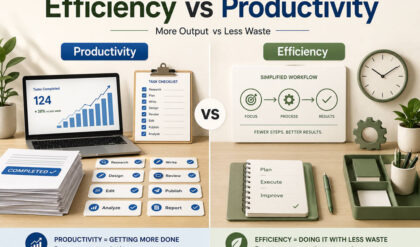
But being busy is not the same as being productive.
Leave some open space in your day for unexpected tasks, deeper thinking, and small transitions. A packed calendar may look productive, but it often leads to rushed work and mental fatigue.
Before accepting a meeting, ask whether it really needs to happen. Some updates can be handled with a short message or shared document.
Protecting your schedule helps you give better attention to the work that actually matters.
Track Progress, Not Just Hours
Remote work is easier to manage when you focus on progress instead of time spent online.
At the end of the day, write down three things:
- What you completed
- What still needs attention
- What you will start with tomorrow
This small habit helps you close the day with more clarity. It also shows you what is working and what is not.
You may notice that you focus better in the morning, lose energy after long meetings, or underestimate how much time certain tasks take. Once you see the pattern, you can adjust your routine.
Work With Your Energy, Not Against It
Productivity is not only about managing time. It is also about managing energy.
Some tasks need creativity. Some need patience. Some need quick decisions. Some are simple but repetitive. Try to match the task to the time of day when your energy fits best.
If your mind is sharpest in the morning, use that time for deeper work. If you feel slower after lunch, use that time for lighter tasks. If you get a second wave of energy later in the day, save a meaningful task for that window.
Sleep, movement, food, and connection also matter. Remote work can become isolating, so make time for real human contact when you can. A quick call, a coworking session, or a walk with a friend can help you feel less stuck.
Summary
Remote work productivity comes from simple structure, not constant effort. When you know your priorities, protect focus time, manage distractions, and create a clear ending to your day, working from home becomes much easier.
You do not need a perfect routine. Start with one or two habits that make your day feel calmer and more focused. Over time, those small changes can help you get more done without letting work take over your whole life.