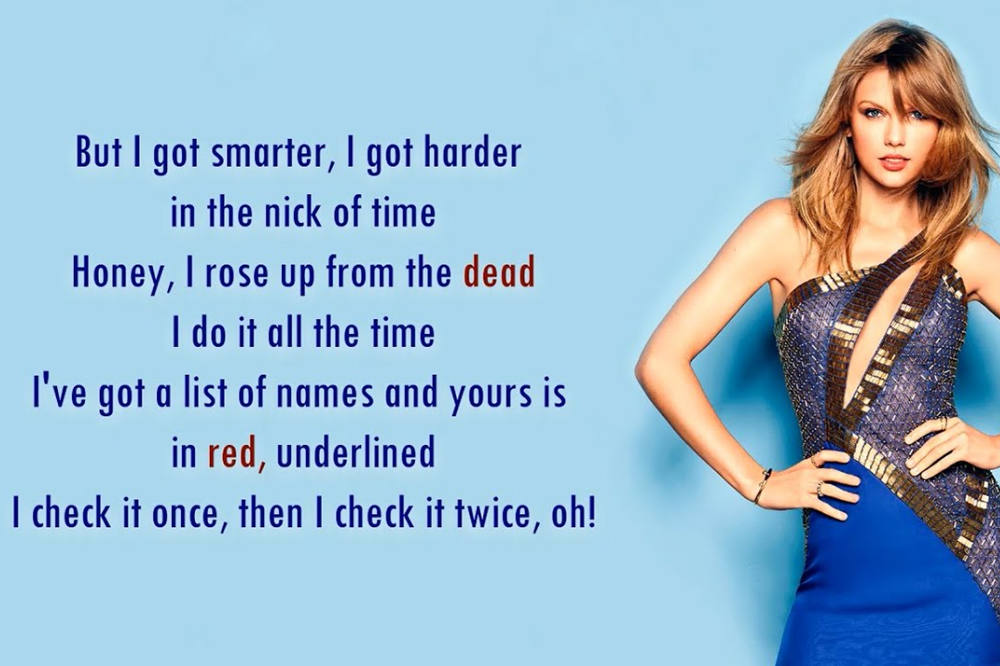
“Look What You Made Me Do” marked one of the most dramatic changes in Taylor Swift’s career. After months away from the spotlight, she returned with a darker sound, sharper lyrics, and an image that felt far removed from the polished pop of 1989.
Released in August 2017 as the lead single from Reputation, the song deals with betrayal, damaged trust, public criticism, and the decision to take control of your own story. You can read along with the song using the “Look What You Made Me Do” lyrics on Genius or watch Taylor Swift’s official lyric video.
The track also introduced the snakes, newspaper headlines, and theatrical revenge imagery that defined the album’s visual style.
What Does “Look What You Made Me Do” Mean?
The song is about how conflict can change a person.
Its narrator feels betrayed and misrepresented by someone who controlled the story and made her look like the problem. Instead of continuing to explain herself or seek approval, she becomes colder, more guarded, and determined to respond on her own terms.
The title places the blame on the other person. It suggests that the narrator would not have acted this way without being pushed.
However, the phrase also sounds intentionally dramatic. Swift is not simply presenting herself as an innocent victim. She is performing an exaggerated villain—the calculating and revenge-obsessed character that critics had already accused her of being.
By leaning into that image, she takes some of its power away. The song’s message is not only “you hurt me.” It is also “you created this version of me, so now I will use it.”
Who Is the Song About?
Taylor Swift has not confirmed that every part of the song is about one person. Still, many listeners connected it to the public controversies she experienced in 2016.
The most common interpretation involves her dispute with Kanye West and Kim Kardashian. Fans linked references to dishonesty, phone conversations, public blame, and a tilted stage to the conflict surrounding West’s song “Famous” and his Saint Pablo Tour.
A Vogue analysis of the lyrics also noted several details that appeared to reflect that feud.
Other listeners have connected parts of the song to Swift’s reported disagreement with Katy Perry, media criticism, former relationships, or people in the music industry. These theories are possible, but the song is broad enough to address several experiences at once.
Its main target may not be one celebrity. It may be the larger system of gossip, online judgment, and public storytelling that shaped Swift’s reputation during that period.
The Meaning of the “Old Taylor”
The song’s best-known moment introduces the idea that the old version of Taylor is gone.
This does not mean Swift rejected her previous music or personality. It signals the end of a particular public image: the friendly, romantic, eager-to-please singer who often tried to explain herself when people misunderstood her.
During the Reputation era, she stopped trying to appear harmless. She wore darker clothing, avoided traditional interviews, deleted her social-media posts, and let the music and imagery speak for her.
The transformation was deliberately theatrical. Swift was creating a character for the album rather than claiming she had become a completely different person.
That distinction matters. “Look What You Made Me Do” mixes genuine anger with self-aware humor. Swift understands how extreme the new persona looks, and she makes that exaggeration part of the entertainment.
Betrayal, Trust, and Revenge
Beneath the song’s dramatic production is a simple emotion: the narrator no longer trusts someone she once believed.
She feels manipulated, embarrassed, and publicly blamed. Her response is to remember the betrayal rather than forgive it quickly.
This gives the song its revenge-heavy mood, but the revenge is mostly presented as performance. Swift creates a character who keeps records, watches her enemies, and waits for consequences to arrive.
The character resembles the version of Swift often described in celebrity coverage: strategic, calculating, and always planning her next move.
Instead of directly arguing with that portrayal, she turns it into a costume. Her critics may call her a villain, but she decides how that villain looks and sounds.
Snake Symbolism and Reinvention
Snakes became one of the clearest symbols of the Reputation era.
Before the album’s release, people had flooded Swift’s social-media pages with snake emojis, using the animal as an insult that suggested dishonesty and manipulation. When she returned, she posted mysterious snake videos and made the image central to her new visual identity.
Snakes appear throughout the “Look What You Made Me Do” music video and later became a major feature of the Reputation Stadium Tour.
The symbol works in several ways. A snake can represent danger, revenge, patience, and transformation. Because snakes shed their skin, they also fit the idea of leaving an old identity behind.
Swift did not attempt to erase the insult. She reclaimed it and turned it into one of the most recognizable images of her career.
The Music Video’s Hidden Meanings
The official music video expands the song into a visual summary of Swift’s career, controversies, and public identities.
Rising From the Grave
The video begins with Swift emerging from a grave. This introduces the idea that her reputation—and possibly her career—had been declared dead.
Her return suggests that attempts to bury her only created a new version of her.
The Snake Throne
Swift sits on a throne surrounded by snakes, showing that she has accepted a symbol once used to attack her.
She is no longer threatened by the image. She controls it.
Celebrity Excess
Several scenes show Swift surrounded by diamonds, money, photographers, and luxury. These images exaggerate the way celebrity culture reduces famous people to wealth, scandal, and spectacle.
The scenes do not present a realistic picture of her life. They resemble tabloid cartoons of what a calculating pop star is supposed to look like.
Past Versions of Taylor
The video’s most important scene brings together different versions of Swift from earlier stages of her career.
They include familiar outfits and personalities associated with past music videos, performances, award shows, and media controversies. The different Taylors argue, insult one another, and repeat common criticisms aimed at her.
The scene shows how Swift’s public identity has never been fixed. She has been described as innocent, fake, surprised, dramatic, controlling, victimized, and attention-seeking—sometimes all at once.
By putting these versions together, Swift suggests that the public “Taylor Swift” is partly a collection of characters created by music, media, fans, and critics.
Why the Chorus Is So Repetitive
The chorus repeats the title instead of offering a long melodic explanation.
That repetition makes the song sound like an accusation. The narrator is not calmly describing what happened; she is forcing the other person to look at the result.
It also gives the song a hypnotic, slightly unsettling quality. The phrase begins to sound less like a reasonable defense and more like an obsession, which fits the exaggerated villain character.
The chorus helped separate the single from Swift’s earlier pop hits. It was blunt, rhythmic, and intentionally less warm than songs from 1989.
The Connection to “I’m Too Sexy”
The chorus uses an interpolation of Right Said Fred’s 1991 hit “I’m Too Sexy.” An interpolation recreates part of an earlier composition rather than directly using the original recording.
Because of the musical similarity, members of Right Said Fred received songwriting credits alongside Taylor Swift and producer Jack Antonoff.
The connection fits the song’s theatrical style. “I’m Too Sexy” is repetitive, playful, and built around an exaggerated personality. Swift uses a similar rhythm but turns it into something darker and more confrontational.
Was Game of Thrones an Influence?
Swift later discussed how Game of Thrones influenced parts of Reputation. The show’s betrayals, shifting alliances, revenge plots, and powerful female characters matched the emotional world she was building.
That influence helps explain why “Look What You Made Me Do” feels larger than an ordinary argument. The song presents conflict like a battle between rivals, complete with secret plans, fallen leaders, and approaching consequences.
The album often treats celebrity drama as if it were a struggle for power. That makes the anger feel cinematic rather than purely personal.
Why the Song Divided Listeners
“Look What You Made Me Do” received mixed reactions when it came out.
Some listeners liked its confidence, dark production, and bold change of style. Others found the chorus too repetitive or thought its revenge theme felt forced.
The reaction was divided partly because the song was designed to be disruptive. Swift was not trying to create another bright pop single like “Shake It Off.” She needed to make it clear that the 1989 era was over.
Even people who disliked the song understood its purpose. It created discussion, introduced the visual world of Reputation, and put Swift back at the center of pop culture.
The Lasting Meaning of “Look What You Made Me Do”
“Look What You Made Me Do” is often described as a revenge song, but its deeper subject is control.
Swift had spent years watching other people debate whether she was sincere, innocent, manipulative, powerful, or dishonest. With this song, she stopped trying to correct every version of the story.
Instead, she took the harshest image of herself, exaggerated it, and turned it into a pop character.
The result is a song about surviving public judgment through reinvention. It does not ask listeners to believe that Swift is completely innocent or that every critic is wrong. It shows how a person can take an identity created by others and reshape it into something they control.
That is why the song remains closely tied to Reputation. It was not simply the beginning of a darker album. It was the moment Taylor Swift decided that explanation was less powerful than transformation.
Featured image source: https://www.youtube.com/watch?v=zHg0OAAMpME