
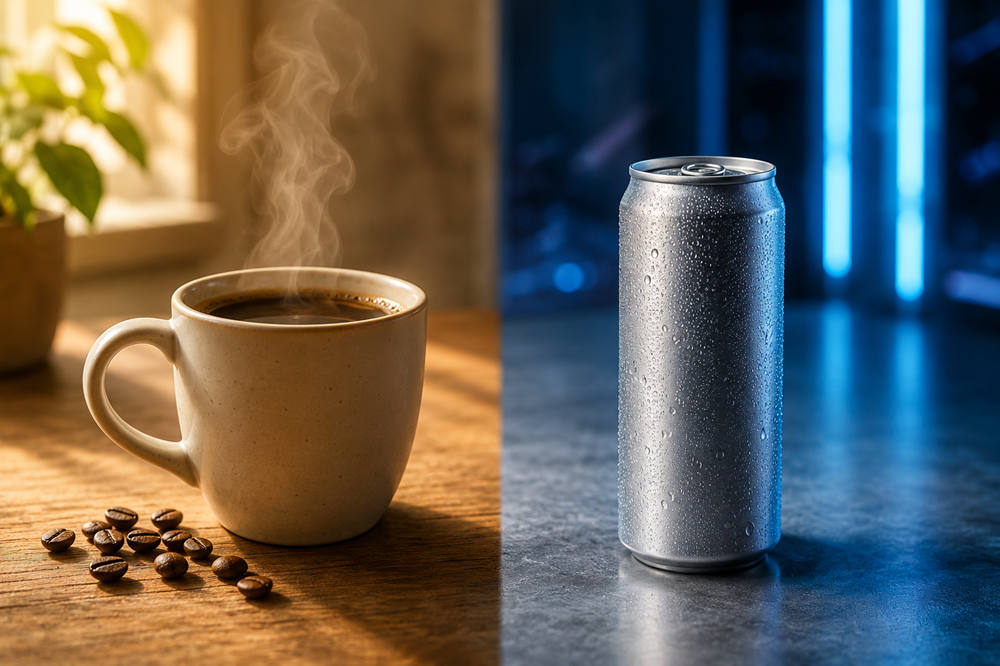
Coffee and energy drinks can both help you feel more alert, but they are not equally good choices for everyday use.
For most healthy adults, plain or lightly sweetened coffee is generally better than an energy drink. It usually has fewer ingredients, contains no added sugar when served black, and makes it easier to control what you consume. Energy drinks can offer a convenient boost, but some contain large amounts of caffeine, sugar, and additional stimulant ingredients.
Still, the label matters more than the name of the drink. A large coffee filled with flavored syrup, sweetened cream, and whipped topping may be less healthy than a small sugar-free energy drink. The best choice depends on caffeine content, serving size, added sugar, and your personal tolerance.
Coffee vs. Energy Drinks at a Glance
| Feature | Coffee | Energy Drinks |
|---|---|---|
| Main stimulant | Naturally occurring caffeine | Added caffeine, sometimes from several sources |
| Added sugar | None in black coffee | Varies from zero to very high |
| Calories | Very low when plain | Varies by product |
| Ingredients | Usually coffee and water | May include taurine, guarana, vitamins, herbs, and sweeteners |
| Caffeine level | Depends on the brew and serving size | Depends on the brand and can size |
| Best use | Moderate everyday alertness | Occasional convenience |
| Main concern | Excessive caffeine and sugary add-ins | High caffeine, sugar, and extra stimulants |
Why Coffee Is Usually the Better Choice
Coffee has a simple advantage: it can be consumed with very little added to it. Black coffee contains almost no calories or sugar, and you can decide exactly how much milk or sweetener goes into your cup.
It also contains naturally occurring plant compounds, including polyphenols. Research has linked moderate coffee consumption with several possible health benefits, although these studies do not prove that coffee directly causes better health. A large review published in the BMJ found that moderate coffee intake was more often associated with benefits than harm.
Energy drinks usually have longer ingredient lists. Along with caffeine, they may include taurine, guarana, ginseng, B vitamins, artificial sweeteners, or herbal extracts. These ingredients are not automatically dangerous, but they make it more difficult to understand the drink’s overall stimulant effect.
Guarana is especially worth noticing because it naturally contains caffeine. A product with both added caffeine and guarana may provide more stimulation than a quick glance at the front of the can suggests.
Coffee only keeps its advantage when it stays relatively simple. A drink filled with flavored syrups, sugary creamers, and whipped topping can contain hundreds of calories and a large amount of added sugar.
Which One Has More Caffeine?
Coffee does not always contain more caffeine than an energy drink, and an energy drink is not always stronger than coffee. The amount varies widely between products.
According to the FDA’s caffeine guidance, a 12-ounce serving may contain approximately:
- Brewed coffee: 113 to 247 milligrams of caffeine
- Energy drink: 41 to 246 milligrams of caffeine
Some large coffees and energy drinks contain considerably more. The way coffee is brewed, the type of beans used, and the size of the cup can all affect its caffeine level. Energy drinks also range from relatively mild products to highly concentrated options.
Check the caffeine content for the entire container whenever possible. A can may look like one serving even when the label divides it into two.
You should also count caffeine from other sources, including tea, soda, chocolate, pre-workout supplements, caffeine tablets, and certain medications.
How Much Caffeine Is Safe?
For most healthy adults, the FDA says that up to 400 milligrams of caffeine per day is not generally associated with harmful effects.
That does not mean everyone can comfortably consume that much. Some people experience anxiety, shakiness, headaches, digestive discomfort, or a racing heartbeat after a relatively small dose.
Your tolerance may depend on:
- How often you consume caffeine
- Your body size and metabolism
- Medications you take
- Existing health conditions
- The time of day you drink it
- How well you have slept
Caffeine can remain in the body for several hours. Even when an afternoon drink does not make you feel wide awake, it may still make it harder to fall asleep or reduce the quality of your sleep.
Using caffeine to cover ongoing sleep deprivation can create an unhealthy cycle. You feel tired, consume more caffeine, sleep poorly, and then need another strong drink the next day.
The Sugar Difference
Black coffee naturally contains almost no sugar. Any sweetness usually comes from ingredients you choose to add.
Energy drinks are more complicated. Sugar-free options are widely available, but some regular products contain a surprisingly large amount of added sugar. The National Center for Complementary and Integrative Health notes that a 16-ounce energy drink may contain 54 to 62 grams of added sugar.
That is around 13 to 15 teaspoons.
Regularly consuming high-sugar drinks can contribute to weight gain and increase the risk of health problems such as type 2 diabetes and heart disease. The CDC’s guidance on added sugar recommends limiting foods and drinks that provide large amounts without much nutritional value.
A sugar-free energy drink avoids those calories, but it can still contain a high dose of caffeine. “Sugar-free” does not necessarily mean mild or suitable for frequent use.
Coffee can also become a sugary beverage. To keep it lighter, choose black coffee, unsweetened cold brew, a small amount of milk, or limited sweetener instead of several pumps of flavored syrup.
Which Drink Gives You More Energy?
Neither drink creates real energy in the way that food and rest do. Caffeine is a stimulant that temporarily makes you feel less tired and more alert.
How strongly you feel its effects depends mainly on the caffeine dose and how quickly you consume it. Drinking a highly caffeinated product in a few minutes may produce a more sudden effect than slowly sipping a cup of coffee.
Energy drinks may also feel stronger when they contain sugar. The combination can provide a quick lift, but the effect may not last. Once the caffeine begins to wear off, the tiredness you were trying to avoid can return.
Coffee often works well for people who want a moderate boost they can control. You can choose the serving size, drink it slowly, or switch to half-caf or decaf when you want less caffeine.
Which Is Better Before a Workout?
Coffee is generally the simpler pre-workout option for adults who tolerate caffeine. A plain cup can provide stimulation without added sugar or a long list of ingredients.
Energy drinks are portable and convenient, but they are not necessary for an effective workout. Some may improve alertness or endurance, yet drinking more caffeine does not automatically lead to better performance.
Before using either drink for exercise:
- Check the total caffeine amount.
- Avoid combining it with a pre-workout supplement.
- Drink water before and during exercise.
- Do not try an unfamiliar high-caffeine product before an important workout.
- Avoid late-day caffeine if it affects your sleep.
Energy drinks are also different from sports drinks. Energy drinks are designed mainly to increase alertness. Sports drinks provide water, carbohydrates, and electrolytes and may be useful during prolonged or intense exercise.
For an ordinary gym session or short workout, water is usually enough.
Are Energy Drinks Bad for You?
An occasional energy drink is unlikely to cause problems for every healthy adult. The main concerns are the amount consumed, the caffeine concentration, and whether it is combined with other stimulants.
Possible side effects include:
- Nervousness or shakiness
- Trouble sleeping
- Headaches
- Nausea
- Increased heart rate
- Higher blood pressure
- Heart palpitations
The risk increases when someone drinks several cans close together or combines an energy drink with coffee, caffeine pills, or pre-workout powder.
Mixing energy drinks with alcohol is also a poor choice. Caffeine may make you feel more awake, but it does not reduce alcohol-related impairment. Your coordination, reaction time, and judgment can still be affected.
Who Should Be More Careful?
Some people should avoid energy drinks or speak with a healthcare professional before consuming significant amounts of caffeine.
This includes:
- Children and teenagers
- Pregnant or breastfeeding people
- People with anxiety or panic attacks
- Anyone with chronic insomnia
- People with heart rhythm conditions
- Those with poorly controlled high blood pressure
- People taking medications that interact with caffeine
Children and teenagers are particularly sensitive to high doses. Health organizations generally advise young people to avoid energy drinks because of their stimulant and sugar content.
Anyone who regularly experiences strong palpitations, chest discomfort, dizziness, or severe anxiety after drinking caffeine should stop using the product and seek medical advice. Severe chest pain, fainting, trouble breathing, or a persistent irregular heartbeat requires urgent medical attention.
How to Choose a Healthier Drink
When choosing coffee:
- Select a small or medium serving.
- Limit syrups and sweetened creamers.
- Try unsweetened coffee or use only a little sugar.
- Choose half-caf or decaf later in the day.
- Remember that refills add to your daily caffeine total.
When choosing an energy drink:
- Read the caffeine amount for the whole can.
- Choose a smaller container.
- Check the added-sugar content.
- Avoid combining it with other caffeinated products.
- Do not mix it with alcohol.
- Avoid drinking it close to bedtime.
You do not need to finish the container simply because you opened it. If you begin to feel shaky, anxious, nauseated, or unusually alert, stop drinking it.
Final Verdict
For most adults, coffee is better than energy drinks for regular use, especially when it is served plain or with a modest amount of milk and sweetener. It has a simpler ingredient list and makes it easier to manage sugar, calories, and serving size.
A small sugar-free energy drink may be reasonable occasionally, but it offers no clear health advantage over ordinary coffee. Whichever drink you choose, pay attention to the caffeine dose, avoid consuming it too late, and do not use it as a replacement for adequate sleep, food, or hydration.