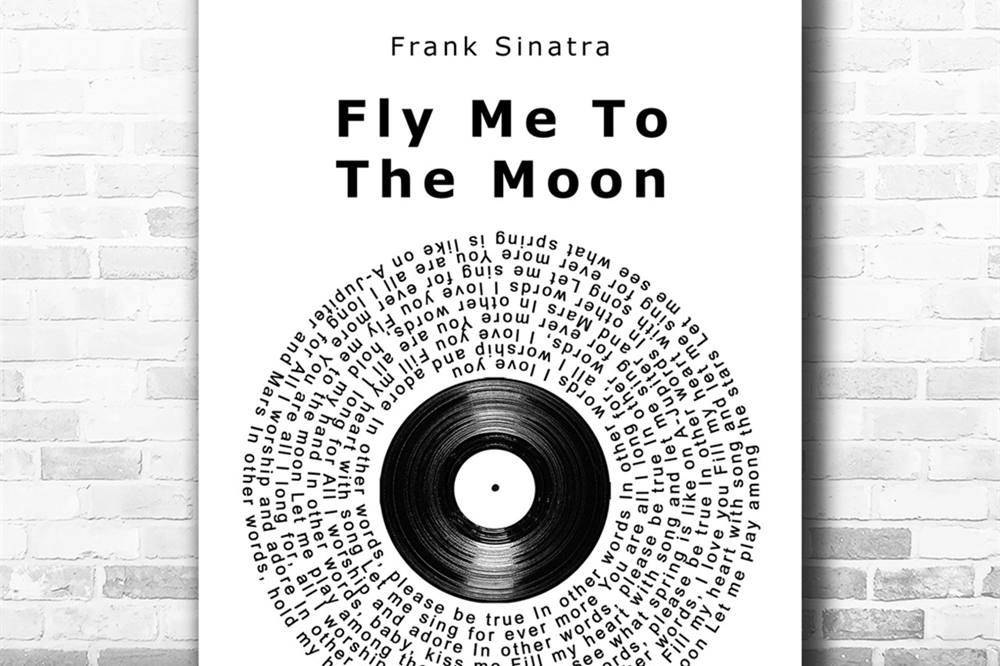
“Fly Me to the Moon” is best known through Frank Sinatra’s stylish 1964 recording, but the song was already a decade old when he performed it. Written by Bart Howard and originally titled “In Other Words,” it began as a gentle cabaret number before becoming a jazz standard and an unofficial soundtrack to the space age.
You can read the song’s words on the LyricsTranslate lyrics page. Here, we look at what they mean, who first recorded the song, and how Sinatra made it famous.
What Does “Fly Me to the Moon” Mean?
“Fly Me to the Moon” is a romantic song about wanting to feel close, secure, and fully loved.
The moon and planets are metaphors rather than real destinations. They describe the rush of falling in love—the feeling that everyday life has suddenly become more exciting. The singer starts with grand images of space travel but eventually reveals a much simpler wish: to share affection and hear that the other person feels the same way.
The cosmic language makes the emotion memorable without making it complicated. The song is not about a particular couple or relationship problem, which allows listeners to connect it with their own experiences.
The moon also fits naturally into a love song. It has long been associated with romance, nighttime, dreams, and mystery. Bart Howard used that familiar symbol to express a feeling that ordinary words could not quite capture.
Why Was It Originally Called “In Other Words”?
Bart Howard wrote the song in 1954 under the title “In Other Words.”
That title reflects how the lyrics are structured. The singer first describes love through imaginative references to the moon, stars, and distant worlds. The message then becomes direct: all of those poetic images are another way of expressing love and devotion.
Listeners remembered the opening line more easily than the original title. Publishers eventually renamed the song “Fly Me to the Moon,” the phrase audiences were already using when they requested it.
The title change helped make the song more recognizable, especially as public interest in space travel grew during the late 1950s and 1960s.
Who Wrote and First Recorded the Song?
Bart Howard was an American songwriter and pianist who worked in New York’s cabaret scene. He often accompanied singers in clubs and wrote music suited to intimate live performances.
Singer and actress Kaye Ballard made the first commercial recording of “In Other Words” in 1954. Her version had a softer, waltz-like rhythm and sounded quite different from the upbeat Sinatra performance most people recognize today.
The song slowly gained attention through other singers and jazz musicians. Peggy Lee helped popularize it through her performances, and instrumental versions showed that the melody could work in several styles.
The Songwriters Hall of Fame later honored “Fly Me to the Moon” as a Towering Song, recognizing its lasting place in popular music.
How Frank Sinatra Made the Song Famous
Frank Sinatra was not the original singer, but his version became the definitive recording.
He recorded “Fly Me to the Moon” for the 1964 album It Might as Well Be Swing. Count Basie’s orchestra performed the music, and Quincy Jones arranged the track.
Jones replaced the song’s earlier waltz rhythm with a lively 4/4 swing. The change gave it a brighter and more confident sound. Count Basie’s brass section added energy, while Sinatra’s relaxed delivery kept the performance personal.
Sinatra does not sing the song like someone making a nervous confession. His voice sounds warm, assured, and playful. That approach suits the arrangement and makes the romance feel joyful rather than overly sentimental.
The timing also helped. The United States was working toward a crewed moon landing, and the public was fascinated by astronauts, rockets, and space exploration. A romantic song about flying to the moon fit the mood of the era perfectly.
Sinatra’s recording combined classic romance with modern ambition, giving an older song a new identity.
The Connection to NASA and Apollo 11
The song became closely linked with the American space program during the Apollo era.
Sinatra released his recording in 1964. Five years later, on July 20, 1969, Apollo 11 astronauts Neil Armstrong and Buzz Aldrin became the first people to walk on the moon. The NASA Apollo 11 archive documents the mission and its place in spaceflight history.
The song’s title suddenly described something humans had actually achieved. What had begun as a playful romantic metaphor now carried a clear connection to one of the century’s greatest technological accomplishments.
NASA has continued to recognize that cultural connection. During the agency’s 50th-anniversary celebration in 2008, Quincy Jones presented commemorative copies of Sinatra’s recording to astronaut John Glenn and Apollo 11 commander Neil Armstrong.
The NASA link did not change the song’s basic meaning, but it gave it an unusual place in history. Few romantic standards are also associated with real lunar exploration.
How the Music Supports the Lyrics
The famous Sinatra arrangement succeeds because the music feels light, elegant, and constantly in motion.
The steady swing rhythm creates a sense of travel, while the brass instruments bring excitement. The orchestra sounds polished without overpowering Sinatra’s voice.
His phrasing is especially important. He sings as though he is speaking directly to one person, pausing naturally and allowing the melody to breathe. This keeps the song from sounding stiff or theatrical.
The contrast between the huge scale of the imagery and Sinatra’s easy delivery is part of its appeal. The lyrics mention planets and stars, but the performance remains intimate.
Other Notable Versions
Many artists have recorded “Fly Me to the Moon,” often changing its rhythm or mood.
Joe Harnell created a successful bossa nova arrangement in the early 1960s. His recording won the Grammy Award for Best Performance by an Orchestra for Dancing. His award history is listed by the Recording Academy.
Tony Bennett, Nat King Cole, Astrud Gilberto, Julie London, and Bobby Womack are among the other performers who have interpreted the song.
Its melody is simple enough to adapt without losing its identity. A slow performance can sound tender, while a jazz or bossa nova version feels lighter and more playful.
The song has also appeared in movies, television programs, and animation, helping introduce it to listeners who may not usually seek out traditional pop or jazz standards.
Why Is “Fly Me to the Moon” Still Popular?
“Fly Me to the Moon” has lasted because it expresses love in a clear but imaginative way.
It works well at weddings, anniversaries, dances, and formal events because the mood is romantic without being sad or intense. The song celebrates affection instead of focusing on conflict, jealousy, or heartbreak.
It also appeals to different generations. Older listeners may connect it with Sinatra and the Apollo era, while younger audiences often discover it through newer covers and popular media.
Most importantly, the message is easy to recognize. Being loved can make an ordinary moment feel unusual and exciting. Bart Howard turned that familiar emotion into an image people have remembered for decades.
Final Thoughts
“Fly Me to the Moon” turns a simple declaration of love into something playful and memorable. Sinatra’s recording linked it permanently with the space age, but its lasting appeal comes from its personal message: wanting to be close to someone and knowing that the feeling is returned.
Featured image source: https://songlyricdesigns.com/frank-sinatra-fly-me-to-the-moon-vinyl-record-song-lyric-quote-music-print/?srsltid=AfmBOoohlCHFFu5XGDZI_iUk4YhOLDAtMcMn1mCaG01mHVEEs3JEIlgu