Productivity advice often sounds like a race. Wake up earlier. Finish more tasks. Answer faster. Add another system. Push harder.
But more speed does not always mean better work. For many people, it creates packed calendars, scattered attention, and the frustrating feeling of being busy all day without making real progress.
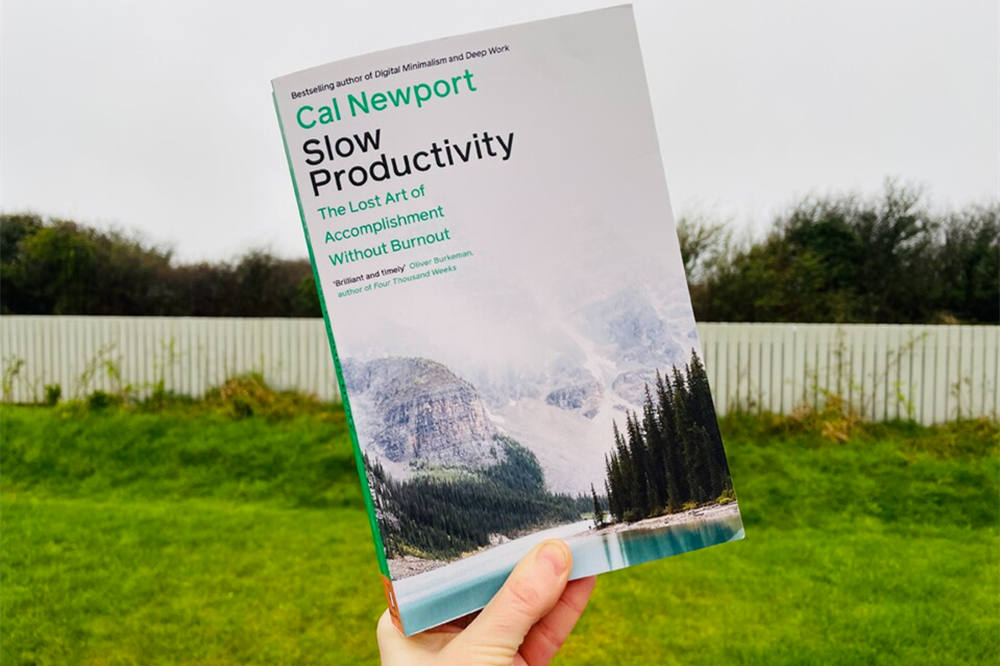
That is where Cal Newport’s idea of slow productivity is useful. In his book Slow Productivity: The Lost Art of Accomplishment Without Burnout, Newport offers a calmer way to think about achievement. Instead of measuring productivity by constant activity, he focuses on meaningful results, sustainable pace, and better-quality work.
Slow productivity is not about being lazy. It is about doing fewer things with more focus, patience, and care.
What Is Slow Productivity?
Slow productivity is a work philosophy that values meaningful accomplishment over constant busyness.
Instead of asking, “How much can I get done today?” it asks, “What work is actually worth my attention?”
This matters because many people are not struggling from a lack of effort. They are overwhelmed by too many tasks, too many messages, too many meetings, and too many half-finished projects. They keep moving, but their best attention is split in too many directions.
Slow productivity challenges the idea that a full task list automatically means a productive life. A busy schedule may look impressive, but it does not always lead to useful progress.
At its core, slow productivity is about doing better work without burning yourself out.
Why Cal Newport’s Slow Productivity Matters
Cal Newport is also known for Deep Work, which focuses on distraction-free concentration. Slow productivity builds on a similar concern: modern work often makes it hard to focus on what truly matters.
You can answer emails all morning, attend meetings all afternoon, reply to messages, update task boards, and still end the day with your most important work untouched.
That is the problem. Activity is easy to see. Real progress is often quieter.
Slow productivity matters because good work usually needs space. Thinking, planning, writing, learning, problem-solving, and creative work rarely happen well when every hour is crowded. When everything feels urgent, deeper work gets pushed aside.
This approach gives you permission to question the pace. It asks you to stop treating overload as the normal price of success.
The Problem With Pseudo-Productivity
One of the most helpful ideas behind slow productivity is pseudo-productivity.
Pseudo-productivity means treating visible activity as proof of valuable work. It happens when someone looks productive because they are constantly busy, even if that busyness does not create meaningful results.
Common examples include:
- Answering messages instantly
- Keeping a packed calendar
- Saying yes to too many projects
- Switching between tasks all day
- Treating every request as urgent
- Measuring progress only by checked-off tasks
The danger is that pseudo-productivity feels responsible. You feel like you are staying on top of things. But over time, it can pull your energy away from deeper, more valuable work.
This is one reason constant task switching can be so draining. Your brain has to keep shifting from one thing to another, which makes focused work harder.
Slow productivity asks a better question: Is this activity helping me create something that matters?
Cal Newport’s Three Principles of Slow Productivity
1. Do Fewer Things
The first principle is to do fewer things.
This does not mean you stop caring or lower your standards. It means you stop spreading your attention across too many active commitments at the same time.
Most people do not only have a time problem. They have a capacity problem. Too many open projects, small promises, and “quick tasks” can make real focus almost impossible.
Doing fewer things might look like:
- Limiting the number of active projects you take on
- Finishing one important task before starting another
- Saying “not right now” more often
- Keeping future ideas separate from current work
- Making your workload visible instead of silently accepting more
When everything is important, nothing gets your best energy. Doing fewer things creates room for better work.
2. Work at a Natural Pace
The second principle is to work at a natural pace.
A natural pace does not mean moving slowly every day. Real work has seasons. Some periods are intense. Others are slower. Some days are for producing, while others are for thinking, planning, learning, or recovering.
Many productivity systems treat every day like it should produce the same amount of output. But people are not machines.
Working at a natural pace may include:
- Setting more realistic deadlines
- Planning lighter weeks after demanding ones
- Protecting quiet time for focused work
- Avoiding unnecessary urgency
- Leaving room for rest and revision
- Accepting that some projects need time to develop
This principle is especially helpful if you feel guilty whenever you are not moving fast. A slower pace does not mean less ambition. Sometimes it is what keeps your ambition alive.
3. Obsess Over Quality
The third principle is to obsess over quality.
This is what keeps slow productivity from becoming passive. The goal is not simply to do less. The goal is to do the right things better.
Quality changes the question from “How fast can I finish this?” to “How can I make this genuinely useful, thoughtful, or strong?”
That does not mean every small task needs to be perfect. Slow productivity is not perfectionism. It means that when something truly matters, you give it the attention it deserves.
You can apply this by improving your skills, studying excellent work, protecting deep focus, and giving important projects enough time to become better.
Quality also builds confidence. When you know your work has real value, you do not need to prove yourself through constant busyness.
How to Apply Slow Productivity in Daily Life
You do not need to change your whole life at once. Start with small habits that reduce overload and protect your attention.
Try this:
- Choose your top 1–3 priorities for the week.
- Keep a “not now” list for ideas and tasks you cannot handle yet.
- Block time for focused work before checking messages.
- Review active commitments once a week.
- Give important projects more realistic timelines.
- Reduce unnecessary meetings and notifications.
- Measure progress by meaningful outcomes, not just completed tasks.
- Build recovery time into your schedule.
- Practice saying, “I can do this, but not this week.”
Start with one area where you feel overloaded. Then ask: What can I reduce, delay, or improve?
That small shift can make your week feel less crowded and more intentional.
What Slow Productivity Is Not
Slow productivity can be misunderstood, so it helps to be clear:
- It is not procrastination. Avoiding important work is not the same as working at a natural pace.
- It is not laziness. Slow productivity still values effort, progress, and achievement.
- It is not perfectionism. Obsessing over quality does not mean polishing every detail forever.
- It is not ignoring deadlines. Some work must be done quickly, and responsibilities still matter.
- It is not only for writers or academics. The basic idea can help anyone who has some control over their attention, schedule, or commitments.
Slow productivity is not about escaping work. It is about building a healthier relationship with work.
Who Can Benefit From Slow Productivity?
Slow productivity can help anyone who feels busy but not fulfilled.
It is especially useful for remote workers, students, creators, business owners, managers, and knowledge workers who deal with constant messages, shifting priorities, and pressure to stay available.
It may help if you often think:
- “I worked all day, but I do not know what I finished.”
- “I have too many things open at once.”
- “Everything feels urgent.”
- “I am productive, but I am exhausted.”
- “I want to do better work, not just more work.”
If any of that sounds familiar, slow productivity is worth trying. It gives you a way to keep making progress without turning every day into a test of endurance.
Common Mistakes to Avoid
Slow productivity is simple, but it takes practice. Most of us are used to moving fast, saying yes, and measuring ourselves by visible output.
Avoid these mistakes:
- Keeping the same workload and calling it slow productivity
- Trying to change every habit at once
- Confusing quality with perfectionism
- Saying yes before checking your real capacity
- Treating rest as something you must earn
- Using slow productivity to avoid hard work
- Expecting every week to move at the same pace
The goal is not to remove all pressure. Life will still have deadlines, busy seasons, and unexpected demands.
The goal is to stop building your whole life around pressure. That matters because burnout often grows from chronic workplace stress that is not managed well.
Summary
Cal Newport’s slow productivity offers a better way to think about meaningful work. It challenges the belief that productivity means doing more, moving faster, and staying constantly available.
The three principles are simple: do fewer things, work at a natural pace, and obsess over quality.
Slow productivity is not about lowering your goals. It is about making your goals more sustainable. When you stop chasing constant busyness, you create more room for focus, creativity, skill, and real progress.
Featured image source: https://www.linkedin.com/pulse/slow-productivity-lost-art-accomplishment-without-burnout-bec-evans-f4gce