Staying hydrated does not always mean drinking plain water all day. Maybe you dislike the taste, forget to drink, feel full too quickly, or just want other options. The good news is that your body can get fluids from more than one place.
You can support hydration through water-rich foods, soups, smoothies, herbal teas, milk, and other drinks. The goal is not to avoid fluids completely. It is to make hydration easier when plain water does not sound appealing.
Can You Stay Hydrated Without Drinking Plain Water?
Yes, you can stay hydrated without relying only on plain water. Your daily fluid intake can come from beverages and foods, especially fruits and vegetables with high water content. The CDC explains that water can come from both drinks and food.
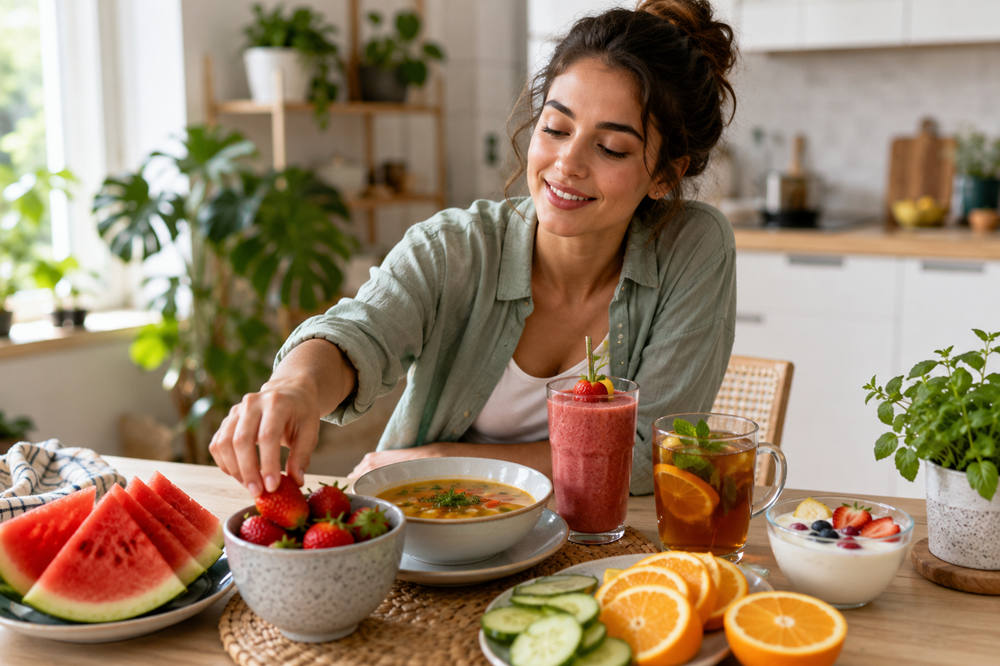
This matters because many people think hydration only counts if they drink a glass of water. In real life, a bowl of soup, a smoothie, a plate of juicy fruit, or a mug of herbal tea can also help.
Still, your body needs enough total fluid. If you are sweating, sick, exercising, or spending time in hot weather, you may need more than usual.
1. Eat More Water-Rich Fruits and Vegetables
Fruits and vegetables are one of the easiest ways to add more fluid to your day. They are refreshing, simple to prepare, and usually easier to eat than forcing yourself to drink when you are not in the mood.
Good hydrating fruits include:
- Watermelon
- Strawberries
- Oranges
- Grapefruit
- Cantaloupe
- Peaches
- Pineapple
- Grapes
Watermelon, strawberries, and oranges are especially helpful because they are naturally juicy and easy to snack on. You can add them to breakfast, keep cut fruit in the fridge, or eat them after a workout.
Vegetables can help too, especially crisp or juicy ones like:
- Cucumber
- Celery
- Lettuce
- Tomatoes
- Zucchini
- Bell peppers
- Spinach
A simple salad with cucumber, tomatoes, lettuce, and fruit on the side can give you food and fluid at the same time. It is a small habit, but it adds up.
2. Use Soups, Broths, and Moist Meals
Soup is one of the best ways to hydrate without drinking plain water. It gives your body fluid while also feeling like a real meal.
Good options include chicken soup, vegetable soup, tomato soup, lentil soup, miso soup, and broth-based noodle soups. These can be especially helpful in cold weather or when you feel tired, run down, or not very hungry.
You can also make regular meals more hydrating by adding moisture. Try rice bowls with saucy vegetables, pasta with tomato sauce, oatmeal made with milk, or cooked grains served with broth.
If you eat canned or packaged soup often, check the sodium. Some salt can be useful when you sweat, but very salty soups may not be the best everyday choice.
3. Choose Drinks That Are Easier Than Plain Water
If the problem is plain water, not drinking itself, choose drinks that feel more enjoyable.
Herbal tea is a great option. Peppermint, chamomile, ginger, lemon balm, and fruit-based teas can be served hot or iced. They give you fluid without the flat taste of plain water.
Other helpful options include:
- Unsweetened iced tea
- Sparkling water
- Lightly flavored water
- Milk or milk alternatives
- Coconut water
- Low-sugar electrolyte drinks
You can also flavor water with lemon, lime, cucumber, mint, berries, or orange slices. Sometimes a little flavor is enough to make drinking easier.
Try not to rely on sugary drinks as your main hydration source. They can add fluid, but they may also add a lot of sugar without keeping you full.
4. Add Smoothies, Yogurt, and Soft Foods
Smoothies are useful because they combine fluid with food. They can include fruit, yogurt, milk, ice, and even vegetables like spinach or cucumber.
A simple hydrating smoothie might include berries, banana, Greek yogurt, milk, and ice. For a lighter option, try watermelon, pineapple, cucumber, or orange.
Soft foods can help too. Yogurt, cottage cheese, applesauce, chia pudding, oatmeal, and overnight oats all contain moisture. They are good choices if you do not like drinking large amounts at once.
Easy ideas include:
- Yogurt with berries
- Oatmeal made with milk
- Cottage cheese with peaches
- Chia pudding with fruit
- Applesauce with breakfast
This approach works well because hydration becomes part of your meals instead of another task on your list.
5. Replace Electrolytes When Needed
Hydration is not only about fluid. When you sweat a lot, you also lose electrolytes such as sodium and potassium. This can happen during hot weather, intense exercise, fever, vomiting, or diarrhea.
For normal daily hydration, food and regular drinks are usually enough. But if you are losing a lot of fluid, you may need electrolytes too. The Mayo Clinic notes that replacing fluids and electrolytes may be needed depending on the cause and severity of dehydration.
Electrolyte-friendly options include:
- Bananas
- Potatoes
- Oranges
- Yogurt
- Soup or broth
- Electrolyte drinks
- Oral rehydration solutions
If you are mildly thirsty after a workout, a banana and a smoothie may be enough. If you have vomiting, diarrhea, dizziness, or signs of dehydration, an oral rehydration solution may be more useful.
Watch for Signs You Need More Fluids
Hydrating foods and drinks can help, but your body may still need more fluid. Pay attention to how you feel, especially in heat or after exercise.
Common signs of dehydration include:
- Dark yellow urine
- Dry mouth
- Headache
- Dizziness
- Tiredness
- Peeing less often
- Feeling very thirsty
The NHS lists dark urine, dizziness, tiredness, dry mouth, and peeing less often as possible signs of dehydration.
Take these signs seriously if they happen during hot weather, illness, heavy sweating, or after not eating and drinking enough. Severe dehydration needs medical care, especially if there is confusion, fainting, extreme weakness, or inability to keep fluids down.
Simple Hydration Plan Without Plain Water
Here is an easy day of hydration without making plain water the main focus:
Morning: Oatmeal made with milk and topped with berries
Snack: Orange slices, grapes, or watermelon
Lunch: Soup with a salad
Afternoon: Herbal iced tea or a smoothie
Dinner: Rice bowl with vegetables and sauce
Evening: Yogurt with fruit
You do not have to follow this exactly. The point is to spread fluids throughout the day through foods and drinks you already enjoy.
Best Foods and Drinks for Hydration
Some of the easiest options to keep around include:
- Watermelon
- Strawberries
- Oranges
- Cucumber
- Celery
- Lettuce
- Tomatoes
- Yogurt
- Soup
- Smoothies
- Oatmeal
- Milk or milk alternatives
- Herbal tea
- Broth
Pick a few that fit your routine. You do not need a perfect hydration plan. You just need more small sources of fluid during the day.
Summary
You can stay hydrated without drinking plain water by eating water-rich fruits and vegetables, choosing soups and broths, drinking herbal tea, making smoothies, and adding moist foods like yogurt or oatmeal.
Plain water is helpful, but it is not your only option. If you dislike it, start with foods and drinks that feel easier. Hydration works best when it fits naturally into your day.