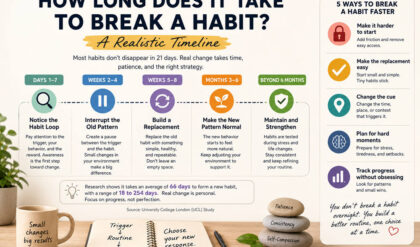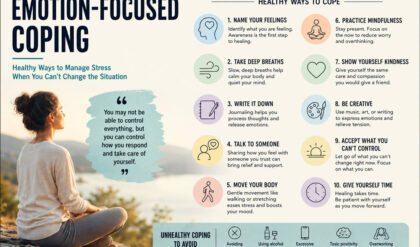

Bad habits do not usually disappear because we promise to “do better.” They change when we understand what keeps them going and build a system that makes the old pattern harder to repeat.
Maybe your habit is scrolling too much, procrastinating, emotional eating, overspending, biting your nails, staying up late, or reacting too quickly when you are stressed. Whatever it is, the goal is not to become perfect overnight. The goal is to interrupt the pattern, replace it with something healthier, and return to that better choice more often.
Breaking a bad habit permanently does not mean you never feel tempted again. It means the habit no longer controls your daily life.
Why Bad Habits Are So Hard to Break
A bad habit is not just a poor choice you keep making. It is often a loop your brain has learned to repeat.
Most habits follow a simple pattern:
- Cue: Something triggers the habit.
- Craving: You want relief, comfort, pleasure, or escape.
- Response: You do the habit.
- Reward: You feel better for a moment.
That reward is what keeps the habit alive. Even when the habit hurts you later, it may still give you something useful in the moment, such as distraction, calm, control, excitement, or relief.
This is why “I just need more discipline” is rarely enough. To break a bad habit for good, you need to understand what need the habit is meeting and find a better way to meet it.
How to Break a Bad Habit Permanently
1. Identify the Real Trigger
Before you try to stop the habit, notice when it happens.
Ask yourself:
- When do I usually do this?
- Where am I?
- What am I feeling?
- Who am I around?
- What happened right before the urge started?
For example, you may think your bad habit is “I eat too much at night.” But the real trigger might be stress after work, boredom after dinner, or feeling like you finally have a moment to yourself.
Once you know the trigger, the habit becomes easier to work with. You are not fighting a vague weakness. You are changing a specific pattern.
2. Be Honest About the Reward
Every bad habit gives you some kind of reward, even if it is temporary.
Scrolling gives quick entertainment. Procrastination gives short-term relief from pressure. Complaining releases frustration. Overspending creates excitement. Snacking can feel comforting.
Instead of judging yourself, ask: What am I getting from this habit?
This question matters because a replacement only works if it meets the same need in a healthier way. If your habit gives comfort, your replacement should feel comforting. If it gives stimulation, the replacement should not feel boring. If it gives escape, you need a better way to pause.
3. Replace the Habit With a Better Action
One of the biggest mistakes people make is trying to remove a habit without choosing what comes next.
“I will stop checking my phone at night” is a start, but it is not complete.
A stronger version is:
“After I put my phone on the charger across the room, I will read two pages of a book.”
Your brain responds better to clear instructions. “Do this instead” is more useful than “don’t do that.”
Try this simple formula:
When I feel the urge to [bad habit], I will [better action] for two minutes.
This kind of “when-then” plan is similar to what psychologists call implementation intentions: a clear plan that connects a situation with a specific action.
Examples:
- When I want to snack from stress, I will make tea and sit for five minutes.
- When I want to scroll, I will stand up and stretch.
- When I want to procrastinate, I will work for just three minutes.
- When I want to complain, I will write down one thing I can control.
The replacement does not need to be impressive. It needs to be easy enough to repeat.
4. Make the Bad Habit Harder to Do
Willpower fades quickly when the habit is easy.
If your phone is beside your bed, scrolling is easy. If junk food is on the counter, eating it is easy. If shopping apps are one tap away, spending is easy.
Do not rely on discipline alone. Change the environment.
You can:
- Move tempting items out of sight.
- Delete apps that trigger the habit.
- Log out of accounts after using them.
- Keep your phone in another room.
- Set spending limits.
- Block distracting websites.
- Avoid situations that keep pulling you back.
This is not weakness. It is smart habit design.
The more friction you add between the urge and the action, the more time you give yourself to choose differently.
5. Make the Better Choice Easier
At the same time, make the better action simple.
If you want to stop staying up too late, prepare your room earlier. If you want to stop eating fast food, keep easy meals ready. If you want to stop procrastinating, open the document before you take a break.
Better habits should not require a dramatic effort every time. Research on healthy behavior change often points to practical supports like self-regulation, stress coping, and social support, not just motivation.
Try setting up your space in a way that supports the person you want to become:
- Keep a water bottle on your desk.
- Put a book where your phone usually sits.
- Lay out workout clothes the night before.
- Save healthy snacks where you can see them.
- Keep your workspace clear.
- Use simple reminders where you will notice them.
Small setup changes can remove a lot of daily resistance.
6. Start Smaller Than You Think You Need To
When people want permanent change, they often start too big.
They decide they will never do the habit again, completely change their routine, wake up earlier, eat perfectly, exercise daily, and become a brand-new person by Monday.
That pressure usually backfires.
Small changes work better because they are easier to repeat.
Instead of “I will never procrastinate again,” try “I will work on the task for five minutes.”
Instead of “I will quit social media forever,” try “I will keep my phone away for the first 30 minutes after waking up.”
Instead of “I will stop emotional eating completely,” try “I will pause for two minutes before eating when I am stressed.”
Small actions may not look impressive, but they build trust with yourself. That trust is what makes bigger change possible.
7. Plan for the Urge Before It Shows Up
Urges feel stronger when you meet them unprepared.
A craving, impulse, or emotional reaction can make the habit feel automatic. That is why you need a plan before the difficult moment arrives.
Try this:
When the urge comes, I will pause, breathe, wait 10 minutes, and then choose my next action.
The delay matters. Urges often rise and fall like a wave. You do not have to argue with the urge or make it disappear. You only have to avoid obeying it immediately.
During the pause, do something that changes your state:
- Walk outside.
- Drink water.
- Take five slow breaths.
- Text someone.
- Write one sentence about what you feel.
- Move to another room.
- Set a timer and wait.
This teaches your brain that an urge is uncomfortable, but it is not a command.
8. Track the Pattern, Not Just the Streak
Streaks can be motivating, but they can also become a trap.
If you focus only on perfect days, one slip can make you feel like you failed. Then it becomes easy to think, “I already messed up, so what’s the point?”
A better approach is to track patterns.
Notice:
- What time of day is hardest?
- What emotions show up before the habit?
- What situations make the habit easier to repeat?
- What helped you pause?
- What made the better choice easier?
This turns mistakes into information.
For example, if the habit comes back when you are tired, the problem may not be your character. The problem may be your sleep, workload, or evening routine.
Tracking helps you adjust the system instead of attacking yourself.
9. Drop the All-or-Nothing Mindset
Permanent change does not mean you never struggle again. It means you recover faster.
A slip is not the same as failure. A bad moment is not a bad identity.
After a slip, ask:
What happened, and what will I do next?
Then reset simply:
- Name what happened without drama.
- Identify the trigger.
- Choose one next right action.
- Return to the better pattern as soon as possible.
For example:
“I scrolled for an hour because I felt overwhelmed. I’m putting my phone away now and going to bed.”
That kind of response keeps one slip from turning into a full return to the old habit.
10. Build an Identity That Supports the Change
Long-term habit change becomes easier when it connects to who you are becoming.
Instead of saying, “I am trying not to be lazy,” try, “I am becoming someone who starts before I feel ready.”
Instead of “I am bad with money,” try, “I am becoming someone who pauses before spending.”
Instead of “I have no self-control,” try, “I am learning how to manage urges.”
This is not fake positivity. It is direction.
Your identity is shaped by repeated evidence. Every time you choose the better action, even in a small way, you give yourself proof that change is possible.
What to Do When the Habit Comes Back
Old habits often return during stress, boredom, grief, burnout, or major life changes. That does not mean you are back at the beginning. It means your system needs support.
When the habit comes back, look at what changed around you.
Ask yourself:
- Am I more stressed than usual?
- Am I sleeping less?
- Am I lonely, bored, or overwhelmed?
- Did I remove my supports too soon?
- Did I expect myself to be perfect?
Then return to the basics. Make the bad habit harder. Make the better habit easier. Start with the smallest version of the change.
It also helps to practice self-compassion. Being honest with yourself is important, but harsh self-criticism often makes people feel more stuck, not more capable.
You do not have to restart your whole life. You only have to restart the pattern.
Summary
Breaking a bad habit permanently is not about hating yourself into change. It is about understanding the habit loop, changing your environment, replacing the old behavior, and learning how to recover when you slip.
Start with the trigger. Understand the reward. Choose a better replacement. Add friction to the bad habit and make the better choice easier. Keep the steps small enough to repeat.
The habit may feel strong now, but it was built through repetition. That means it can be weakened through repetition too.
You do not need a perfect fresh start. You need one honest pause, one better choice, and a system that helps you make that choice again tomorrow.