
Starting a new habit is usually the easy part. You feel inspired, make a plan, and tell yourself this time will be different.
Then life gets busy. You miss a day. Your energy drops. The habit that felt exciting suddenly feels like one more thing to manage.
That does not mean you lack discipline. Most habits fail because they are too big, too vague, or too dependent on motivation. A habit that sticks needs a simple structure you can repeat even on normal, messy days.
Start With One Habit, Not a Whole Life Makeover
When you want to improve your life, it is tempting to change everything at once. You may want to wake up earlier, eat better, exercise, read more, clean more, and spend less time on your phone.
The problem is that too much change creates pressure. Pressure makes it harder to stay consistent.
Choose one habit first. Make it clear and realistic. Instead of saying, “I need to be healthier,” choose one small action:
- Walk for 10 minutes after lunch
- Drink a glass of water after brushing your teeth
- Read two pages before bed
- Stretch for five minutes in the morning
- Write down tomorrow’s top three tasks
One small habit may not feel impressive, but it gives you something more important: proof that you can follow through. If you are working on health-related routines, the NIDDK’s guide to changing habits for better health is a helpful reminder that progress often happens in stages, not overnight.
Make the Habit Smaller Than You Think It Should Be
A sticky habit often starts very small.
If you want to work out, begin with five minutes. If you want to journal, write one sentence. If you want to meditate, sit quietly for one minute. If you want to clean more, start with one surface.
Small habits work because they reduce resistance. On a tired day, a 45-minute workout may feel impossible. But putting on your shoes and walking for five minutes feels doable.
The goal at the beginning is not to push yourself as hard as possible. The goal is to build the pattern.
Once the habit feels normal, you can make it bigger. Start with the version you can repeat.
Attach the Habit to Something You Already Do
A habit needs a clear place in your day. If you only say, “I’ll do it later,” it is easy to forget or put it off.
Connect the new habit to something you already do. This gives your brain a natural reminder. This idea is often connected to habit stacking, where a new action is linked to an existing routine.
Use this simple formula:
After I [current habit], I will [new habit].
For example:
- After I make coffee, I will write my top priority for the day.
- After I brush my teeth, I will stretch for two minutes.
- After I close my laptop, I will take a short walk.
- After I get into bed, I will read one page.
The existing routine becomes the trigger. You no longer have to wait for the perfect mood or remember it from scratch.
Make Your Environment Support the Habit
Your surroundings can either make a habit easier or quietly work against it.
If your running shoes are buried in the closet, a morning walk feels harder. If your phone is beside your bed, scrolling becomes the easiest choice. If your book is in another room, reading before sleep becomes less likely.
Set up your space so the habit is easy to start.
Put your workout clothes out the night before. Keep a book on your pillow. Place a water bottle on your desk. Leave a notebook beside your coffee maker. Put distractions farther away.
You do not have to rely on willpower for every small decision. Make the better choice more visible, more convenient, and easier to begin.
Focus on Showing Up, Not Being Perfect
Perfection is one of the fastest ways to ruin a new habit.
You miss one day and think, “I already failed.” Then one missed day turns into a missed week.
A better rule is simple: get back to it quickly.
If you skip your walk today, take a shorter walk tomorrow. If you forget to journal at night, write one sentence in the morning. If you do not have time for your full routine, do the smallest version.
The habit does not need to look perfect every day. It needs to stay connected to your life.
Consistency is not about never missing. It is about not letting one miss become a full stop.
Create a Minimum Version for Busy Days
Some days will not go as planned. You may be tired, traveling, stressed, sick, or overloaded with work. If your habit only works on easy days, it will not last.
Create a minimum version ahead of time.
For example:
- Full habit: 30-minute workout
Minimum version: 5-minute walk - Full habit: Write one page
Minimum version: Write three sentences - Full habit: Meditate for 10 minutes
Minimum version: Take five slow breaths - Full habit: Clean the kitchen
Minimum version: Clear the sink
This gives you a way to keep the habit alive without forcing an unrealistic standard. The minimum version is not a failure. It is how you stay consistent when life is not ideal.
Make the Habit Feel Rewarding
Your brain repeats actions that feel rewarding. That is why long-term goals can be hard. The reward may be real, but it feels far away.
Make the habit satisfying now.
Check it off on a calendar. Play music while you clean. Listen to a podcast while you walk. Use a notebook you enjoy. Drink tea after your evening routine. Take a moment to notice, “I kept my promise today.”
The reward does not need to be big. It just needs to give your brain a small reason to want to repeat the action.
When a habit feels punishing, you will avoid it. When it feels doable and even a little enjoyable, it becomes much easier to keep.
Track Progress Without Turning It Into Pressure
Tracking can help you see that your effort is adding up. You can use a habit app, calendar, checklist, or simple notebook.
Keep it light. Mark the days you complete the habit, then look for patterns.
If you keep missing the same habit, do not use that as proof that you are bad at discipline. Use it as information.
Maybe the habit is too big. Maybe the timing is wrong. Maybe the reminder is not clear. Maybe your environment needs to change.
Tracking should help you adjust, not shame yourself.
Connect the Habit to the Person You Want to Become
A habit gets stronger when it feels connected to your identity.
Instead of saying, “I’m trying to exercise,” think, “I’m becoming someone who moves every day.”
Instead of saying, “I’m bad at routines,” think, “I’m learning to keep small promises to myself.”
This may sound simple, but it matters. Every time you repeat the habit, you give yourself evidence that this is who you are becoming.
You do not need to feel confident before you start. Confidence grows when your actions begin to match the story you want to believe about yourself.
Remove One Obstacle at a Time
When a habit does not stick, pause before blaming yourself. Often, the problem is not your character. It is the setup.
Ask:
- Is this habit too big?
- Is the timing realistic?
- Do I have a clear reminder?
- Is there too much friction?
- Am I expecting results too quickly?
- Can I make the first step easier?
Then change one thing.
If evening workouts never happen, try morning or lunchtime. If reading before bed fails, keep the book on your pillow. If meal planning feels overwhelming, plan only breakfast first.
Small adjustments can make a habit much easier to repeat. Even with willpower, your setup matters because it is much easier to follow through when your goal is clear, visible, and realistic.
Give the Habit Time to Feel Normal
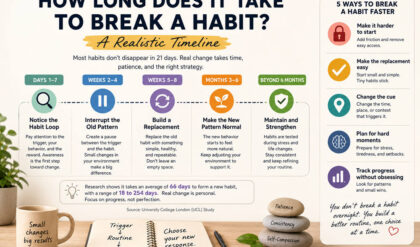
New habits often feel awkward before they feel natural. That is part of the process.
At first, the habit may feel like extra effort. You may forget. You may need reminders. You may not enjoy it right away.
Stay with it long enough for the action to become familiar. You are training your brain to expect a new pattern. Mayo Clinic also notes that habits can be hard to change because they become familiar patterns in daily life.
Do not judge the habit only by how it feels in the first few days. Repetition is what turns effort into routine.
Summary
Learning how to build a habit that sticks is not about forcing yourself to be perfect. It is about making the habit easier to repeat.
Start with one small action. Attach it to something you already do. Set up your environment so the habit is easy to begin. Use a minimum version on hard days. Make the habit rewarding, track it lightly, and adjust when something is not working.
A lasting habit does not need to be dramatic. It needs to be repeatable.
Small actions, done often, can quietly change the way you live.