
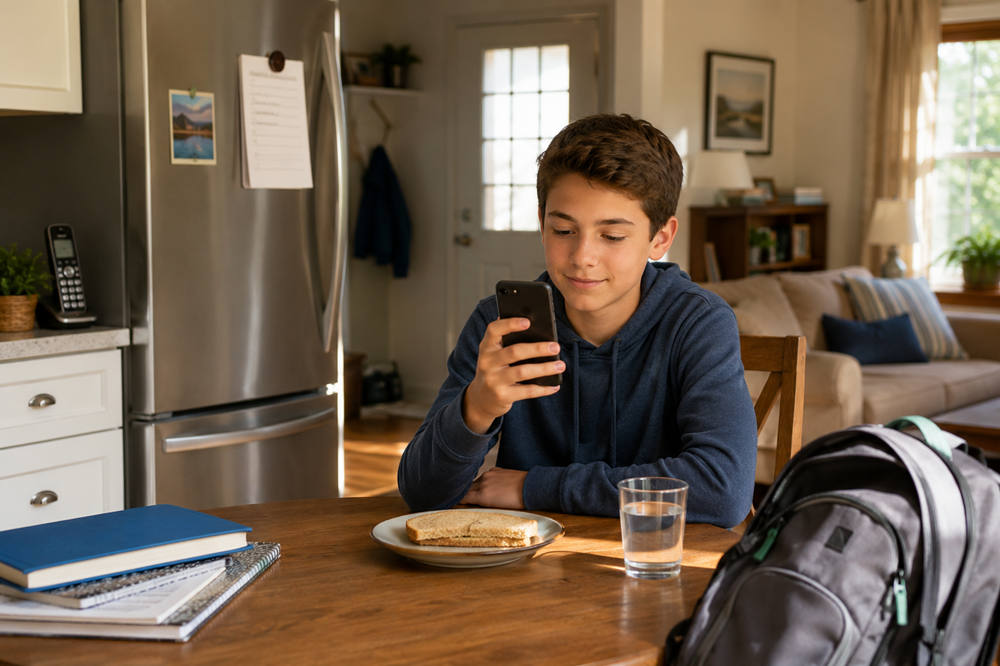
Many parents eventually ask the same question: how old does a child have to be to stay home alone?
The answer depends on your local law, your child’s maturity, and the situation. For many families, ages 11 to 13 are a common starting point for short periods at home alone, but some children need more time.
Before you decide, look at whether your child can follow rules, stay calm, contact you, and handle basic safety steps while you are away.
So, What Age Can a Child Stay Home Alone?
A good general guideline is that many children are not ready to stay home alone until around age 11 or 12. Longer periods usually make more sense for older children or teens.
Still, age by itself is not enough. A responsible 11-year-old may be fine alone for 30 minutes after school, while a 13-year-old who panics easily or ignores rules may not be ready yet.
Safe Kids Worldwide notes that many children are ready around age 12 or 13, but maturity matters. The better question is not only “How old is my child?” but “Can my child stay safe, calm, and responsible while I am gone?”
Check Your State’s Home Alone Laws First
Before leaving a child home alone, check your state or local rules. Some places have specific age guidelines. Others do not give one clear age but may still consider it unsafe if a child is left alone in a risky situation.
For example, Maryland law says a child under age 8 cannot be left alone in a home, building, or vehicle unless a reliable person at least 13 years old is with them. You can review the rule through the Maryland General Assembly.
Oregon law focuses on whether a child under 10 is left unattended in a way that could endanger their health or welfare. The wording is available in the Oregon Revised Statutes.
Illinois is another reminder to check current law instead of relying on old advice. Its law looks at whether a minor was left without supervision for an unreasonable period of time without regard for the child’s safety or welfare. You can read the current language through the Illinois General Assembly.
Because laws and guidance can change, it is always smart to check your state’s child welfare agency or local legal guidance before making home-alone care a regular routine.
Age Guide for Leaving Kids Home Alone
These are general safety guidelines, not legal rules. Always follow your local law first.
Under Age 8
In most situations, children under 8 should not be left home alone. Even if they are bright and independent, young children are usually not ready to handle emergencies, strangers, injuries, alarms, power outages, or fear on their own.
At this age, children may understand rules when an adult is nearby but forget them when they feel scared, bored, or excited.
Ages 8 to 10
Some children in this age range may handle very short moments alone, such as a parent stepping outside briefly or going to a nearby neighbor. But most are not ready to stay home alone for longer periods.
If your local law allows it, keep the time short, stay close by, and make sure another trusted adult is easy to reach. Children this young should not be responsible for younger siblings.
Ages 11 to 12
This is often when some children can begin staying home alone for short periods during the day. For example, a mature child may be able to stay home for 30 minutes to one hour after school.
Before trying it, make sure your child can follow rules, use a phone, stay calm, avoid unsafe appliances, and explain what they would do in an emergency.
Ages 13 to 15
Many teens in this range can stay home alone for longer periods, especially during the day or early evening. They still need clear rules, not just a casual “be careful.”
Talk about visitors, cooking, screen use, check-ins, going outside, and what to do if plans change.
Ages 16 and Older
Older teens are often ready for more independence. Some may be able to stay home alone for extended periods, depending on their maturity and the situation.
Overnight stays are a bigger decision. Before allowing it, think about your teen’s judgment, the neighborhood, weather, emergency contacts, local law, and whether a trusted adult can help nearby.
Signs Your Child May Be Ready
Your child may be ready to stay home alone if they can:
- Follow household rules without constant reminders
- Stay calm when something unexpected happens
- Lock and unlock doors safely
- Use a phone responsibly
- Contact you and another trusted adult
- Explain when to call 911
- Avoid opening the door to strangers
- Prepare a simple snack without risky cooking
- Handle boredom without unsafe choices
- Tell the truth about what happened while you were gone
Readiness is not about being “good” or “smart.” A child can be kind, capable, and loving but still not ready to manage stress alone.
Signs Your Child Is Not Ready Yet
Your child may need more time if they:
- Feel scared about being alone
- Forget rules when nervous or excited
- Take unsafe risks
- Fight often with siblings
- Struggle to use a phone responsibly
- Do not know their address or emergency contacts
- Open the door without thinking
- Hide mistakes from adults
- Panic during small problems
- Need help with basic self-care
If your child says they are not comfortable staying home alone, listen. Confidence matters. A frightened child may freeze, cry, call repeatedly, or make unsafe choices because they feel overwhelmed.
What Your Child Should Know Before Staying Home Alone
Before leaving your child alone, walk through the basics together. Do not assume they know what to do just because it seems obvious to you.
Your child should know:
- Their full name, address, and phone number
- Your phone number and where you will be
- A backup adult they can call
- When to call 911
- What to do if there is smoke, fire, or a gas smell
- What to do if the power goes out
- What to do if they get hurt
- What to do if someone knocks or rings the doorbell
- Which appliances they are allowed to use
- Whether they can go outside
- Whether friends can come over
The American Red Cross recommends creating a safety plan, setting rules, making sure children know how to reach adults, and reviewing emergency steps before children stay home alone.
Start With a Practice Run
Do not make the first time a long absence. Start small.
You might leave for 10 or 15 minutes while staying nearby. Afterward, ask your child how it felt. Were they calm? Did they follow the rules? Did anything confuse them?
If it goes well, slowly increase the time.
A simple practice plan may look like this:
- Leave for 10 minutes while you stay close by.
- Try 20 to 30 minutes during the day.
- Practice the after-school routine.
- Add check-in calls or texts.
- Review what went well and what needs work.
This helps your child build confidence without putting too much pressure on them all at once.
Set Clear Home Alone Rules
Children feel safer when the rules are simple and specific. Instead of saying, “Be good,” explain exactly what is allowed.
For example:
- Keep the doors locked.
- Do not open the door for anyone.
- Answer only approved calls or texts.
- Do not use the stove or oven unless you have agreed.
- Do not invite friends over.
- Stay inside unless you made another plan.
- Call or text when they get home.
- Call 911 for real emergencies.
- Contact the backup adult if you do not answer.
Write the rules down and place them somewhere easy to see, such as on the fridge or near the family calendar.
Should an Older Child Watch Younger Siblings?
Staying home alone is one responsibility. Watching younger siblings is another.
A child who can safely stay alone may not be ready to care for a toddler, calm a crying child, break up sibling fights, or make decisions for someone else. Babysitting requires patience, judgment, and emotional control.
Before letting an older child watch younger siblings, ask:
- Can they stay calm when a younger child refuses to listen?
- Can they handle sibling conflict safely?
- Do they know what to do if the younger child gets hurt?
- Are they willing to help, or do they feel forced?
- Can they reach you quickly?
- Is another adult nearby if something goes wrong?
If the answer is no, wait. It is better to build responsibility slowly than to put both children in a stressful situation.
Summary
A child often needs to be around 11 to 13 before many families consider short periods at home alone, but there is no one-size-fits-all age. Local laws, maturity, safety skills, and the home environment all matter.
Before deciding, check your state rules, talk through emergency plans, set clear home-alone rules, and start with short practice periods. Your child should know how to contact you, handle basic problems, follow directions, and feel comfortable being alone.
The best decision is not based on age alone. It is based on whether your child can stay safe, calm, and responsible while you are away.