Small business branding often starts to feel urgent when your logo, website, social media, and customer materials no longer look like they belong to the same business. Maybe your colors keep changing. Maybe your message feels unclear. Or maybe customers understand what you do only after you explain it three different ways.
That is where branding services can help. The right support can make your business look more professional, sound more confident, and feel easier to recognize. But you do not need to buy the biggest package or act like a national company. You need branding that fits your size, budget, audience, and goals.
What Are Branding Services for Small Business?
Branding services are professional services that shape how people see, understand, and remember your business. They can include your logo, colors, fonts, tagline, website style, social media design, packaging, signs, brand voice, and customer-facing materials.
A strong brand is not only about looking nice. It helps customers answer simple questions quickly: What does this business offer? Who is it for? Why should I trust it?
The U.S. Chamber of Commerce explains that branding can show up through many parts of a business, including signage, advertising, store displays, and tone of voice. For small businesses, that matters because customers often judge your business before they ever call, book, visit, or buy.
Common Branding Services Small Businesses May Need
Not every business needs the same branding package. A local bakery, cleaning company, online shop, consultant, salon, and landscaping business may all need different support. Still, most branding services fall into a few main areas.
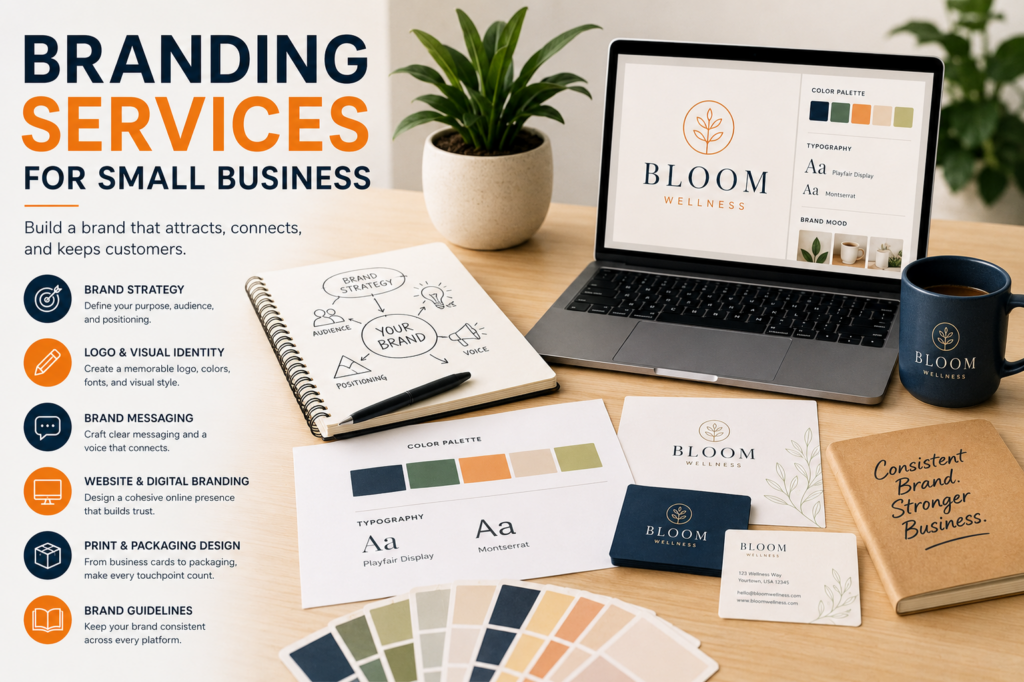
Brand strategy helps define your audience, position, values, personality, and main message. This is the foundation behind your visuals.
Logo design gives your business a recognizable symbol or wordmark. A logo is important, but it works best when it fits a clear strategy.
Visual identity includes colors, fonts, image style, icons, patterns, and layout rules.
Brand messaging shapes your tagline, short business description, website copy, service descriptions, and tone of voice.
Website branding makes sure your website matches the feeling and promise of your business.
Social media branding can include profile images, post templates, highlight covers, and a consistent design style.
Print and packaging design may include business cards, menus, flyers, labels, boxes, brochures, signs, and customer handouts.
Brand guidelines put your logo, colors, fonts, design rules, and voice into one simple document. Adobe notes that a brand style guide is especially useful when working with freelancers, agencies, or other creative partners.
Why Branding Services Matter for Small Businesses
Small businesses often compete with bigger companies, cheaper options, and crowded local markets. Good branding helps you look more professional, but it also makes your business easier to understand.
Branding can help you:
- Make a stronger first impression
- Build trust before a customer contacts you
- Look consistent across your website, social media, signs, and printed materials
- Explain your offer more clearly
- Stand out from similar businesses
- Make your marketing easier to repeat
- Create a smoother customer experience
Consistency is one of the biggest benefits. The Small Business Administration’s brand guide focuses on visually consistent communication materials that are easy for people to understand. Small businesses can use the same idea on a smaller scale. When your materials feel connected, your business feels more organized and trustworthy.
Which Branding Services Should You Start With?
The best place to start depends on where your business is right now.
If you are starting a new business, focus on the basics: your name, positioning, logo, color palette, fonts, short brand message, and simple guidelines. You do not need a huge brand book, but you do need enough direction to look consistent from the beginning.
If your business is already open but feels messy, start with a brand cleanup. That may include updating your logo, choosing better colors, rewriting your website copy, improving social media templates, and making your customer materials match.
If your business is growing, you may need deeper strategy. This can include clearer audience targeting, stronger messaging, a better website, updated service pages, photography direction, and a brand guide your team can use.
If your business feels outdated, a rebrand may help. A rebrand is more than changing colors. It should clarify what your business stands for now, who you serve, and how you want customers to see you.
Branding Agency vs Freelancer vs DIY Tools
There are three common ways to handle branding: hiring an agency, working with a freelancer, or using DIY tools.
A branding agency is usually best for larger projects. Agencies often provide strategy, design, messaging, website support, and marketing direction. This can be a good fit if you are launching a serious brand, opening multiple locations, or planning a full rebrand.
A freelancer can be a smart choice for focused work, such as logo design, brand guidelines, packaging, website graphics, or social media templates. Freelancers are often more affordable than agencies, but the quality depends on their experience and process.
DIY tools can help when your budget is tight. They are useful for early ideas, simple graphics, or temporary materials. Just be careful before building your full identity around a quick logo or name. Your business name, logo, or slogan may function as a trademark, so it is worth checking basic trademark guidance before investing heavily in a brand identity.
Why Website Branding Matters Too
Your website is often the place where customers decide whether your business feels credible. A strong logo will not help much if your website is confusing, outdated, slow, or visually disconnected from the rest of your brand.
Website branding includes more than colors and fonts. It also includes clear navigation, useful service pages, strong calls to action, professional images, and copy that sounds like your business. Nielsen Norman Group notes that website trust is influenced by factors such as design quality, clear information, current content, and connection to the wider web.
For a small business, this means your website should not feel like an afterthought. It should support the same message customers see on your social media, business card, storefront, email signature, and printed materials.
How to Choose the Right Branding Service Provider
Before hiring anyone, get clear on what you need. Do you only need a logo, or do you also need messaging, website visuals, social templates, packaging, and brand guidelines?
Look at the provider’s portfolio. Do the projects feel thoughtful, or do they all look the same? A good branding provider should be able to explain why they made certain design choices, not just show attractive samples.
Ask what is included in the package. Will you receive logo files for web and print? Will you get color codes, font recommendations, and usage rules? Will the provider help with messaging, or only visuals?
Also ask about ownership and file access. You should know whether you can use the final designs on your website, signs, packaging, ads, social media, and printed materials. You should also receive usable file formats, not just a small image of your logo.
Most importantly, choose someone who understands small business needs. Your branding should work in real life, not only in a polished presentation. It should look good on a website, invoice, storefront sign, Instagram post, email footer, and customer handout.
Common Branding Mistakes to Avoid
One common mistake is starting with a logo before knowing your message. A logo can only do so much if your business is hard to explain.
Another mistake is copying competitors too closely. It may feel safe, but it makes your business easier to forget. You can study your market without looking like everyone else.
Using too many fonts, colors, or design styles can also weaken your brand. This often happens when a business creates materials one at a time without a clear system.
Changing your brand too often is another problem. A refresh can help, but constant changes make it harder for customers to recognize you.
It is also easy to ignore the customer experience. Branding does not stop at visuals. If your website is unclear, your emails feel cold, or your signs are hard to read, customers may still feel unsure.
How Much Should a Small Business Spend on Branding?
Branding costs vary because the word “branding” can mean many different things. A simple logo project will cost less than a full brand strategy, identity system, website redesign, and marketing package.
Instead of choosing only by price, compare what you actually receive. A cheaper logo may not include strategy, guidelines, file formats, or messaging help. A more complete package may cost more upfront, but it can save time later because your website, social media, print materials, and ads all follow the same direction.
For many small businesses, the smartest move is to start with a strong foundation and build from there. Begin with strategy, logo, colors, fonts, messaging, and a simple style guide. Later, you can add packaging, photography direction, ad creative, campaign materials, or a more advanced website.
Summary
Branding services for small business should make your business clearer, more recognizable, and easier to trust. You do not need every service at once, and you do not need to copy what large companies do.
Start with the basics: know who you serve, what you want to be known for, how your brand should look, and how your message should sound. Then choose branding services that support those goals.
A strong small business brand is not just a logo. It is a consistent experience that helps customers remember you, trust you, and feel confident choosing you.