
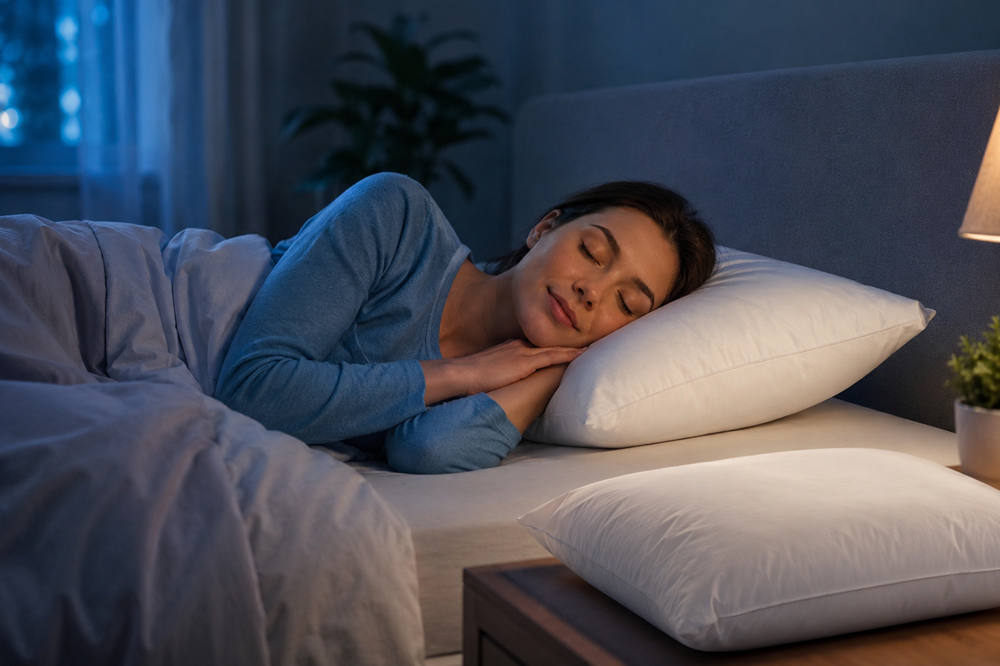
Sleeping without a pillow can be comfortable for some stomach sleepers, but it is usually not the best choice for side or back sleepers. What matters most is whether your pillow keeps your head, neck, and spine in a natural position.
A pillow should support your neck without pushing your head too far forward, backward, or sideways. In many cases, the problem is not using a pillow—it is using one that is too thick, too flat, or worn out.
Does Sleeping Without a Pillow Help?
There is limited research showing that everyone would benefit from sleeping without a pillow. Whether it feels comfortable depends largely on your usual sleeping position.
Going pillowless may help if your current pillow forces your neck into an awkward angle. However, removing support completely can also cause stiffness, shoulder tension, headaches, or restless sleep.
The goal is not to use the fewest pillows possible. It is to keep your body comfortably aligned throughout the night.
Is Sleeping Without a Pillow Better for Stomach Sleepers?
Stomach sleepers are the most likely to feel better without a pillow or with a very thin one.
When you sleep on your stomach, your head must turn to one side so you can breathe. A thick pillow lifts your head higher and may tilt your neck backward, adding more strain.
Using no pillow beneath your head may reduce that tilt. Some stomach sleepers also place a small pillow under the hips or lower abdomen to ease pressure on the lower back.
Still, stomach sleeping can strain the neck because the head remains turned for long periods. If you regularly wake with pain or stiffness, changing to a side or back position may help more than simply removing your pillow.
Should Back Sleepers Use a Pillow?
Most back sleepers benefit from a thin or medium-height pillow.
When you lie on your back, there is a natural curve beneath your neck. A supportive pillow fills that space while keeping your chin in a relaxed position. Guidance on sleeping with neck pain recommends supporting the neck’s natural curve without pushing the head too far forward.
Without a pillow, your head may tilt backward, especially on a firm mattress. This can leave your neck feeling tight or uncomfortable in the morning.
Back sleepers may also feel more comfortable with a small pillow under the knees, which can reduce pressure on the lower back.
Should Side Sleepers Sleep Without a Pillow?
Side sleepers usually need a pillow.
Your shoulder creates space between your head and the mattress. A pillow fills that gap and helps keep your neck straight. Without enough support, your head drops toward the bed, bending your neck sideways.
Side sleepers often need a thicker pillow than back or stomach sleepers, but the ideal height depends on shoulder width and mattress firmness.
A firm mattress may require a higher pillow because your shoulder does not sink deeply into the bed. A softer mattress may work better with a slightly lower pillow.
Placing another pillow between your knees can also help keep your hips and lower back aligned.
Possible Benefits of Sleeping Without a Pillow
Sleeping without a pillow may help when:
- You sleep on your stomach.
- Your current pillow is too thick.
- Your neck feels pushed forward or backward.
- You naturally feel more comfortable with less support beneath your head.
In some cases, the improvement comes from replacing an unsuitable pillow rather than removing it completely. Trying a thinner pillow is often a better first step.
Claims that pillowless sleeping prevents wrinkles, improves hair health, or permanently corrects posture are not strongly supported by research.
Possible Risks
Sleeping without enough support can contribute to:
- Morning neck stiffness
- Shoulder or upper-back tension
- Headaches
- Restless sleep
- Numbness or tingling in the arms or hands
These symptoms are more likely when your head is not level with the rest of your spine. An awkward sleeping position is also one of the common causes of temporary neck pain and stiffness.
How to Tell If You Need a Pillow
Pay attention to how your neck and shoulders feel when you wake up.
Your pillow may be the wrong height if:
- You need to fold or bunch it to become comfortable.
- Your chin is pushed toward your chest.
- Your head drops toward the mattress when you sleep on your side.
- You regularly place your hand or arm beneath your head.
- You wake with neck or shoulder pain that improves later.
- The pillow feels flat, lumpy, or uneven.
There is no single material or pillow shape that works for everyone. As Cleveland Clinic explains in its guidance on choosing a pillow for neck support, comfort and proper positioning are more important than choosing one particular filling.
How to Try Sleeping Without a Pillow Safely
Instead of removing your pillow immediately, begin with a thinner one. You can also use a folded towel so you can adjust the height gradually.
Test the new setup for several nights and notice:
- Whether you wake with pain or stiffness
- Whether you sleep through the night
- Whether your shoulders feel tense
- Whether headaches become more frequent
- Whether you feel rested in the morning
When lying on your back, your chin should not be forced tightly toward your chest or pointed sharply upward.
When lying on your side, your head should remain level rather than leaning toward the mattress or ceiling.
Return to your previous setup if the change causes new or worsening pain, numbness, tingling, weakness, or ongoing headaches.
When to See a Healthcare Professional
Changing your pillow may help mild discomfort, but it will not fix every cause of neck pain.
Speak with a doctor or physical therapist if your pain:
- Lasts for several weeks
- Keeps returning
- Started after an injury
- Travels into your shoulder or arm
- Includes numbness, tingling, or weakness
A healthcare professional can help determine whether the problem comes from your sleeping position, posture, muscles, joints, or nerves.
The Bottom Line
Sleeping without a pillow may work for some stomach sleepers, especially if a thick pillow is pushing the neck backward. Back sleepers usually need a thinner pillow, while side sleepers generally need enough height to fill the space above the shoulder.
Choose the setup that keeps your neck relaxed, your head level, and your body comfortable through the night.