
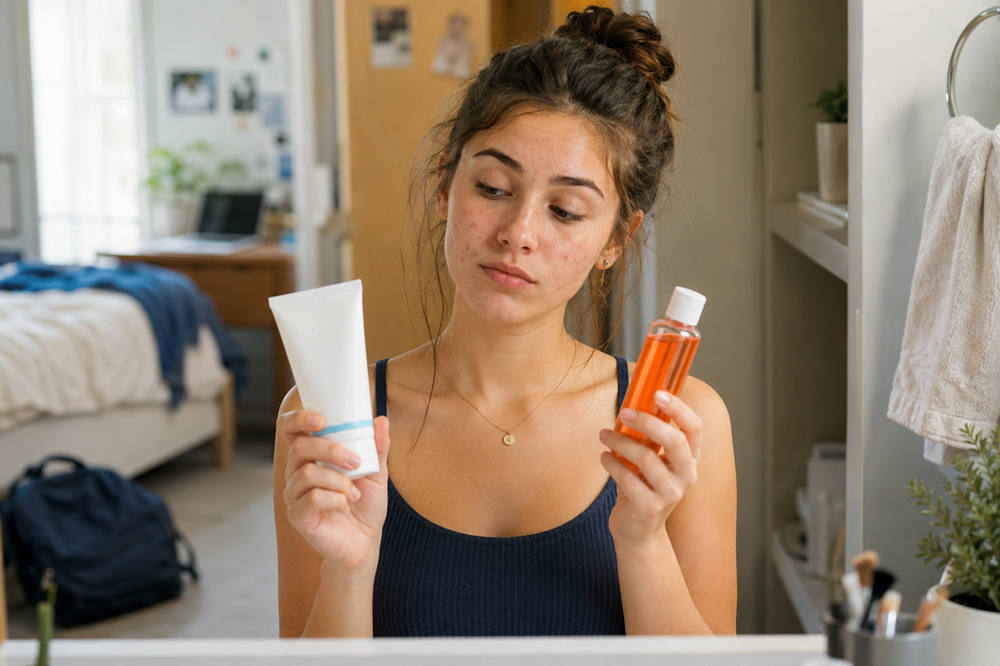
If you are a college student dealing with acne, you probably want something effective, affordable, and easy to use. Between La Roche-Posay and Neutrogena, the better choice depends on how sensitive your skin is and how much you want to spend.
La Roche-Posay is usually better for sensitive or easily irritated acne-prone skin. Neutrogena is usually better if you want a cheaper, widely available option.
Both brands use common acne-fighting ingredients, so the logo on the bottle matters less than the formula inside it.
La Roche-Posay vs. Neutrogena at a Glance
| Category | La Roche-Posay | Neutrogena |
|---|---|---|
| Best for | Sensitive, oily, or dehydrated skin | Oily skin and tighter budgets |
| Common acne ingredients | Salicylic acid and benzoyl peroxide | Salicylic acid and benzoyl peroxide |
| Product feel | Often lighter and less stripping | Varies from gentle to drying |
| Price | Usually higher | Usually lower |
| Availability | Drugstores, beauty stores, and online | Easy to find almost anywhere |
| Main advantage | Better for building a gentle routine | Better value and convenience |
When La Roche-Posay Is the Better Choice
La Roche-Posay may be worth the higher price if your skin gets red, tight, flaky, or uncomfortable after using acne products.
Its acne-focused Effaclar line includes cleansers and treatments made for oily and acne-prone skin. Many of the formulas are designed to feel lightweight, which can help if your face is oily but still becomes dehydrated.
La Roche-Posay may suit you better if:
- Your skin is sensitive or reactive.
- Acne washes often leave your face tight.
- You want fragrance-free options.
- You need a light moisturizer that does not feel greasy.
- You are already using a strong treatment and want the rest of your routine to remain gentle.
That does not mean every La Roche-Posay product is mild. A benzoyl peroxide treatment can still cause dryness, peeling, redness, or irritation, especially if you use too much too soon.
When Neutrogena Is the Better Choice
Neutrogena makes more sense if budget and convenience are your main concerns.
You can find its products at most pharmacies, supermarkets, and major retailers, which is helpful when you are living on campus and need to replace something quickly. The brand also offers a wide range of acne cleansers, spot treatments, and body acne products.
Neutrogena may be the better option if:
- You want to spend less.
- Your skin is oily and not especially sensitive.
- You need a basic salicylic acid cleanser.
- You want products for back, chest, or shoulder acne.
- You prefer something available near campus.
The main downside is that some Neutrogena acne products can feel harsh when used too often. If your face feels squeaky clean, tight, or sore after washing, the formula may be too drying for you. Excessive washing and scrubbing can irritate the skin rather than clear acne faster.
Which Brand Is Better for Your Type of Acne?
Blackheads and Clogged Pores
Look for salicylic acid from either brand.
Salicylic acid helps prevent dead skin cells from clogging the pores, making it particularly useful for blackheads, whiteheads, and small bumps.
Neutrogena is a practical budget choice for oily skin. La Roche-Posay may be more comfortable if your skin becomes irritated easily.
Red, Inflamed Pimples
Benzoyl peroxide is often a better choice for red, swollen pimples because it helps reduce acne-causing bacteria and inflammation.
Both brands offer benzoyl peroxide products, so start with the gentlest option you can find rather than automatically choosing the highest percentage. The American Academy of Dermatology includes benzoyl peroxide among its recommended topical acne treatments.
Benzoyl peroxide can also bleach towels, pillowcases, and clothing. Let it dry completely before your skin touches fabric, and consider using white towels if you live in a dorm.
Sensitive Skin With Acne
La Roche-Posay has a slight advantage because it is often easier to build a simple, gentle routine around the brand.
Still, check each label. Some Neutrogena products are also fragrance-free and suitable for sensitive skin, while some La Roche-Posay acne treatments can be strong.
Begin slowly when introducing a new active ingredient. Using a product every other day at first can help you see how your skin responds.
Very Oily Skin
Either brand can work.
Neutrogena may give you a stronger cleansing feel, while La Roche-Posay may feel less stripping. Avoid choosing a cleanser simply because it promises to remove all oil. Your skin still needs a healthy moisture barrier.
Washing more often is not necessarily better. For most people, gently cleansing twice a day and after heavy sweating is enough.
Acne Marks
Both brands sell products aimed at post-acne marks, but preventing new breakouts and wearing sunscreen are more important than adding several brightening products at once.
Flat brown or red marks can gradually fade. Indented or raised scars are different and usually need professional treatment.
A Simple Acne Routine for College Students
You do not need a shelf full of products. A basic routine is easier to follow during busy mornings, late study nights, and exam weeks.
Morning
- Wash with a gentle cleanser.
- Apply a lightweight moisturizer.
- Use broad-spectrum SPF 30 or higher.
Evening
- Cleanse your face.
- Apply one acne treatment.
- Follow with moisturizer.
Start with one main active ingredient. Do not introduce salicylic acid, benzoyl peroxide, an exfoliating toner, and a retinoid at the same time. That usually leads to irritation, not faster results.
You also do not need to use one brand for your whole routine. A Neutrogena treatment can work perfectly well with a La Roche-Posay cleanser or moisturizer.
Mistakes to Avoid
Buying the Strongest Product
Higher percentages can cause more irritation without necessarily giving you better results. Mayo Clinic recommends beginning with lower-strength acne products to reduce redness, dryness, and other side effects.
Using Several Medicated Products at Once
Using an acne cleanser, toner, spot treatment, scrub, and retinoid together can overwhelm your skin. Add one product at a time so you can tell what helps and what causes irritation.
Skipping Moisturizer
Acne-prone skin still needs moisture. In fact, a suitable acne-friendly moisturizer may make it easier for your skin to tolerate drying treatments.
Look for lightweight formulas labeled oil-free, noncomedogenic, or unlikely to clog pores.
Assuming Higher Price Means Better Results
La Roche-Posay may feel nicer on sensitive skin, but a well-chosen Neutrogena product can work just as well for the right person. Paying more does not guarantee clearer skin.
Switching Products Every Few Days
Acne treatments need consistency. Constantly changing your routine makes it difficult to tell what is helping and may repeatedly irritate your skin.
Final Verdict
Choose La Roche-Posay if your acne-prone skin is sensitive, easily irritated, or dehydrated and you can spend a little more.
Choose Neutrogena if you want an affordable, easy-to-find acne product and your skin tolerates stronger formulas well.
For many college students, the best routine may include products from both brands. Keep it simple, introduce treatments slowly, and focus on ingredients rather than brand loyalty.
If your acne is painful, cystic, leaving scars, or not improving with consistent over-the-counter care, visit your campus health center or a dermatologist. Professional treatment may save you more time and money than repeatedly trying new products.