
Most people want a clear number. Is it 21 days? 30 days? 66 days?
The honest answer is that habit formation depends on the habit itself. A small habit, like drinking water after breakfast, may feel natural after a few weeks. A bigger habit, like exercising every morning or changing your sleep schedule, often takes much longer.
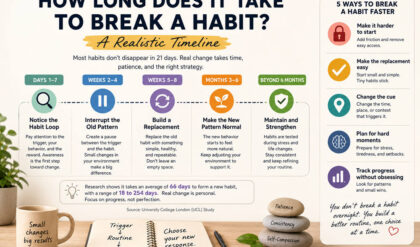
One well-known study from University College London found that it took people an average of 66 days to form a habit. But the full range was much wider, from 18 to 254 days.
So, a realistic answer is this: many habits take about two to three months to become automatic. Some are quicker. Some need more time. What matters most is repeating the behavior often enough, in a consistent situation, until it starts to feel normal.
Why the 21-Day Habit Rule Is Misleading
The “21 days to form a habit” idea is popular because it sounds simple and encouraging. Three weeks feels short enough to be motivating.
But real habits do not always follow a neat timeline.
Brushing your teeth at night is not the same as going to the gym before work. Writing one sentence in a journal is not the same as writing every morning for an hour. Some habits are easy to repeat. Others take more energy, planning, or emotional effort.
That does not mean 21 days is useless. It can be a good starting point. The problem comes when you expect a habit to feel automatic after three weeks and then feel discouraged when it still takes effort.
If your habit is not easy by day 21, you have not failed. You are probably still in the building stage.
A Realistic Habit Formation Timeline
Habit formation usually happens in stages. It is less like flipping a switch and more like making a path easier to walk.
Days 1–7: Getting Started
At the beginning, motivation is usually high. You feel ready to change, and the habit may even feel exciting.
This is also when people often make the habit too big. They plan to work out every day, completely change their diet, wake up at 5 a.m., or build a perfect morning routine all at once.
A better goal for the first week is simple: show up. Make the habit small enough that you can repeat it even on a busy day.
Days 8–30: Staying Consistent
This stage is often harder than the first week. The habit is no longer new, but it is not automatic yet.
You may forget. You may feel bored. You may start telling yourself, “I’ll do it tomorrow.”
That is normal. This is where a clear cue helps. A cue is the moment that reminds you to act, such as:
- After I make coffee, I will write my to-do list.
- After lunch, I will take a 10-minute walk.
- Before bed, I will read five pages.
The more predictable the cue, the easier the habit becomes to repeat.
Days 31–66: Making It Feel Normal
After a month or so, the habit may start to feel more familiar. It may not be effortless, but it usually takes less mental energy than it did in the beginning.
This is the stage where consistency matters more than intensity. You do not need to do the habit perfectly. You need to keep the pattern alive.
If you are building an exercise habit, a short walk still counts. If you are building a reading habit, a few pages still count. Keeping the habit small on hard days helps you avoid quitting completely.
After 66 Days: Strengthening the Habit
For some habits, this is when the behavior starts to feel automatic. For others, especially harder lifestyle changes, it may still need attention.
A 2024 review on health-related habit formation found that many habits can take around two to five months to develop, depending on the person, the behavior, and the situation. You can read more about it in this systematic review.
The main point is simple: do not quit just because your habit still takes effort after a few weeks. Effort does not mean it is not working.
Why Some Habits Take Longer Than Others
Some habits stick faster because they are small, clear, and easy to repeat. Others take longer because they involve more steps or more resistance.
For example, “drink a glass of water after brushing my teeth” is much easier than “be healthier.” One is a specific action. The other is a broad goal.
A habit may take longer if:
- It requires a lot of time or energy
- It depends on other people
- Your schedule changes often
- The reward feels far away
- The habit is too vague
- You do not have a clear reminder
- It feels unpleasant at first
This is why starting small works so well. A small habit gives your brain less to argue with.
Does Missing One Day Ruin a Habit?
No, missing one day does not ruin a habit.
Life happens. You may get sick, travel, have a busy day, or simply forget. One missed day is not the problem. The real issue is letting one missed day turn into a full stop.
A helpful rule is: do not miss twice if you can avoid it.
If you skipped your workout yesterday, do a shorter version today. If you forgot to journal last night, write one sentence tonight. The goal is not to protect a perfect streak. The goal is to return to the habit quickly.
Consistency is built through recovery, not perfection.
How to Form a Habit More Easily
You cannot force a habit to become automatic overnight, but you can make it easier to repeat.
1. Make the Habit Specific
Vague goals are hard to follow.
Instead of saying, “I want to read more,” say, “I will read five pages after dinner.”
Instead of saying, “I want to exercise,” say, “I will walk for 10 minutes after lunch.”
A clear habit tells you exactly what to do and when to do it.
2. Attach It to Something You Already Do
New habits are easier when they connect to an existing routine.
For example:
- After brushing my teeth, I will floss.
- After making coffee, I will stretch.
- After closing my laptop, I will tidy my desk.
This is often called habit stacking. It works because your current routine becomes the reminder for the new behavior.
3. Start Smaller Than Feels Necessary
Small habits may not feel impressive, but they are powerful because they are easier to repeat.
Start with one minute of meditation, five minutes of walking, or one sentence in a journal. Once the habit feels stable, you can slowly increase it.
The first goal is not to do the most. The first goal is to keep showing up.
4. Make the Habit Easy to See
Your environment can either support your habit or make it harder.
Put your book on your pillow if you want to read at night. Keep your walking shoes near the door. Place a water bottle on your desk. Remove distractions when possible.
A visible reminder reduces the need to rely on willpower.
5. Add a Small Reward
Long-term rewards are helpful, but your brain also likes quick feedback.
You can make a habit more satisfying by checking it off on a tracker, listening to music while doing it, enjoying a quiet moment afterward, or celebrating the fact that you followed through.
The reward does not need to be big. It just needs to make the habit feel worth repeating.
The Best Number to Aim For
If you want a practical target, aim for 60 to 90 days.
That gives you enough time to move past the early excitement and build real consistency. For simple habits, you may feel progress sooner. For harder habits, give yourself more time.
The exact number matters less than the system you build around the habit. A small habit repeated often will usually beat a big habit that only lasts a week.
Summary
So, how many days does it take to form a habit?
For many people, it takes around two to three months. Some habits may start feeling natural in a few weeks, while others can take several months.
Do not worry too much about finding the perfect number. Focus on making the habit clear, small, and easy to repeat. Attach it to something you already do, give yourself a simple reminder, and return quickly when you miss a day.
A habit is not built by being perfect. It is built by coming back to the action until it becomes part of your normal life.