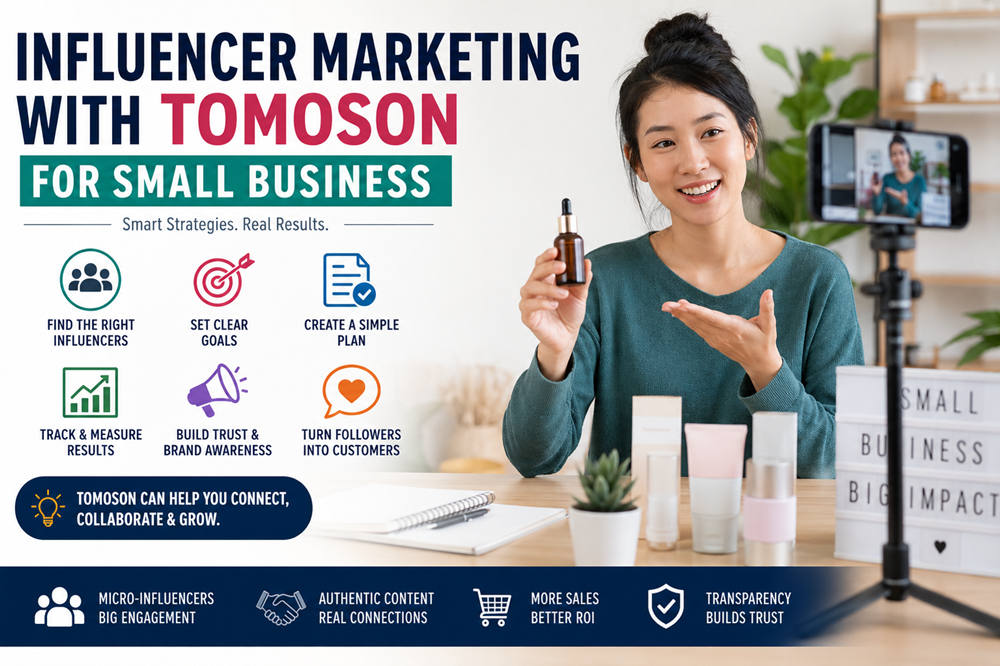
Small businesses do not need celebrity budgets to try influencer marketing. A good campaign can start with one product, one clear goal, and a creator whose audience already cares about that niche.
Tomoson is worth discussing in this space, but carefully. Its About page presents Tomoson as a resource for digital insights across influencer marketing, social media, personal branding, and digital entrepreneurship. Some Tomoson pages also describe it as a platform-style tool that connects businesses with influencers and supports campaign creation, creator applications, communication, and performance review. That makes it useful to look at, especially for small businesses trying to understand how influencer campaigns can work without building everything from scratch.
What Is Tomoson?
Tomoson is commonly connected with influencer marketing and brand-creator collaboration. In simple terms, it can be understood as an influencer marketing resource that discusses how brands and creators work together. Its guide to how Tomoson works describes steps such as creating a campaign, setting goals, reviewing influencer applications, and tracking campaign results.
For a small business, that structure can be helpful. Influencer marketing often becomes messy when everything happens through random direct messages, scattered spreadsheets, and unclear agreements. A more organized process can make it easier to decide what you want, who you want to work with, and how you will measure results.
Still, Tomoson should not be treated as a magic shortcut. A platform or resource can support the process, but it cannot fix a weak product, a vague offer, or a poor audience match. The business still needs a clear campaign goal and a creator who fits the brand.
Why Influencer Marketing Appeals to Small Businesses
Small businesses often need trust more than noise. Paid ads can help, but many customers still want to see real people using, reviewing, or recommending a product before they feel ready to buy.
That is where influencer marketing can help. A creator can show your product in a normal setting, explain how it works, answer audience questions, and give your brand a more human feel. This is especially useful for product-based businesses, local services, restaurants, salons, wellness brands, boutiques, online shops, and niche service providers.
For small businesses, micro-influencers are often more realistic than celebrity creators. They usually have smaller, more focused audiences, which can make their recommendations feel more personal and relevant.
That matters because a small business usually does not need everyone. It needs the right people. A local bakery may get better results from a food creator in the same city than from a large lifestyle account with followers spread across the country.
How Tomoson Can Fit Into a Small Business Plan
Tomoson can fit into a small-business marketing plan as a starting point for thinking through influencer campaigns. Its campaign-focused pages discuss steps such as setting goals, defining expectations, connecting with influencers, and reviewing campaign performance.
The value is not just finding creators. The real value is having a process.
Before reaching out to influencers, a small business should know:
- What product or service is being promoted
- Who the campaign is trying to reach
- What type of content is needed
- Whether the goal is sales, awareness, reviews, or reusable content
- What the creator will receive
- How the post should disclose the partnership
- How results will be tracked
Without those answers, even a good creator may struggle to make useful content. With those answers, the campaign becomes easier to manage and easier to judge afterward.
Best Influencer Campaigns for Small Businesses
Small businesses usually do not need complicated campaigns. The best campaigns are clear, focused, and easy for customers to understand.
Product Review Campaigns
Product reviews are one of the most natural ways to use influencer marketing. They work well for beauty products, food, home goods, pet products, fitness items, books, digital tools, handmade products, and wellness brands.
A good review does not need to sound like an ad. In fact, it should not. The creator should be able to show the product honestly, explain what they liked, and give their audience a real sense of how it fits into daily life.
Local Awareness Campaigns
Local businesses can use influencer marketing to reach people nearby. A restaurant can invite local food creators. A salon can work with beauty creators in the area. A gym can collaborate with fitness creators who live nearby. A boutique can partner with local fashion or lifestyle creators.
For local campaigns, location often matters more than follower count. A creator with 6,000 local followers may be more useful than a creator with 100,000 followers who mostly live somewhere else.
Social Proof Campaigns
Sometimes the goal is not instant sales. Sometimes the goal is proof.
A creator’s video, photo, review, or testimonial can help future customers feel more comfortable. This type of content can support your website, product pages, email newsletters, and social media posts, as long as you have permission to reuse it.
For small businesses, social proof is powerful because it makes the brand feel less unknown.
Giveaway Campaigns
Giveaways can increase attention, but they should be used carefully. A giveaway that attracts random people who only want free products may not lead to real customers.
A better giveaway is specific. The prize should appeal to the same kind of person who might buy from you later. The creator should also explain why the product is worth trying, not just tell people to follow and tag friends.
User-Generated Content Campaigns
Some small businesses work with creators mainly for content. This can be smart, especially if the business needs better photos, short videos, unboxing clips, demonstrations, or lifestyle images.
A creator may understand lighting, angles, captions, short-form video, and social media storytelling better than the business owner has time to learn. That content can become useful beyond the original post.
How to Choose the Right Influencers
The best influencer is not always the one with the biggest audience. For small businesses, fit matters more than fame.
Look at the creator’s audience, tone, content quality, comments, and past brand partnerships. Are real people asking questions? Do the comments sound genuine? Does the creator’s style match your brand? Would your ideal customer trust this person?
A good creator for a small-business campaign should have:
- An audience that matches your customer
- Real engagement, not just high follower numbers
- Content that fits your product or service
- Clear communication
- A professional posting style
- Honest sponsored-content habits
- A niche or location that makes sense for your brand
For example, a small skincare brand may not need a general lifestyle influencer. It may get better results from a creator who focuses on sensitive skin, acne care, mature skin, budget beauty, or simple routines. The more specific the match, the easier it is for the audience to care.
What Small Businesses Should Track
Influencer marketing should not be judged only by likes. Likes can be nice, but they do not always show whether the campaign helped the business.
Better things to track include:
- Website visits
- Link clicks
- Discount code use
- Sales
- Email signups
- New followers
- Direct messages
- Comments from potential customers
- Saved posts
- Cost per usable content asset
Use simple tools where possible. A unique discount code, a campaign landing page, or a trackable link can make results easier to understand. Even if the campaign does not lead to many sales right away, it may still show which creators, products, messages, or content formats are worth testing again.
FTC Disclosure Rules Matter
Influencer partnerships need to be clear. The FTC disclosure rules say creators should disclose when they have a material connection with a brand. That connection can include money, free products, gifts, discounts, employment, family relationships, or other benefits.
This is not just a legal detail. It is also a trust issue.
A small business should never ask a creator to hide a partnership. Clear words like “ad,” “sponsored,” or “gifted by” are easier for audiences to understand than vague phrases. The disclosure should be easy to notice, not buried at the end of a long caption.
Add disclosure expectations to the campaign brief before the creator posts. That protects the business, the creator, and the audience.
Common Mistakes to Avoid
One of the biggest mistakes small businesses make is choosing influencers only by follower count. A large audience does not help much if it is the wrong audience.
Another mistake is giving unclear instructions. Creators need freedom to make content in their own voice, but they also need basic details: the product, the key message, the deadline, the link or code, and the disclosure requirements.
Small businesses should also avoid these common problems:
- Starting without a clear goal
- Working with creators who do not match the brand
- Sending products too late
- Forgetting to track links or discount codes
- Expecting one post to change the whole business
- Reusing creator content without permission
- Ignoring audience quality
- Treating influencer marketing like a one-time trick
A better approach is to start small, learn from the results, and improve the next campaign.
Is Tomoson Right for Every Small Business?
Tomoson may be useful for small businesses that want to understand or test influencer marketing in a more organized way. It is especially relevant for brands interested in product reviews, social media exposure, creator content, and niche visibility.
It may not be the right fit for every business. A company that needs advanced ecommerce reporting, large-scale creator payments, deep integrations, or a full ambassador program may need a different platform or a more customized system.
Before using Tomoson for a campaign, check its current features, pricing, and account options directly. Influencer marketing tools change over time, and your decision should be based on what is available now.
Other Ways Small Businesses Can Find Influencers
Tomoson is not the only way to find creators. Small businesses can also use manual outreach through Instagram, TikTok, YouTube, blogs, newsletters, and local community groups.
Ecommerce brands may also look at tools such as Shopify Collabs, which connects creators with brands through affiliate-style partnerships. Manual outreach can work well for very small campaigns, while a platform may make more sense when the business wants to manage more creators, track more results, or organize repeat campaigns.
The right choice depends on your budget, your product, your time, and how much structure you need.
A Simple Campaign Plan
Start with one product or service. Choose something easy to explain and easy for a creator to show.
Next, decide the goal. Do you want sales, reviews, awareness, email signups, local attention, or content you can reuse?
Then choose creators based on fit. Look for audience match, content quality, real engagement, and clear communication.
Write a short brief that covers the product, talking points, deadline, disclosure rules, tracking link or code, payment or gifting details, and content usage rights.
After the campaign goes live, review the results. Look beyond likes. Check clicks, sales, comments, saves, messages, and the quality of the content itself.
Summary
Influencer marketing with Tomoson can be a useful idea for small businesses, but the platform is only one part of the process. The real work is choosing the right creators, setting clear goals, following disclosure rules, and tracking what happens after the post goes live.
A small campaign can still be valuable when it is focused. Start with one clear offer, work with creators who match your audience, measure the results, and use what you learn to make the next campaign stronger.