
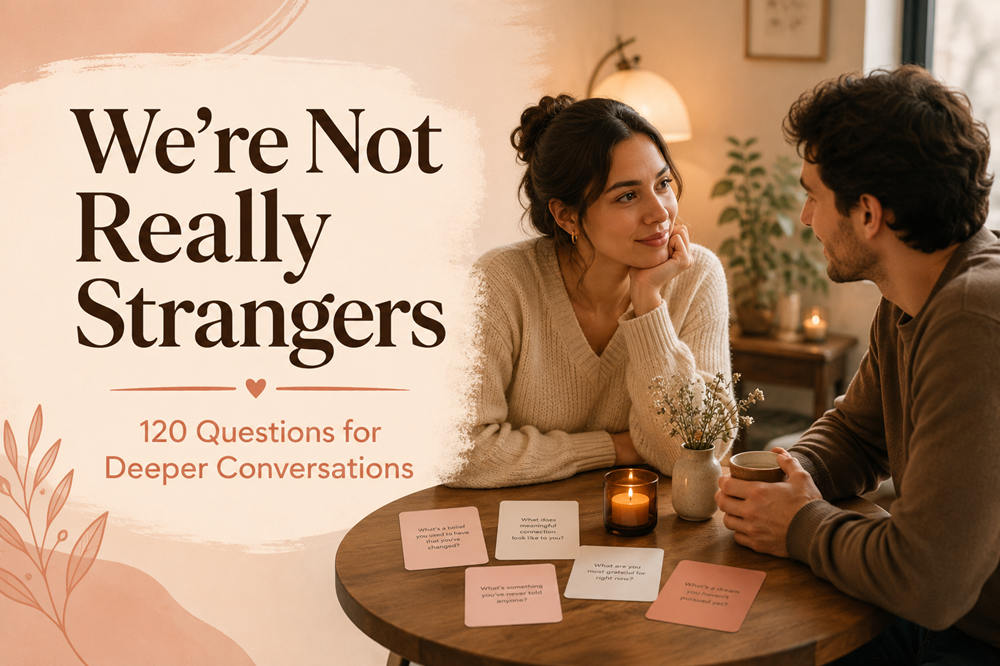
You can spend hours with someone and still avoid the things that truly matter. You might talk about work, school, shows, or weekend plans without learning what they fear, value, regret, or hope for.
We’re Not Really Strangers is a conversation card game built around three levels: Perception, Connection, and Reflection. The questions become more personal as the game continues, helping people move beyond small talk at a comfortable pace.
The prompts below follow that same general progression, but they are completely original and are not copied from the official deck. Use them with a partner, friend, family member, new acquaintance, or anyone you would like to know better.
How to Play
Take turns choosing and answering questions. Begin with Level One before moving into the deeper sections, especially when you are playing with someone you do not know well.
A few simple guidelines can make the conversation more comfortable:
- Give honest answers without pressuring anyone to overshare.
- Let people skip any question without explaining why.
- Ask follow-up questions when you are genuinely interested.
- Listen without interrupting or immediately offering advice.
- Keep phones and other distractions out of the way.
You do not need to finish every question. A good conversation may grow from just one or two prompts.
Level One: Perception Questions
These questions are about first impressions, visible traits, and the assumptions we make before knowing someone well.
- What was the first thing you noticed about me?
- What did you assume about me when we first met?
- Do I seem more introverted or outgoing?
- Which emotion do you think shows most clearly on my face?
- What kind of music do you imagine I listen to?
- Do I appear more organized or spontaneous?
- What job do you think I would enjoy?
- What do you think I usually order at a restaurant?
- Do I seem like someone who enjoys being surprised?
- What type of social situation would probably make me uncomfortable?
- Which of my qualities stands out first?
- Do I seem more competitive or relaxed?
- What do you think my ideal weekend looks like?
- Which subject could you imagine me talking about for hours?
- Do I appear to trust people quickly?
- What kind of student do you think I was?
- Do I seem more likely to plan a trip or follow someone else’s plan?
- What do you think makes me laugh?
- Which fictional character reminds you of me?
- Do I seem more guided by feelings or facts?
- What kind of compliment do you think I enjoy receiving?
- What do you imagine my room or home looks like?
- Do I seem like someone who holds grudges?
- What habit do you think I have?
- Which season matches my personality?
- What do you think I notice first about other people?
- Do I seem comfortable with attention?
- What do you imagine I do when I need to recharge?
- Which word would you use to describe my energy?
- What assumption about me would you like to confirm?
Level Two: Connection Questions
This level moves beyond first impressions. The questions focus on memories, relationships, fears, boundaries, and the experiences that have shaped you.
- When do you feel most like yourself?
- What makes you feel understood?
- Describe a moment when you felt genuinely proud of yourself.
- Which part of your personality took you the longest to accept?
- What lesson did you have to learn through experience?
- Who made you feel safe when you were younger?
- What do you miss about your childhood?
- Which childhood belief have you completely changed your mind about?
- What do you wish your younger self could see about your life now?
- Name a memory that always improves your mood.
- What do people often misunderstand about you?
- When is it hardest for you to ask for help?
- What kind of support feels most helpful when you are struggling?
- How can someone tell when you are having a difficult day?
- What helps you calm down when life feels overwhelming?
- Which emotion is hardest for you to express?
- What are you better at handling now than you were a few years ago?
- Name something you are still learning to forgive yourself for.
- What personal boundary did you learn to set too late?
- Which behavior makes you lose respect for someone?
- What makes an apology feel sincere to you?
- How do you usually respond when someone disappoints you?
- What does loyalty look like in everyday life?
- Which quality makes it easier for you to trust someone?
- What can make you feel lonely even when other people are around?
- Describe a time when you felt completely out of place.
- What kind of rejection has affected you the most?
- Which criticism tends to stay with you?
- What are you afraid people might judge you for?
- What is something you wish your family understood about you?
- Which relationship has taught you the most about yourself?
- What pattern are you trying not to repeat in your relationships?
- When have you stayed in a situation longer than you should have?
- What does a healthy friendship look like to you?
- What makes you feel appreciated?
- Which small gesture means more to you than people realize?
- What have you outgrown but still miss sometimes?
- Name a risk you are grateful you took.
- What dream do you rarely share with other people?
- Which fear has influenced too many of your choices?
- What would you try if you knew nobody would judge you?
- What do you wish you had more courage to say?
- Which version of yourself are you trying to become?
- What has recently made you question an old belief?
- Finish the sentence: “I feel safest with people who…”
Level Three: Reflection Questions
After sharing personal answers, use these questions to reflect on what you have learned about each other.
- Which of my answers surprised you?
- What do you understand about me now that you did not before?
- Which experience of mine helped you understand me better?
- What do you think we have in common?
- Which difference between us do you appreciate?
- What part of this conversation felt most honest?
- Did any of my answers change your first impression of me?
- Which question was most difficult for you to answer?
- What answer do you wish we had discussed for longer?
- What strength do you see in me?
- What do you think I underestimate about myself?
- Which part of my personality do you think deserves more appreciation?
- What do you think I need to hear right now?
- What would you encourage me to do more often?
- What do you hope becomes easier for me?
- What is something you would like us to talk about again?
- What did this conversation reveal about you?
- What do you think we could learn from each other?
- How do you think our connection has changed during this conversation?
- Finish the sentence: “After talking with you, I realize…”
We’re Not Really Strangers Questions for Friends
Even close friends can fall into a routine where they talk often but rarely discuss the friendship itself.
- When did you realize we were becoming close friends?
- What is your favorite memory of us?
- Which moment made you feel that you could trust me?
- What do you think makes our friendship work?
- How have I changed since you first met me?
- What do you think we understand about each other that others may not?
- When have you felt most supported by me?
- What is one thing I could do to be a better friend?
- Which quality do you value most in our friendship?
- What is something we should make more time to do together?
- What difficult moment are you glad we went through together?
- Which of our differences has strengthened the friendship?
- What is something you hope never changes between us?
- Where do you imagine our friendship five years from now?
- Finish the sentence: “Our friendship matters to me because…”
We’re Not Really Strangers Questions for Couples
These prompts can help couples talk about affection, communication, emotional needs, and their future together.
- When do you feel closest to me?
- What small thing do I do that makes you feel loved?
- Which memory from our relationship always makes you smile?
- What do you think we communicate well about?
- Which subject should we discuss more openly?
- What have we taught each other?
- When have you felt especially proud of our relationship?
- What new experience would you like us to share?
- How could I support you better during stressful periods?
- Finish the sentence: “I feel most connected to you when…”
Wildcard Activities
You can add these activities between questions to keep the conversation from feeling like an interview. They are optional and should only be completed when both people feel comfortable.
- Hold eye contact for 20 seconds without speaking.
- Show each other a photo connected to an important memory.
- Write down one thing you appreciate about each other, then exchange notes.
- Choose a song that represents your current stage of life.
- Describe the other person using three kind and specific words.
- Share a goal and name one small step you can take toward it.
- Send a thoughtful message to someone you have not checked on recently.
- Take turns completing the sentence, “Something I rarely tell people is…”
- Give the other person a compliment you have thought before but never shared.
- Create one new question together and both answer it.
Keeping the Conversation Comfortable
Deeper does not always mean more painful. You can connect through funny memories, unusual habits, future plans, embarrassing moments, or small things that make you happy. Nobody needs to reveal a secret or discuss a difficult experience to participate meaningfully.
Pay attention to the other person’s comfort level. When someone gives shorter answers, changes the subject, or seems uneasy, move to a lighter prompt. Being willing to skip a question helps create more trust than pushing for an answer.
Conversation-card games can make personal topics easier to introduce because both people agree to the same structure before beginning. As The Guardian noted in its discussion of conversation games, a card can give people permission to ask questions that might otherwise feel awkward.
The best conversations are not always the longest or most dramatic. Sometimes one honest answer is enough to help two people see each other differently.