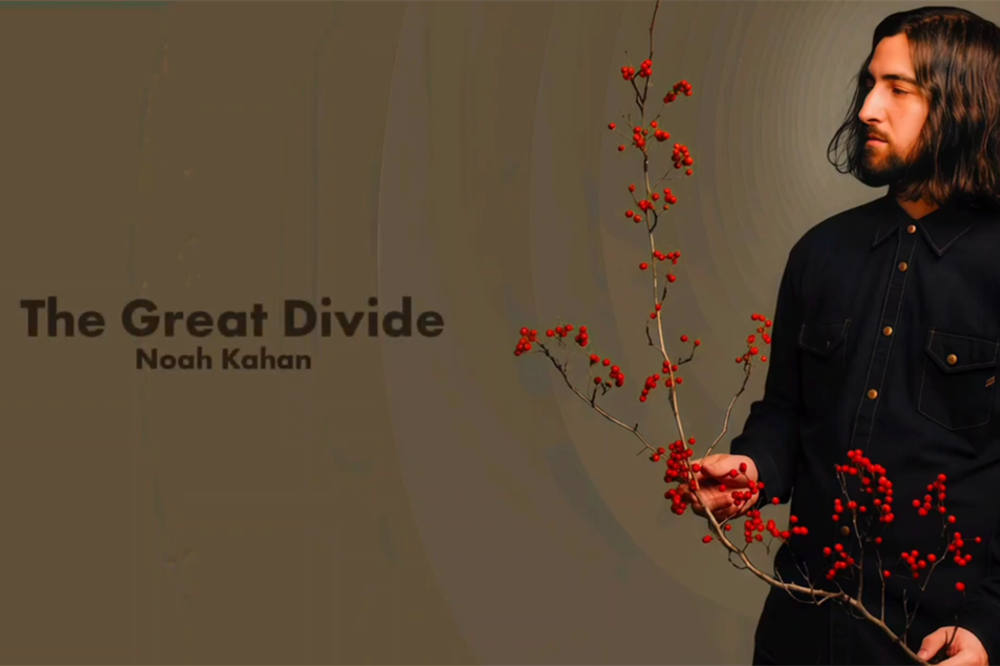
Noah Kahan’s “The Great Divide” looks back on a friendship shaped by reckless memories, emotional silence, and questions that were never asked. The narrator once believed he knew the other person well. Years later, he realizes that being close to someone is not the same as understanding what they are going through.
You can read the complete “The Great Divide” lyrics on LyricsTranslate. This article focuses on the song’s story, religious imagery, emotional themes, and possible meaning without reproducing the lyrics.
What Is “The Great Divide” by Noah Kahan About?
“The Great Divide” is about recognizing another person’s pain after distance and time have made it difficult to help them.
The narrator remembers a close relationship from his younger years. The two people shared drives, music, impulsive decisions, and physical reminders of their past. On the surface, these experiences made them appear inseparable. Emotionally, however, there was a gap between them.
One person may have been struggling with fear, shame, isolation, or spiritual anxiety. The narrator noticed pieces of that struggle but did not understand their full meaning. He now wonders whether the signs were always there and whether he avoided asking difficult questions because he was afraid of the answers.
The song is not only about two people growing apart. It is about realizing that they may have experienced the same friendship very differently.
What Does the Title Mean?
The “great divide” represents the emotional distance between the narrator and the person he is addressing.
They spent time together and created meaningful memories, but they did not communicate honestly about what was happening beneath the surface. One person may have been trying to hide their distress, while the other accepted the silence and continued as though everything was fine.
The title can also describe several other divisions:
- The difference between appearing okay and feeling overwhelmed
- The distance between friendship and true emotional intimacy
- The conflict between religious belief and spiritual fear
- The separation between childhood memories and adult understanding
- The gap between sensing that something is wrong and choosing to ask about it
The divide is especially painful because the narrator was not completely absent. He was physically present but emotionally unable to reach the other person.
Friendship, Silence, and Missed Warning Signs
One of the song’s clearest ideas is that shared history does not automatically create emotional closeness.
The narrator and his friend appear to have bonded through intense experiences. They knew where to go, what music to play, and how to escape ordinary life together. Yet they struggled to discuss fear, identity, faith, and emotional pain.
Looking back, the narrator begins to interpret their memories differently. What once seemed like ordinary teenage behavior may have contained signs that the other person was struggling.
Perhaps certain songs meant more to them than he understood. Their reckless choices may have been attempts to feel something, escape something, or communicate without speaking directly. The lyrics do not fully explain the person’s situation, leaving room for different interpretations.
What matters most is the narrator’s growing awareness that he did not listen closely enough.
He may have sensed discomfort or sadness, but he did not continue the conversation when it became difficult. That hesitation becomes one of his greatest regrets.
Music as Unspoken Communication
Music plays an important role in the relationship.
The two people listen to the same songs, but they do not hear them in the same way. For the narrator, the music may have been part of the atmosphere surrounding their drives and adventures. For the other person, it may have expressed thoughts they could not say aloud.
This difference reflects the wider divide between them. They occupy the same space and hear the same words, yet their emotional experiences are completely different.
People often use music when ordinary conversation feels impossible. Sharing a song can become a quiet confession, especially when someone is afraid of being judged or misunderstood.
The narrator now seems to wonder whether the music contained messages he failed to recognize. What he remembered as background sound may have been the other person’s attempt to be heard.
Religious Fear and Spiritual Anxiety
Religious imagery gives “The Great Divide” much of its emotional depth.
The person in the song appears troubled by questions about judgment, punishment, and the fate of their soul. Their beliefs may have created more fear than comfort, although the exact source of that fear is not fully explained.
This could suggest religious trauma, spiritual anxiety, or a conflict between personal identity and what the person had been taught to believe. The song leaves these details open rather than providing a clear explanation.
The narrator’s wish for the person to fear ordinary things is particularly meaningful. At first, wishing fear on someone sounds cruel. In the context of the song, however, ordinary fear would represent freedom.
Being worried about everyday problems would mean they were no longer consumed by larger questions about condemnation or eternal punishment. They could focus on work, relationships, money, aging, and other normal parts of life.
The narrator does not wish for a dramatic or perfect future. He imagines the other person experiencing stability, honesty, companionship, and manageable concerns. After years of hidden fear, an ordinary life would be a form of healing.
The stained-glass imagery strengthens this interpretation. Stained glass is associated with churches, tradition, beauty, and religious authority. Its destruction may symbolize breaking away from beliefs that created shame or fear.
That does not necessarily mean rejecting faith completely. It may represent rejecting a particular version of faith that made the person feel condemned.
Regret and the Meaning of the Bridge
The bridge shifts the song from reflection toward direct self-examination.
The narrator begins questioning whether the other person tried to express their pain through small acts, anger, withdrawal, or gradual disappearance. He wonders whether they wanted him to notice what was happening.
He also admits that the emotional place they entered may have been somewhere he was not brave enough to follow.
That admission is important. It suggests that the narrator was not simply unaware. He may have noticed enough to know that a difficult conversation was needed, but he avoided it.
People often hesitate in these moments because they fear saying the wrong thing. They may worry about hearing something they cannot fix or becoming responsible for another person’s pain. Avoiding the conversation can feel safer at the time, but it may create lasting guilt later.
The narrator now understands that remaining silent was still a choice. He cannot return to the moment with the emotional maturity he has gained since then. All he can do is recognize his failure and imagine what he wishes he had done differently.
Who Is Noah Kahan Singing About?
The song feels deeply personal, but Noah Kahan has not clearly identified one specific person as its subject.
The character may be based on an old friend, someone from his hometown, or a combination of several people and memories. It is also possible that parts of the song are directed toward a younger version of Kahan himself.
The direct use of “you” makes the story feel like a private message, but leaving the person unnamed gives the song a wider meaning. Listeners can connect it to a friend they lost, a sibling they misunderstood, or someone whose struggles only became clear much later.
The uncertainty also fits the song’s central theme. The narrator never completely understood the other person, and the audience is not given every answer either.
The Meaning of the Official Music Video
The official music video expands the song’s ideas about memory, aging, and separation.
It follows people through different stages of life while returning to a familiar setting. The characters change, but the location remains connected to their shared past. This creates the feeling that memories can stay vivid even after the people inside them have grown apart.
The aging characters also show how differently people may carry the past. A friendship that once felt permanent can become distant, while small moments continue to shape both people for years.
The video does not offer an easy reunion or a simple explanation. Instead, it shows how time can widen an emotional distance that began long before either person noticed it.
How the Song Connects to Noah Kahan’s Music
“The Great Divide” shares several themes with Kahan’s other work, including hometown memories, mental health, complicated relationships, and the discomfort of growing into a different person.
However, this song places more responsibility on the narrator. He is not only describing how someone else hurt or abandoned him. He is considering how his own fear, silence, and inattention may have contributed to the loss of a relationship.
That self-awareness makes the song especially powerful. It does not turn the narrator into a villain, but it also does not excuse him. He was young, uncertain, and emotionally unprepared, yet he still wishes he had done more.
Final Meaning of “The Great Divide”
“The Great Divide” is a song about the painful difference between caring for someone and truly seeing them.
The narrator once believed that shared adventures and years of friendship meant he understood the other person. With time, he realizes that they were separated by fears and feelings they never discussed.
He cannot repair the past or ask the questions he avoided. He can only hope that the person found peace, love, and a life no longer controlled by shame or spiritual fear.
The song’s strongest lesson is simple: being near someone does not always mean we know what they are carrying. Sometimes the most important act of friendship is having the courage to ask.
Featured image source: https://www.youtube.com/watch?v=SJUzjmWHkcU