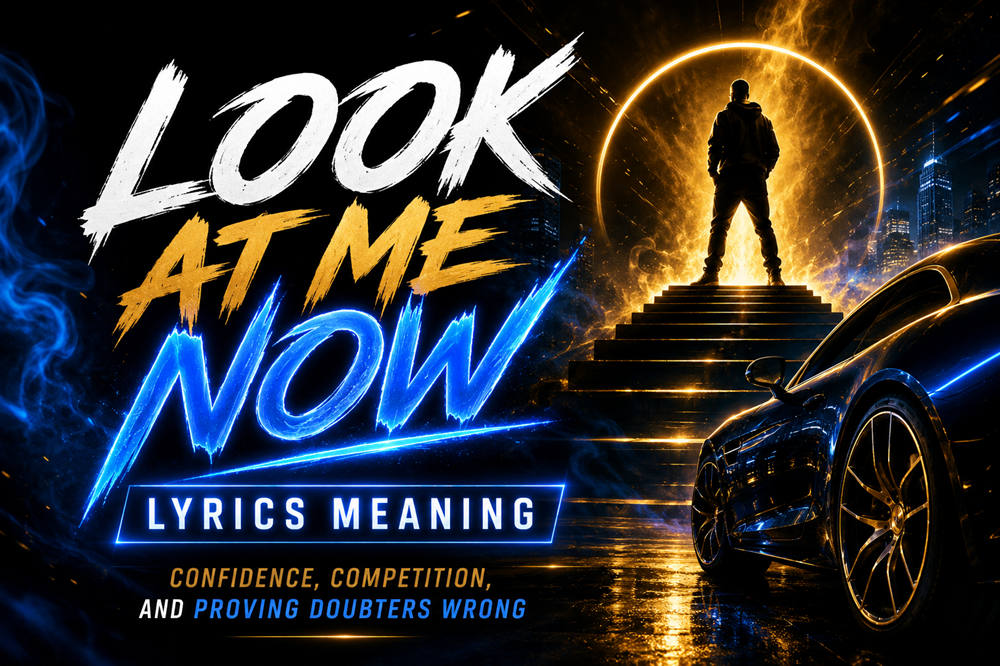
Chris Brown’s “Look at Me Now,” featuring Busta Rhymes and Lil Wayne, is a bold rap anthem about success, money, talent, and proving critics wrong. You can read the full “Look at Me Now” lyrics here while following the meaning and explanations below.
Released in 2011 on Brown’s album F.A.M.E., the song became especially famous for Busta Rhymes’ extremely fast verse. It later received Grammy nominations for Best Rap Performance and Best Rap Song.
There is no complicated story hidden in the lyrics. The three artists take turns showing off their skills and presenting themselves as successful people who cannot be ignored. Each performer approaches that idea differently: Chris Brown sounds eager to prove himself, Busta Rhymes uses speed and control to overwhelm the competition, and Lil Wayne adds humor and relaxed confidence.
What Does “Look at Me Now” Mean?
The title is directed at anyone who doubted, criticized, or underestimated the performers.
In simple terms, “look at me now” means:
- See how successful I have become.
- Notice how far I have come.
- You doubted me, but I still succeeded.
- My achievements are now impossible to ignore.
The phrase can be motivational outside the song. Many people use it when they have reached a goal after being told they would fail.
Within the track, however, success is mostly shown through money, fame, expensive possessions, popularity, and musical ability. The artists are not quietly celebrating personal growth. They want their critics and competitors to witness their success.
Chris Brown’s Part Explained
Chris Brown introduces the song’s main attitude. He dismisses people who criticize him and suggests that their opinions do not matter because they have not reached his level of success.
His verse focuses on wealth, style, attraction, and status. He presents himself as someone whose achievements can be seen through the life he lives and the attention he receives.
The song also gave Brown a chance to show a different side of his music. He was already widely known as an R&B singer and dancer, but “Look at Me Now” allowed him to step into a more aggressive rap style.
That choice supports the meaning of the song. Brown is not only claiming that he is talented; he is attempting to prove that he can perform outside the style people normally expect from him.
His delivery is playful, cocky, and intentionally provocative. Some lines rely on sexual jokes and exaggerated boasts, but they are not part of a deeper storyline. They are there to strengthen the song’s reckless, competitive mood.
Why Busta Rhymes’ Verse Became Famous
Busta Rhymes delivers the track’s most memorable moment. His verse suddenly increases the speed and turns the song into a display of breath control, timing, pronunciation, and rhythm.
The message of his verse is similar to the rest of the track: he sees himself as powerful, determined, and far ahead of his competition. What makes the section special is how he delivers that message.
Busta Rhymes does not simply tell listeners that he is a skilled rapper. He demonstrates it.
His rapid flow creates the feeling that he is racing forward without slowing down. The delivery matches his claims about working harder, moving faster, and refusing to be stopped.
The verse later became a popular challenge for listeners and other performers. Many people tried to rap along with it, but keeping up with the speed while pronouncing the words clearly proved difficult.
That challenge helped the song remain recognizable long after its original release. Even people who do not remember every part of the track often remember the moment Busta Rhymes begins rapping at full speed.
The Recording Academy lists the song among the notable nominations in Busta Rhymes’ Grammy history, including recognition for both its performance and songwriting.
Lil Wayne’s Verse Explained
Lil Wayne closes the song with a different kind of confidence.
Instead of matching Busta Rhymes’ speed, Wayne relies on clever comparisons, strange images, jokes, and wordplay. His verse feels more relaxed, as though fame and wealth have become normal parts of his life.
Wayne presents himself as successful, unpredictable, and unconcerned with criticism. He does not sound as though he is desperately trying to convince anyone. He sounds amused by the idea that someone might doubt him.
That contrast gives the song more variety.
Chris Brown wants to show that he belongs in the competition. Busta Rhymes attacks the beat with technical skill. Lil Wayne finishes the track with the confidence of someone who believes his reputation already speaks for itself.
The Main Themes of the Song
Proving People Wrong
The clearest theme is the satisfaction of succeeding after being underestimated.
The artists do not respond to critics with long explanations. Instead, they point toward their fame, money, and abilities as evidence that the critics were wrong.
This is one reason the song can feel motivating. Most people understand the desire to improve, succeed, and surprise someone who expected them to fail.
However, the track is not only about personal pride. The artists want their success to be seen. Winning feels more satisfying because their doubters are forced to notice it.
Money and Social Status
The lyrics repeatedly connect success with wealth and access.
Money is shown through clothing, homes, nightlife, travel, and other visible signs of a luxurious lifestyle. These details act like a scoreboard. The more wealth and influence the artists have, the more successful they appear.
The song does not ask whether money brings happiness. It simply treats wealth as proof that the performers are winning.
Competition
“Look at Me Now” treats the music industry like a contest.
Each artist tries to leave a strong impression, but they do it in different ways:
- Chris Brown shows versatility by rapping instead of staying within his familiar R&B style.
- Busta Rhymes competes through speed and technical control.
- Lil Wayne uses personality, humor, and wordplay.
The collaboration works because the performers share the same confident attitude without sounding exactly alike.
Confidence and Recognition
The song is full of self-confidence, but it is also about being recognized.
The repeated title shows that private success is not enough for the performers. They want an audience. They want critics, rivals, and fans to pay attention.
This does not necessarily mean their confidence is fake. It simply shows that public success often comes with a desire for validation. Reaching the top matters, but being seen at the top matters too.
What Does the Chorus Mean?
The chorus delivers the song’s message in its simplest form: pay attention to me now.
It works as a victory statement. The performers have reached a level of success they believe others never expected, and they are demanding recognition.
The repeated phrase also makes the song easy to remember. After the faster and more complicated verses, the chorus gives listeners a simple line they can immediately understand and repeat.
Outside the song, the phrase can apply to many situations. Someone might say “look at me now” after finishing school, improving their career, becoming healthier, recovering from a difficult period, or reaching any goal that once seemed unlikely.
How the Beat Supports the Lyrics
The production uses heavy bass, sharp electronic sounds, and plenty of open space.
That space is important because the verses contain fast and detailed vocal performances. A crowded instrumental could make the rappers harder to follow, especially during Busta Rhymes’ section.
The beat also has a slightly strange and playful sound. It does not feel polished in a calm or elegant way. It feels unpredictable, loud, and built to attract attention.
That makes it a good match for the lyrics. The artists are not trying to sound modest or thoughtful. They want the track to feel like an interruption that forces everyone in the room to listen.
What the Music Video Adds
The official “Look at Me Now” music video uses graffiti-covered walls, colorful streetwear, dancers, and an industrial setting. Its style reflects hip-hop dance culture and gives the song a loose, energetic atmosphere.
Chris Brown’s dancing is an important part of the video. Although the track allows him to experiment with rapping, the visuals still highlight the performance skills that helped build his career.
The video does not add a new storyline to the song. Its purpose is to make the confidence of the track visible through movement, clothing, attitude, and group energy.
Why the Song Remained Popular
The song stands out because each artist contributes something memorable.
Chris Brown provides the hook and the central idea. Busta Rhymes delivers the verse that many listeners immediately recognize. Lil Wayne adds humor and a familiar style of wordplay.
The track also invites participation. Listeners can sing along with the simple chorus or challenge themselves to copy Busta Rhymes’ rapid delivery.
Its lasting popularity is also reflected in its documented UK chart history, where its rankings and time on the chart can still be viewed.
Most importantly, the central message is easy to understand. Even listeners who cannot relate to the luxury references may relate to the feeling behind them: the desire to succeed after being doubted.
Is “Look at Me Now” Motivational?
The song can feel motivational because it is energetic and focused on winning.
Its message can encourage listeners to work harder, improve their skills, and let their results speak for them. It fits naturally in workout, competition, or confidence-building playlists.
Still, the song’s version of success is strongly tied to wealth, fame, and being better than other people. It is not a serious lesson about healthy confidence or personal development.
The most useful idea to take from it is simple: keep improving until your progress becomes difficult to ignore.
Final Meaning
“Look at Me Now” is a boastful song about success, competition, and making former doubters notice how far you have come.
Chris Brown uses the track to show versatility, Busta Rhymes turns his verse into an unforgettable display of speed, and Lil Wayne brings humor and effortless confidence. Together, they create a loud celebration of achievement built around one direct message: you may have doubted me before, but you cannot overlook me now.