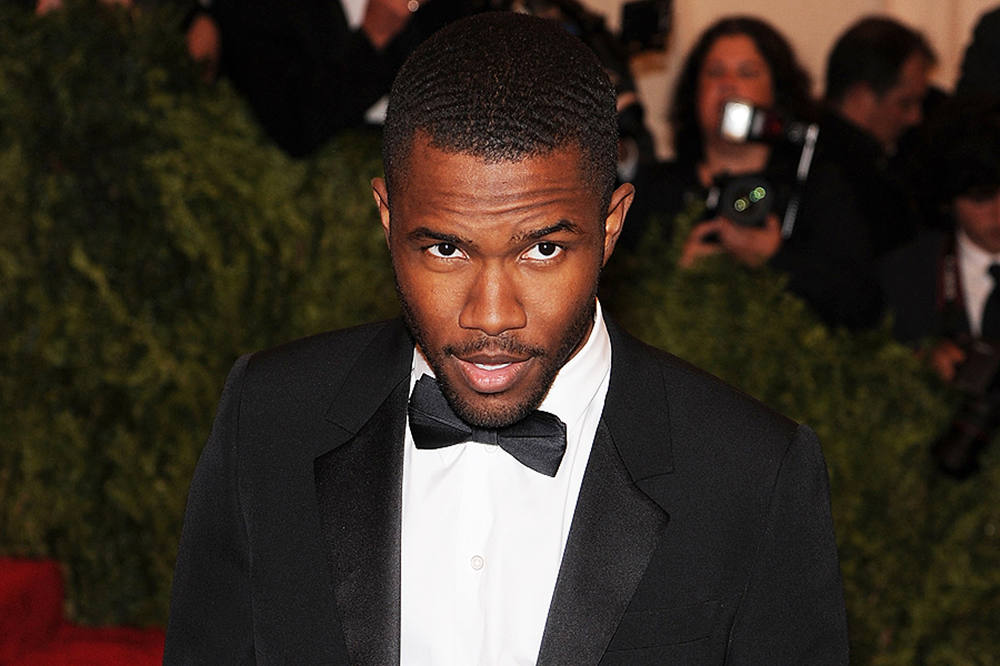
Frank Ocean’s “American Wedding” follows a young couple who rush into marriage while caught up in an intense summer romance. What begins as an exciting fantasy soon becomes a story about annulment, family pressure, possessions, and the difference between feeling in love and being ready for a lasting commitment.
The song appeared on Ocean’s self-released 2011 mixtape Nostalgia, Ultra, a project that helped introduce his detailed storytelling and unconventional approach to R&B. Pitchfork’s original review of Nostalgia, Ultra also noted the mixtape’s use of familiar songs by artists such as Coldplay, MGMT, Radiohead, and the Eagles.
You can read the complete “American Wedding” lyrics online. The lyrics are not reproduced here, but the story, symbols, and main ideas are explained below.
What Is “American Wedding” About?
The song tells the story of two young people who marry at a courthouse with little preparation. They write their vows in a hurry, kiss in front of a judge, and treat the moment like the beginning of a romantic movie.
For a while, the narrator believes their feelings are strong enough to make the marriage work. He imagines formal clothes, lifelong promises, and a shared future. The plain courthouse setting does not matter because the couple is completely absorbed in the moment.
That confidence disappears when his wife suggests an annulment. The relationship has barely become a marriage before she wants to end it.
Ocean does not present the romance as completely fake. The couple appears to have felt something real, but they made a permanent decision during an intense and temporary stage of their relationship. Their feelings were strong; their foundation was not.
The Meaning of the Title “American Wedding”
The title works as both a description and a criticism.
The wedding feels distinctly American because it is built around personal freedom. The couple does not wait for family approval or follow a long traditional process. They choose each other, visit a courthouse, sign the necessary papers, and create a marriage on their own terms.
However, the same freedom that allows them to marry quickly also allows them to leave quickly.
The narrator begins to question whether the wedding promises meant as much as he believed. Marriage is supposed to represent permanence, yet this one starts and ends with legal documents. The dream of lifelong love is reduced to signatures, property, a surname, and an annulment.
The song is not claiming that every American marriage is shallow. Instead, it questions a culture that often celebrates the excitement of falling in love more than the patience needed to remain together.
Young Love and a Rushed Commitment
The speed of the relationship is one of the clearest warning signs in the song.
The couple marries during what the bride remembers as an unforgettable summer. That detail suggests their decision was driven by a short period of freedom, excitement, and emotional intensity.
Summer romances can feel separate from ordinary life. Responsibilities seem distant, while the future feels easy to imagine. Once that season ends, the couple must face the parts of marriage they did not discuss at the courthouse.
The bride’s request for an annulment shows that she no longer sees the relationship as something that should continue. She wants to stop it before their lives become more complicated.
The narrator is not ready to let go. He understands that the marriage was rushed, but he still treats its promises seriously. That difference between them creates the heartbreak at the center of the song.
Freedom, Family, and a Hidden Relationship
The couple believes it is exercising personal freedom, but the bride has kept the relationship secret from her parents.
That detail complicates the song’s references to America as the home of freedom. She is legally free to marry, yet family expectations still affect her decisions. Her independence exists alongside fear, secrecy, and possible disapproval.
The song also mentions her academic interest in arranged marriage, religious customs, and women whose relationships may be strongly influenced by family traditions. She appears to view those women as less free than she is.
Ocean places that belief beside her own hidden courthouse marriage. She may have more legal choice, but her situation is not as simple as she imagines. Social pressure still follows her, even when she acts independently.
This contrast does not offer a complete argument about arranged marriage or religion. It mainly exposes the distance between the freedom the couple celebrates and the pressure it still experiences.
The Meaning of the Wedding Ring
The ring becomes one of the song’s strongest symbols.
At first, it represents the couple’s decision to remain together. After the request for an annulment, it becomes a reminder that the relationship cannot be erased as easily as a legal record.
The narrator feels that the ring has left a permanent mark. Even if the marriage is officially cancelled, the experience will remain part of him.
A relationship does not have to last for years to change someone. The marriage may have been brief, but the narrator’s disappointment is real.
The law may be able to end their status as husband and wife. It cannot return them to exactly who they were before the wedding.
Why the Mustang Matters
When the couple begins discussing what will happen after the separation, the narrator offers his Mustang.
The car appears to be one of the few valuable things he owns. Giving it up shows both his youth and his desperation. He does not have a house, large savings, or an established adult life to divide. He has a car, a wedding ring, and a broken heart.
Cars frequently appear in Frank Ocean’s music as symbols of independence, identity, escape, and memory. A GQ look at Ocean’s interest in car culture connects the Mustang in “American Wedding” with later vehicle references in songs such as “Swim Good,” “Acura Integurl,” and “White Ferrari.”
In “American Wedding,” the Mustang represents the freedom the narrator had before marriage. He is willing to lose it if that might save the relationship, but a material sacrifice cannot repair the emotional distance between them.
The Pretty Woman Reference
Near the beginning of the song, Ocean imagines the couple dressed like glamorous movie characters. He places himself in the role of Richard Gere beside his “pretty woman,” directly connecting the scene to the 1990 romantic film Pretty Woman.
The reference makes the courthouse wedding feel more extravagant than it really is. The narrator sees a ball gown and tuxedo even though the couple is rushing through a simple legal ceremony.
It also shows how movies shape his expectations of romance. He imagines love as a dramatic story in which passion can overcome practical problems.
Ocean frequently uses films to build characters and emotional settings in his songs. A Pitchfork feature on his movie references connects “American Wedding” to Pretty Woman while exploring similar references throughout Nostalgia, Ultra and Channel Orange.
Reality is less forgiving than the movies. There is no carefully written ending, only a young couple dealing with the consequences of a decision it made too quickly.
Why Frank Ocean Used “Hotel California”
“American Wedding” is built over the instrumental and melody of the Eagles’ “Hotel California.” Ocean did not use only a brief background sound. The original song’s musical structure remains clearly recognizable beneath his new vocals and story.
The familiar music gives “American Wedding” a nostalgic and slightly uneasy atmosphere. Ocean takes a classic song associated with American glamour and excess and creates a new story about another ideal that fails to deliver what it promises.
One possible interpretation is that the borrowed music mirrors the emotional path of the marriage. The relationship begins with beauty, confidence, and fantasy but slowly becomes restrictive and difficult to escape.
Ocean did not publicly confirm that this was his reason for choosing the song, so the connection is better understood as an interpretation rather than a definite explanation.
The use of borrowed recordings also fits the larger structure of Nostalgia, Ultra. Ocean repeatedly placed new stories over familiar music, making each track feel like an old memory being rewritten from a different perspective.
The “Hotel California” Copyright Dispute
The use of “Hotel California” caused problems after Nostalgia, Ultra gained widespread attention.
Ocean said “American Wedding” was released for free as a tribute and that he had not earned money from it. Representatives connected to the Eagles argued that the track used the original master recording and melody without permission.
According to Pitchfork’s report on the dispute, the initial notice came from Warner Music Group, which controlled the master recording. An Eagles representative also objected to describing the track as a small sample because Ocean had used much of the original recording and melody.
Ocean was warned about continuing to distribute or perform the song. The clearance problem prevented “American Wedding” from receiving the kind of normal commercial release enjoyed by several of his other songs.
The controversy became an unusual extension of the song’s themes. A track about marriage, ownership, promises, and legal agreements became involved in a separate argument about musical ownership and an artist’s right to reuse an existing recording.
The Change in the Outro
The final part of the song moves away from the failed marriage and becomes more defiant.
Instead of remaining focused on rejection, the outro encourages confidence and ambition. Its message is that another person’s judgment does not determine what someone can achieve.
The change is sudden, but it prevents the song from ending in complete defeat. The narrator has lost the future he imagined with his wife, yet he can still create another future for himself.
The romance is over. His life is not.
The Final Meaning of “American Wedding”
“American Wedding” is about the danger of treating an intense feeling as proof of permanent compatibility.
The young couple is free to marry, but freedom does not make it prepared. It can sign papers, exchange rings, and create a shared name, yet none of those things guarantees that both people understand each other or want the same future.
Ocean also shows that a failed relationship does not have to be meaningless. The marriage ends quickly, but it leaves emotional consequences that cannot be removed through an annulment.
That balance is what makes the song memorable. It is romantic without idealizing romance and cynical without suggesting that love is worthless. The couple made a serious mistake, but the feelings behind it still mattered.
“American Wedding” ultimately presents love as something that can be sincere, temporary, and painful at the same time.
Featured image source: https://www.nme.com/news/music/the-eagles-12-1233413