
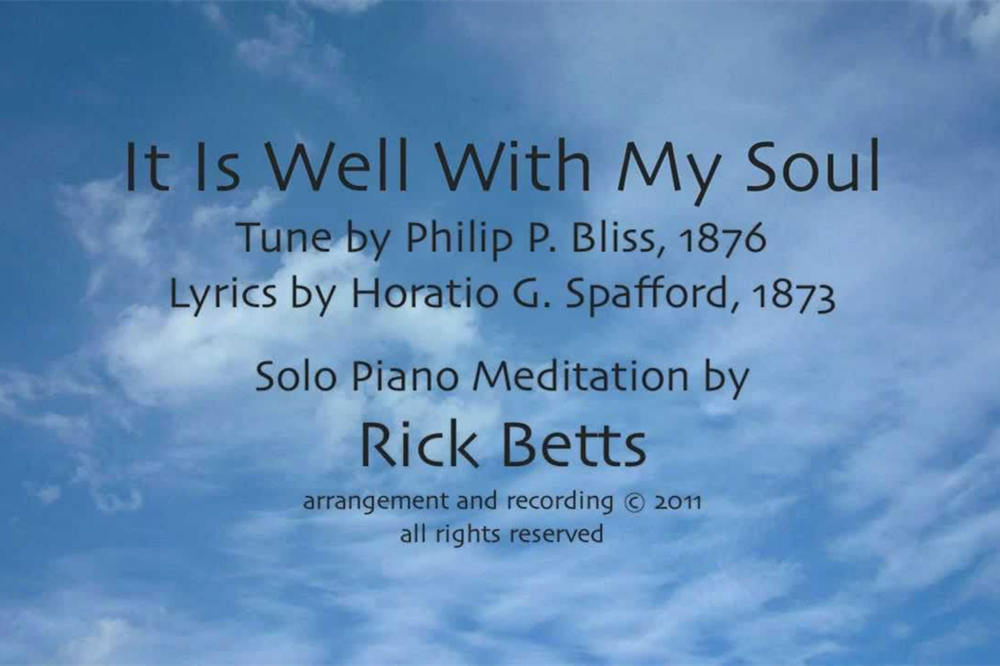
“It Is Well with My Soul” is a Christian hymn about finding peace in God during life’s hardest moments. It does not pretend that grief disappears or that faithful people never struggle. Instead, it expresses the belief that sorrow does not have to destroy a person’s inner hope.
You can read the complete “It Is Well with My Soul” lyrics on Hymnary. The hymn is also listed by its opening words, “When Peace, Like a River.”
What Does “It Is Well with My Soul” Mean?
The phrase “it is well with my soul” means that a person has found spiritual peace even when their circumstances are painful or uncertain.
The hymn contrasts peaceful moments with overwhelming sorrow. Its message is not that everything in life is going well. It is that faith can remain steady when life is not going well.
This kind of peace does not require someone to hide sadness. A person can grieve, cry, feel confused, and still believe that God is present. The hymn makes room for both pain and trust.
Its central message can be summed up simply: circumstances may change, but the soul can remain anchored in faith.
The Story Behind “It Is Well with My Soul”
The words were written by Horatio G. Spafford, a Chicago lawyer and businessman who experienced severe personal loss.
In 1873, Spafford’s wife, Anna, and their four daughters traveled to Europe aboard the Ville du Havre. The ship collided with another vessel and sank in the Atlantic Ocean. Anna survived, but all four daughters died.
Spafford later traveled across the Atlantic to join his wife. The hymn is closely connected to this tragedy, although historical accounts differ about exactly when and where he wrote it. What is clear is that the words came from a life marked by real grief rather than distant ideas about suffering.
That history gives the hymn much of its emotional weight. Spafford was not writing as someone untouched by loss. He was trying to express faith after his family had been devastated.
An early manuscript of the hymn is preserved by the Library of Congress.
Who Wrote the Music?
The melody was composed by Philip Paul Bliss, a well-known American gospel songwriter. He named the tune “Ville du Havre” after the ship involved in the tragedy.
The words and music were published together in 1876. Bliss’s melody begins calmly and grows stronger as it reaches the chorus. That movement fits the lyrics: sorrow is acknowledged, but it gradually gives way to confidence.
The repeated chorus also allows one person’s private declaration to become something a whole congregation can sing together.
Meaning of the First Verse
The first verse places two opposite experiences side by side: peace flowing like a river and sorrow rising like powerful ocean waves.
These images capture the unpredictability of life. Some seasons feel calm and secure, while others leave us overwhelmed. The speaker does not claim that faith prevents either experience.
The key idea is “whatever my lot.” His peace is not based on receiving the life he wanted. It comes from trusting God in both comfort and loss.
This is what makes the hymn different from a simple song about optimism. The speaker is not expecting every problem to disappear. He is choosing where to place his trust while the pain is still real.
Meaning of the Second Verse
The second verse turns from outward hardship to inward struggle. It mentions temptation, trials, and the attacks that can weaken a person’s faith.
Instead of depending on his own strength, the speaker finds comfort in Christ’s care. His confidence comes from believing that God understands his weakness and has already acted on his behalf.
Faith in this verse is not presented as constant bravery. It is the willingness to rely on grace when personal strength is not enough.
That message can be especially comforting during seasons when someone feels emotionally or spiritually exhausted.
Meaning of the Third Verse
The third verse focuses on sin, forgiveness, and the sacrifice of Christ.
The speaker celebrates the belief that his sins have been dealt with completely—not partly, but fully. Because of that forgiveness, he no longer has to live under the same burden of guilt.
This verse gives a deeper reason for the hymn’s peace. The singer is not calm only because he expects God to improve his circumstances. He believes his relationship with God has been restored.
For Christian listeners, that assurance is at the heart of the hymn. Peace comes from grace rather than from having a perfect life.
Meaning of the Final Verse
The final verse looks toward the return of Christ and the fulfillment of Christian hope.
Its imagery includes the sky opening, a trumpet sounding, and the Lord descending. These pictures come from biblical descriptions of Christ’s return.
The verse shifts attention from present suffering to the belief that suffering will not last forever. Death, grief, and separation are not treated as small or unimportant, but they are not given the final word.
The hymn ends with expectation. The singer still lives in an imperfect world, yet he believes a day is coming when faith will become sight.
Major Themes in the Hymn
Peace That Does Not Depend on Circumstances
The hymn describes a peace rooted in faith rather than comfort. It can remain even when life feels unstable.
Honest Grief
Sorrow is never denied. The sea-billow image shows how powerful and overwhelming grief can be.
Forgiveness
The hymn connects peace with the Christian belief that Christ has carried the burden of sin.
Hope Beyond Death
Its final verse looks beyond present loss toward eternal life and reunion with God.
Trust Without Complete Answers
The hymn does not explain why tragedy happens. It shows how faith may continue even when no explanation feels sufficient.
Does the Hymn Tell People to Hide Their Sadness?
No. “It Is Well with My Soul” is not a command to act cheerful after something painful happens.
Spafford’s words openly acknowledge sorrow. The song’s message would lose its meaning if the sadness were not real. Saying “it is well” does not mean saying “this does not hurt.”
Grief and faith can exist together. Someone may feel devastated while still believing they are not alone. The hymn offers words for that difficult middle ground.
This is one reason it is often sung at funerals and memorial services. It allows people to mourn while expressing hope that death is not the end.
Why the Hymn Still Matters
Many inspirational songs focus on overcoming a problem or believing that better days will arrive soon. “It Is Well with My Soul” offers a quieter kind of hope.
It asks whether peace is possible before circumstances improve.
That question remains meaningful for people facing bereavement, illness, family struggles, financial pressure, or an uncertain future. The hymn does not provide a quick explanation or promise immediate relief. It reminds listeners that they can still be held by faith when life feels out of control.
Its lasting message is not that everything is fine. It is that suffering does not have the final word.
Featured image source: https://www.youtube.com/watch?v=-dFKdVF9NGU