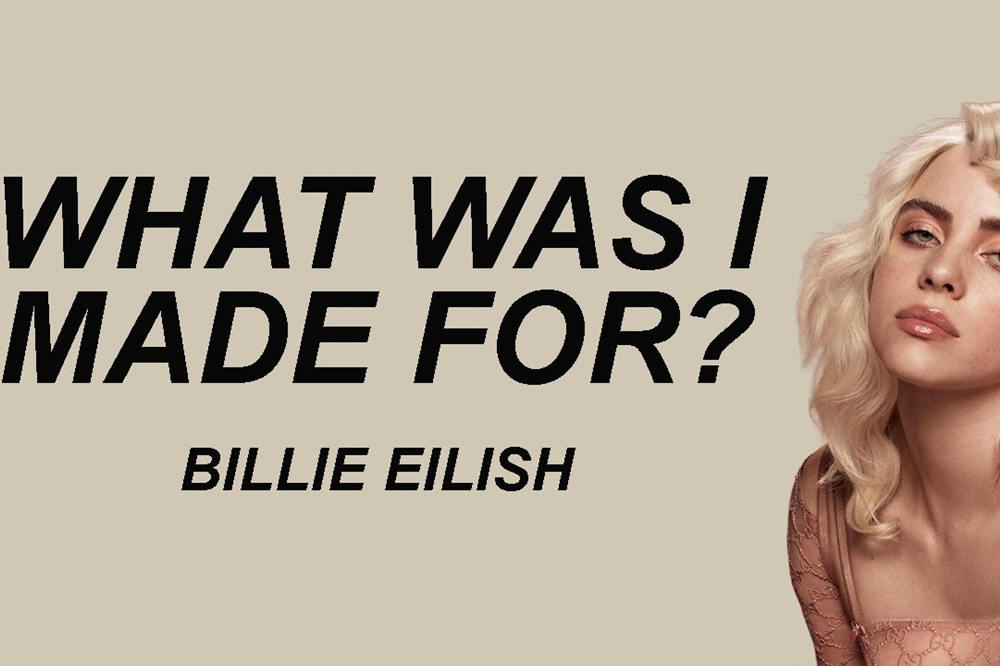
Billie Eilish’s “What Was I Made For?” is a quiet song about losing your sense of identity. Written for the Barbie movie, it captures the moment when a person begins questioning the role she has been given and wonders whether it still feels true.
You can read the complete “What Was I Made For?” lyrics before exploring the song’s meaning, themes, and connection to Barbie.
What Is “What Was I Made For?” About?
“What Was I Made For?” is about feeling disconnected from yourself and uncertain about what comes next.
The narrator remembers when life felt easier and happiness came more naturally. Now, she feels emotionally numb and unsure of her purpose. She knows something has changed, but she does not yet know how to become the person she wants to be.
Although Billie Eilish and Finneas wrote the song for Barbie, its meaning is broad enough to fit many real-life experiences. It may connect with someone who is:
- going through a major life change
- struggling with burnout
- questioning a career or relationship
- feeling lost after reaching an important goal
- growing away from an old identity
- trying to recover from a difficult period
The song does not present this uncertainty as weakness. Instead, it treats confusion as a natural part of change.
How the Song Connects to Barbie
In the Barbie movie, Barbie begins as a character with a clear role. She lives in a perfect-looking world where every day follows a familiar routine.
That certainty disappears when she begins experiencing thoughts and emotions that do not fit her expected identity. After entering the real world, she realizes that Barbie means different things to different people. She is admired by some, criticized by others, and often treated as a symbol rather than an individual.
This leads to the question at the center of the song: Who is Barbie when she is no longer performing the role created for her?
The question is especially meaningful because Barbie was literally manufactured for a purpose. Her appearance, personality, and place in the world were designed by someone else. Once she becomes self-aware, she must decide whether she wants to continue living according to that design.
The song captures the loneliness of that realization. Having a role is not the same as having an identity.
Losing Touch With Your Former Self
One of the most relatable parts of the song is the feeling that you used to be a different person.
You may remember being more confident, creative, social, or hopeful. Then life changed. Responsibilities increased, relationships ended, plans failed, or daily pressure slowly wore you down.
There may not be one dramatic event that explains the change. Sometimes people simply notice that the things that once made them happy no longer have the same effect.
This can create a strange kind of grief. You are not mourning another person. You are mourning an earlier version of yourself.
“What Was I Made For?” does not suggest that the old version must be recovered exactly as she was. The song leaves open the possibility that growing forward may be more important than returning to the past.
The Pressure to Be Perfect
Barbie represents an ideal. She is expected to look beautiful, remain cheerful, and inspire other people.
That pressure also connects to Billie Eilish’s life as a public figure. From a young age, her appearance, music, clothing, personality, and relationships have been examined by millions of people.
Fame can make it difficult to separate the private person from the public image. People may praise the version of you they see while knowing very little about how you actually feel.
This is not only a celebrity problem. Many people create versions of themselves for work, school, relationships, family, or social media. They may become known as the successful one, the helpful one, the strong one, or the person who always has everything under control.
Those roles can feel comforting at first. Over time, however, they may become limiting. You may begin wondering whether people value you or simply the role you perform for them.
The song explores what happens when that polished identity stops feeling real.
Why Emotional Numbness Matters in the Song
The narrator is not only sad. She has trouble understanding what she feels at all.
Emotional numbness can make life feel distant. Events happen, people speak, and responsibilities continue, but you do not react in the way you expect. Even positive moments may feel muted.
The important detail is that the narrator still wants to experience happiness. She may not know how to reach it, but the desire has not disappeared.
That gives the song a small sense of hope. It does not promise that everything will suddenly improve. It simply suggests that recognizing what is missing can be the beginning of change.
What Does the Title Mean?
The title asks whether we are born with a fixed purpose or whether we create one for ourselves.
For Barbie, the question is literal. She was made by a company and given a particular function. For the listener, it becomes a personal question about identity, meaning, and choice.
Many people expect purpose to arrive as one clear answer. They believe they must find the perfect career, relationship, talent, or calling that explains their entire life.
The song suggests that purpose may be less certain than that. It may change as we grow.
At one point, your purpose may be learning. At another, it may be caring for someone, building a home, creating something, healing from an experience, or simply getting through a difficult season.
Not knowing your purpose does not mean you do not have one. It may mean that you are between versions of your life.
The Meaning of the Ending
The ending does not give the narrator a complete answer. She does not suddenly regain her confidence or discover exactly what she should do.
Instead, she begins to consider that happiness might still be possible.
That small shift is what makes the ending feel honest. Real change often begins before a person feels fully hopeful. You may not believe that everything will work out, but you can still recognize that your present feelings will not necessarily last forever.
The song moves from certainty, through confusion, toward possibility. Its hope is quiet rather than dramatic.
Why the Music Sounds So Fragile
The song’s simple production allows its emotions to remain at the center.
Soft piano, open space, and Billie Eilish’s restrained vocals make the track feel personal. It sounds less like a performance and more like someone trying to understand her thoughts in real time.
The arrangement avoids a large, dramatic climax. Instead, Billie’s voice gradually becomes stronger as the song continues. The change is subtle, matching the narrator’s slow movement from numbness toward self-awareness.
This restrained style also separates the song from the brighter energy commonly associated with Barbie. The contrast shows that a colorful, perfect-looking world can still contain sadness and uncertainty.
What the Music Video Represents
In the official music video, Billie Eilish sits alone at a small desk and arranges miniature versions of outfits from different points in her career.
At first, everything is neat and controlled. Then wind and rain begin disrupting the display. The clothes fall, the setup becomes messy, and Billie can no longer keep everything in place.
The outfits can represent her past public identities. Each one belongs to a particular stage of her life and reminds viewers of an image they may associate with her.
Her attempt to organize them may reflect the pressure to preserve every former version of herself. When the display falls apart, she eventually gathers what remains and leaves.
The video suggests that identity cannot always be carefully controlled. Growing up sometimes means accepting that old versions of yourself will change, disappear, or no longer fit.
Why the Song Resonates
“What Was I Made For?” became meaningful to listeners because it describes uncertainty without trying to solve it too quickly.
The song speaks to people who appear fine on the outside but feel directionless inside. It also captures the experience of realizing that success, beauty, approval, or achievement cannot automatically create a strong sense of self.
Its central question may never have one permanent answer. Purpose changes, and identity continues developing throughout life.
You may not become the person you once expected to be. That does not mean you have failed. It may simply mean that you now have the opportunity to decide who you want to become.
Featured image source: https://www.gigwise.com/best-of-billie-eilishs-what-was-i-made-for-lyrics/