
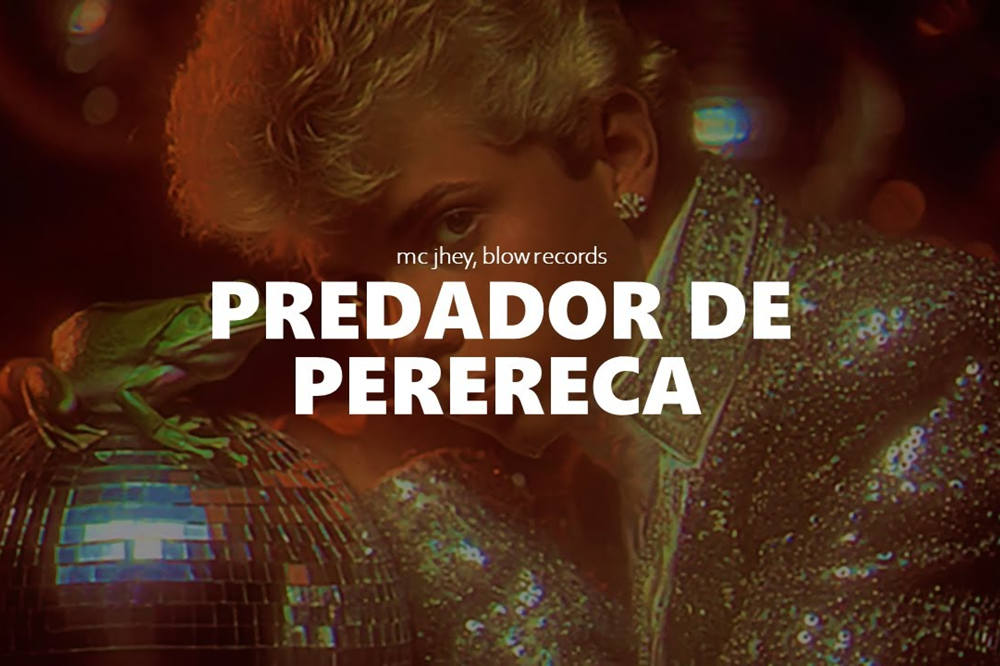
“Predador de Perereca” may sound like a smooth Brazilian dance song, especially in the viral retro version. But the Portuguese lyrics are far more explicit than the music suggests.
Originally released by Brazilian funk artist MC Jhey, the song uses crude slang, sexual boasting, and a repetitive chorus designed for parties and baile-funk settings. Its later 1980s-style remake became popular online because many international listeners enjoyed the music before discovering what the words meant.
What Does “Predador de Perereca” Mean in English?
The literal translation of “predador de perereca” is “tree-frog predator.” However, that is not what the phrase means in the song.
In Brazilian Portuguese, “perereca” can be vulgar slang for female genitalia. A direct English translation of the title would be “pussy predator.”
A cleaner interpretation would be “sexual hunter” or “womanizer,” although those versions soften the deliberately crude tone of the original phrase.
The title describes a man who boasts about aggressively pursuing sexual encounters with women.
Predador de Perereca English Lyrics Summary
The song begins by describing a woman as attractive and charming. The narrator then claims that she can sexually satisfy several men without needing to bring any friends.
The chorus introduces the narrator’s group, or “bonde,” as the “predadores de perereca.” The men boast about arriving together and taking part in a sexual encounter with the woman.
In simple English, the lyrics are about a group of men bragging that one woman can satisfy several members of their crew.
The song is not telling a detailed story or expressing romantic feelings. Its focus is sexual exaggeration, masculine bravado, and a chant-like chorus meant to be memorable.
Important Brazilian Slang in the Song
Several words in the lyrics have meanings that are not obvious from a literal translation.
Perereca
“Perereca” normally means a small frog or tree frog. In Brazilian slang, it can also be a vulgar word for female genitalia.
Bonde
The literal meaning of “bonde” is “tram.” In Brazilian funk and street slang, it often means a crew, group, or circle of friends.
When the song says the “bonde” has arrived, it means the narrator’s group of men has shown up.
Pepeca and Tcheca
These are also slang terms for female genitalia. They are used partly because they rhyme with “perereca” and fit the rhythm of the chorus.
Sentar
“Sentar” literally means “to sit.” In Brazilian funk lyrics, it often refers to a sexual movement, usually describing a woman moving on top of a partner.
Treta
“Treta” can mean trouble, drama, conflict, or a complicated situation. In the song, it adds to the rough, informal language rather than describing a serious fight.
What Is the Song About?
“Predador de Perereca” is an explicit party song built around sexual conquest and group boasting.
Its main ideas include:
- A group of men presenting themselves as sexual hunters
- One woman being described as able to satisfy several men
- Crude humor and exaggerated claims
- Repetitive slang chosen for rhythm and rhyme
- The masculine bravado found in some baile-funk lyrics
The woman is praised briefly at the beginning, but the song does not explore her personality or point of view. She quickly becomes the subject of the men’s sexual claims.
The lyrics are meant to be provocative and excessive rather than emotional or deeply symbolic. The track belongs to the wider world of Brazilian funk, a musical and cultural movement closely connected to Brazil’s urban communities.
The Original Song and Viral Retro Version
MC Jhey released the original “Predador de Perereca” in 2015. The track uses the heavy, stripped-down beat associated with Brazilian funk. It is also listed as a 2015 release on Apple Music.
A retro remake credited to BLOW RECORDS and MC Jhey appeared in 2025. This version replaced the original funk production with synthesizers, smoother vocals, and an arrangement inspired by 1980s Brazilian soul and dance music.
The remake is often called “Predador de Perereca (1982),” but it was not actually recorded in 1982. The year refers to the musical style the producers were trying to recreate.
BLOW RECORDS describes the newer track as an AI remix and a reinterpretation of MC Jhey’s original song. The official music video presents it as a modern recording reimagined with an 1980s synth-pop sound.
Its convincing vintage production caused some listeners to believe it was an old song that had later been sampled. In reality, the 2015 funk song came first.
Why Did Predador de Perereca Become Viral?
The biggest reason for the song’s popularity is the contrast between its sound and its meaning.
To listeners who do not understand Portuguese, the retro version may sound warm, romantic, and nostalgic. It could easily be mistaken for a forgotten Brazilian dance song from the 1980s.
Portuguese speakers, however, immediately recognize the explicit slang and sexual boasting.
That contrast made the song suitable for reaction videos. People began playing it for Brazilian friends, asking for translations, and recording their reactions after learning what the lyrics meant.
The catchy chorus also helped the song spread. Even listeners who do not speak Portuguese can remember the title and repeat the main phrase, making it suitable for memes, dance clips, and short-form videos.
Is the Song Appropriate for Children?
No. The lyrics contain vulgar sexual slang and references to group sexual activity.
Although the retro production sounds light and cheerful, the meaning is adult and explicit. Anyone using the song in a public video, school setting, or family-friendly post should understand the translation first.
Featured image source: https://www.youtube.com/watch?v=n_VYU7M7RUw