
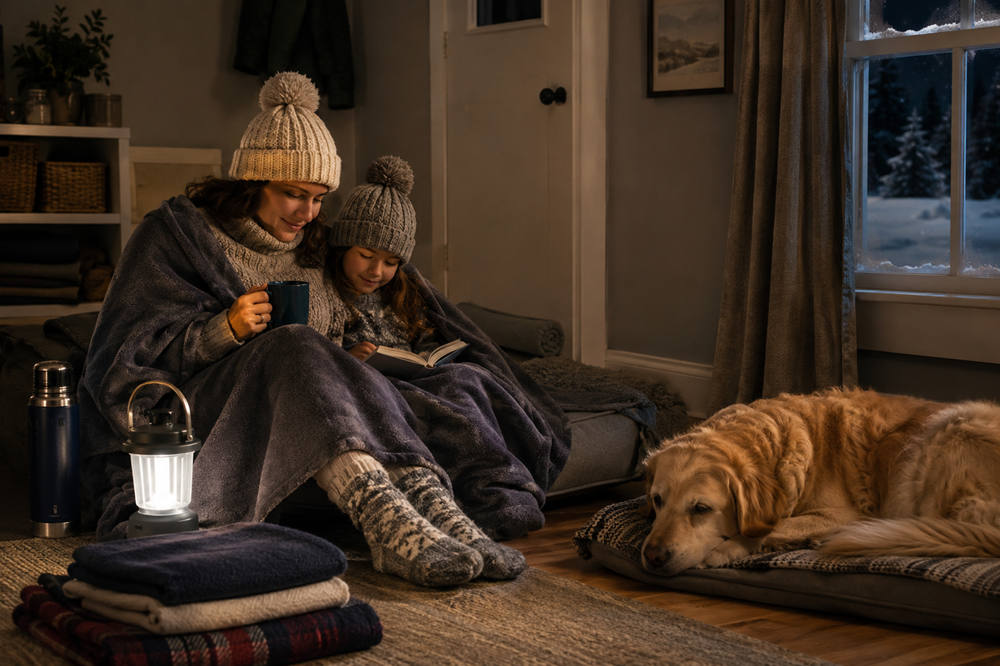
A power outage in cold weather can make your home feel uncomfortable quickly. The heat stops running, rooms cool down, and even simple things like making food or charging a phone become harder.
The goal is not to heat the whole house. The goal is to protect body heat, reduce cold air coming in, and use only safe warming methods. That matters because winter outages can also bring serious risks, including hypothermia, house fires, and carbon monoxide poisoning.
Here’s how to stay as safe and comfortable as possible when the power goes out.
What to Do First When the Power Goes Out
Start with the basics. These first steps can make a big difference before your home gets too cold.
- Choose one small room for everyone to stay in.
- Put on dry layers, warm socks, and a hat.
- Close doors to rooms you are not using.
- Block drafts with towels, blankets, or rolled clothing.
- Gather blankets, sleeping bags, flashlights, and water.
- Check on children, older adults, pets, and anyone with health concerns.
- Avoid unsafe indoor heat sources from the beginning.
It is easier to keep warm if you act early. Do not wait until everyone is already shivering.
Stay in One Small Room
Trying to keep the entire home comfortable during an outage usually does not work. Instead, pick one room where everyone can gather.
A smaller room with fewer windows is usually best. Bedrooms, dens, or interior rooms often hold heat better than large open spaces. Close the doors to unused rooms so the remaining warmth stays concentrated.
If cold air comes under the door, place a rolled towel, blanket, or sweatshirt along the gap. You can also hang a blanket over a doorway if the room does not have a door.
If you have a tent, setting it up indoors can help trap body heat while you sleep. A safe blanket fort can also help children feel calmer and warmer, as long as exits stay clear.
Dress in Layers
Warming your body is more important than warming the room. Put on layers before you feel deeply cold.
Start with a thin layer close to your skin, then add thicker layers on top. A good outfit may include a long-sleeve shirt, sweater, hoodie, coat, warm socks, slippers or boots, gloves, and a hat.
Your hands, feet, and head can feel cold quickly, so cover them early. Even indoors, a beanie and wool socks can make a noticeable difference.
Change out of damp clothing right away. Wet socks, sleeves, or base layers pull heat from your body and make it much harder to stay comfortable.
Use Blankets the Smart Way
Blankets work best when they create layers of trapped air. Instead of using one heavy blanket, combine a few lighter ones.
For sleeping, put insulation under your body too. A cold mattress, couch, or floor can pull heat away from you. Use blankets, rugs, yoga mats, cardboard, or sleeping bags underneath if needed.
Emergency mylar blankets can also help reflect body heat. They are not always cozy by themselves, but they work well as an outer layer over regular blankets.
For extra warmth, sit close to others under shared blankets. Body heat can help, especially for kids and older adults.
Block Cold Air From Windows and Doors
Drafts can make one room feel much colder than the rest of the house. Check around windows, doors, vents, baseboards, and fireplaces.
Use what you already have:
- Towels along door bottoms
- Blankets over drafty windows
- Curtains or blinds closed at night
- Plastic sheeting or bubble wrap over windows
- Rugs or towels on cold floors
- Tape around obvious gaps, if safe for the surface
During the day, open curtains on sunny windows to let sunlight in. Before evening, close them again to help hold heat inside.
Eat and Drink Enough
Your body needs energy to handle cold. Eat regular meals if you have food available, even if you do not feel very hungry.
Warm foods are helpful when you can prepare them safely. Soup, oatmeal, beans, rice, pasta, and stew are good choices. If cooking is not possible, eat shelf-stable foods like peanut butter, crackers, granola bars, tuna, nuts, dried fruit, or canned meals.
Warm drinks can also help you feel better. Tea, broth, hot water, or warm milk are comforting if you have a safe way to heat them.
Avoid using alcohol as a way to “warm up.” It may make you feel warmer for a short time, but it can make cold exposure more dangerous.
Move a Little, But Do Not Sweat
Light movement helps your body produce heat. Walk around the room, stretch, tidy up a small area, or do gentle movements like marching in place.
Keep it light. Sweating is not helpful in a cold home because damp clothing can cool you down afterward.
Good options include:
- Marching in place
- Arm circles
- Gentle squats
- Slow stretching
- Walking around indoors
Stop if you feel dizzy, weak, short of breath, or unusually tired.
Keep People Together
During a cold outage, it is better for everyone to stay in the same warmest room. This makes it easier to share supplies, watch for warning signs, and use body heat.
Pay extra attention to babies, older adults, and people with health conditions. They may get cold faster or may not notice how serious the situation is becoming.
Pets need warmth too. Bring them indoors, keep them dry, and give them a blanket or bed away from drafts.
Never Use Unsafe Heat Sources Indoors
This is the most important safety rule. Do not bring outdoor cooking or heating equipment inside.
Never use these indoors for heat:
- Charcoal grills
- Gas grills
- Camp stoves
- Fire pits
- Portable generators
- Outdoor propane heaters
- Gas ovens or stovetops
- Cars running in a garage
These can produce carbon monoxide, a gas you cannot see or smell. It can make people sick quickly and can be deadly.
The CDC warns that generators, grills, camp stoves, gas ranges, and charcoal-burning devices should not be used inside homes during outages. Generators should stay outside and far away from doors, windows, and vents.
A gas oven should also never be used to heat a home. It is not designed for that purpose and can create serious fire and carbon monoxide risks.
Be Careful With Portable Heaters
Some portable heaters are made for indoor emergency use, but they still require caution. Always follow the manufacturer’s instructions.
If you use an indoor-rated propane or kerosene heater, make sure it is approved for indoor use, use the correct fuel, keep it away from anything flammable, and follow all ventilation instructions. You should also have working carbon monoxide alarms with battery backup.
Do not sleep with a fuel-burning portable heater running unless the product instructions clearly say it is safe for that use. When in doubt, turn it off before sleeping.
Avoid homemade heater “hacks” with candles, flowerpots, bricks, or other improvised setups. They usually do not heat a room well and can create fire hazards.
Protect Pipes If You Can
If the outage lasts long enough, pipes may freeze. People come first, but you can take a few simple steps to reduce the risk.
Open cabinet doors under sinks so warmer air can reach the pipes. If local guidance recommends it, let faucets drip slowly. A small drip can help reduce pressure inside the pipes.
Know where your main water shutoff valve is. If a pipe bursts, shutting off the water quickly can reduce damage.
Still, do not stay in a dangerously cold home just to protect the house. Your safety matters more.
Know When to Leave
Sometimes the safest choice is to go somewhere warmer. Consider leaving if the indoor temperature keeps dropping, the outage may last many hours, or someone in the home is vulnerable.
Look for a friend’s home, hotel, community warming center, library, church, or emergency shelter. Local emergency management pages, city websites, and radio updates may list warming locations.
Get help right away if someone has signs of possible hypothermia, such as:
- Confusion
- Slurred speech
- Extreme shivering or shivering that stops
- Unusual sleepiness
- Weakness
- Clumsy movement
- Cold, pale, or numb skin
The Red Cross recommends moving a person with suspected hypothermia to a warmer place, removing wet clothing, and getting emergency medical help.
Prepare a Winter Outage Kit
A little preparation makes the next outage much easier to handle. Keep emergency supplies in one place so you can find them quickly.
Helpful items include:
- Extra blankets
- Sleeping bags
- Wool socks
- Hats and gloves
- Flashlights
- Batteries
- Power banks
- Battery-powered radio
- Bottled water
- Shelf-stable food
- Manual can opener
- First aid supplies
- Hand warmers
- Mylar emergency blankets
- Battery-backup carbon monoxide alarms
You can also review basic winter safety guidance from Ready.gov before cold weather arrives.
Summary
To stay warm without power, focus on keeping body heat close and cold air out. Gather everyone in one small room, dress in dry layers, block drafts, use blankets above and below you, eat enough food, and move gently when needed.
Just as important, avoid unsafe heat sources. Do not use grills, generators, camp stoves, gas ovens, or outdoor heaters inside. Carbon monoxide and fire risks are much more dangerous than a cold room.
If your home keeps getting colder and you cannot stay warm safely, leave for a warmer place. Staying comfortable is helpful, but staying safe comes first.