
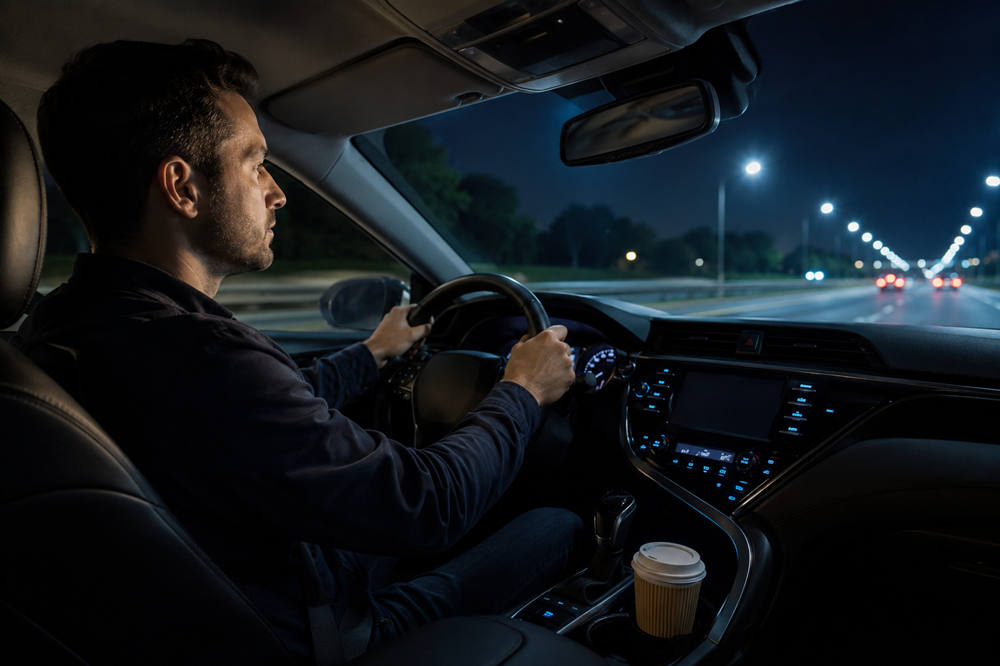
Feeling sleepy behind the wheel is not something to push through. Even a few seconds of lost focus can be enough to drift out of your lane, miss a stop, or react too late.
The safest way to stay awake while driving is to start rested, take breaks early, and stop as soon as you feel too tired to drive safely. Tricks like loud music, cold air, or chewing gum may help for a moment, but they do not fix real sleepiness.
If you are nodding off, the only safe choice is to stop driving.
Know the Warning Signs of Drowsy Driving
Sleepiness can build slowly, so it helps to know the signs before things become dangerous. According to the National Highway Traffic Safety Administration, drowsy driving can affect attention, reaction time, and decision-making.
Watch for these warning signs:
- You keep yawning or blinking.
- Your eyelids feel heavy.
- You drift from your lane.
- You hit rumble strips.
- You miss exits, signs, or turns.
- You cannot remember the last few miles.
- Your speed keeps changing without meaning to.
- You feel foggy, irritated, or unfocused.
If any of these happen, do not treat them like small annoyances. They are signs that your brain needs rest, not more willpower.
Pull Over Before You Get Too Sleepy
The best move is simple: pull over somewhere safe.
Look for a rest area, gas station, parking lot, hotel, or another public place where you can stop. Do not wait until your head is dropping or your eyes are closing. By that point, your driving is already unsafe.
Once you are parked, you can:
- Take a short nap.
- Drink caffeine and wait for it to work.
- Switch drivers if someone else can drive.
- Walk around for a few minutes.
- Stop for the night if you are still exhausted.
Avoid stopping on the shoulder unless it is an emergency. A well-lit public place is usually much safer.
Take a Short Nap
A short nap can help more than trying to force yourself awake for another hour. Even 15 to 20 minutes can improve alertness, especially during a long drive.
Park safely, lock your doors, set an alarm, and give yourself a few minutes to fully wake up before driving again. Do not jump straight back onto the road while you still feel groggy.
The Sleep Foundation lists frequent yawning, drifting lanes, and trouble remembering recent miles as key warning signs that it is time to stop and rest.
A nap is not a cure for serious sleep loss, but it is much safer than pretending you are fine.
Use Caffeine Carefully
Caffeine can help for a short time, but it is not a replacement for sleep. Coffee, tea, caffeine gum, or an energy drink may give you a temporary boost if you are only mildly tired.
For a better short-term reset, try this:
- Pull over safely.
- Drink coffee or another caffeinated drink.
- Take a 15- to 20-minute nap.
- Wake up and wait a few minutes before driving.
This works because caffeine takes time to kick in. Drinking coffee while you are already struggling to keep your eyes open is not enough.
The CDC notes that caffeine and short naps can temporarily improve alertness, but they should not replace proper sleep.
Also, avoid overdoing caffeine. Too much can make you jittery, anxious, or restless later. Once it wears off, the tiredness can come back quickly.
Share the Driving When You Can
If you are on a long trip, having another licensed driver makes a big difference. Switching drivers gives each person time to rest, stretch, eat, and reset.
Do not wait until one person feels completely drained. Switch before the tiredness gets serious. A simple plan, such as changing drivers every two hours, can make the trip safer and less stressful.
Conversation can help you feel more awake for a little while, but it should not be your main safety plan. If the driver is sleepy, talking is not enough.
Take Breaks Before You Feel Exhausted
Long drives are harder when you try to save time by skipping stops. Your body needs movement, water, food, and mental breaks.
A good rule is to stop every couple of hours, even if you still feel okay. During the break, get out of the car. Walk around. Stretch your legs. Drink water. Eat something light.
A real break should wake your body up, not just refill the gas tank.
Eat Light Before and During the Drive
A heavy meal can make you feel sluggish, especially if you are already tired. Greasy food, oversized portions, and sugary snacks may give you a short burst of energy followed by a crash.
Choose lighter foods that keep your energy steadier, such as:
- Fruit
- Yogurt
- Nuts
- A sandwich
- Whole-grain snacks
- Something with protein
You do not need to eat perfectly. Just avoid meals that make your body want a nap.
Keep the Car Alert, Not Too Cozy
A warm, quiet car can make sleepiness worse. Keep the temperature comfortable but not too warm, sit upright, and let in fresh air if it helps.
Small changes can help mild tiredness, but they have limits. Cold air, loud music, open windows, and chewing gum are not reliable fixes for drowsy driving. They may make you feel awake for a few minutes, but they do not restore your focus the way sleep does.
Use them only to help you stay alert until you reach a safe place to stop.
Plan Long Drives Around Your Energy
The best time to prevent drowsy driving is before the trip starts.
Try not to begin a long drive after a full workday, a late night, or only a few hours of sleep. If you have to drive far, plan rest stops ahead of time. It is easier to stop when breaks are already part of the plan.
Be extra careful late at night, early in the morning, and during the mid-afternoon. These are times when many people naturally feel sleepier.
If the drive is very long, consider leaving earlier, splitting the trip into two days, or staying overnight somewhere instead of forcing yourself to finish.
Check Your Medications
Some medications can make you drowsy, even if they are common or over the counter. Allergy medicine, cold medicine, sleep aids, pain medicine, anxiety medication, and some prescriptions may affect your alertness.
Before driving, read the label carefully. The FDA explains that some medicines can affect your ability to drive safely, especially if they cause sleepiness, dizziness, slowed reaction time, or blurred vision.
If a medicine warns you not to drive or operate machinery, take it seriously. Do not try to balance it out with coffee.
Avoid Alcohol Before Driving
Alcohol and tiredness are a dangerous mix. Even a small amount can make you sleepier, slower, and less focused.
If you are already tired, alcohol can make the situation worse faster than you expect. Coffee will not make you sober or fully alert. The safer choice is to get a ride, stay where you are, or wait until you are rested and sober.
What to Do If You Get Sleepy on the Highway
If you start feeling sleepy while driving, do not panic. Stay calm and focus on getting off the road safely.
Here is what to do:
- Keep both hands on the wheel.
- Increase your following distance.
- Move to the right lane when safe.
- Take the next exit or pull into a rest area.
- Park in a safe, public place.
- Nap, drink caffeine, switch drivers, or stop for the night.
Do not tell yourself, “I only have a little farther to go.” Most tired drivers think they can make it. That is exactly what makes drowsy driving so risky.
When You Should Not Drive
Sometimes the safest plan is to not drive at all.
Do not drive if:
- You are struggling to stay awake before leaving.
- You slept very little the night before.
- You keep nodding off.
- You are taking medicine that makes you sleepy.
- You feel foggy or unable to focus.
- You have already drifted lanes or missed signs.
- You have been awake for a very long time.
In these moments, the answer is not another energy drink. The answer is rest, a different driver, public transportation, a rideshare, or delaying the trip.
Summary
Staying awake while driving is not about fighting your body harder. It is about listening to the warning signs early and making safer choices before tiredness takes over.
Sleep well before long drives, take breaks, eat light, use caffeine carefully, and share the driving when possible. If you start yawning, drifting, missing signs, or forgetting parts of the road, stop driving as soon as you safely can.
No destination is worth risking your life or someone else’s.