
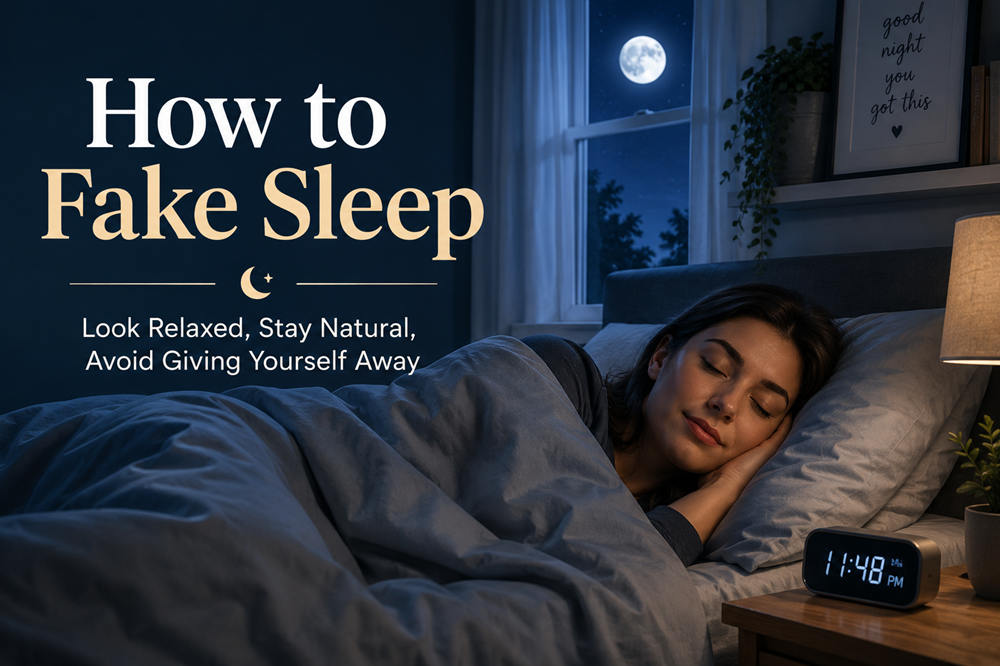
Maybe you want to avoid an awkward conversation, get some peace during a car ride, or make someone think you have already gone to bed. Whatever the reason, believable fake sleep is not about dramatic acting. It is mostly about staying comfortable, breathing normally, and resisting the urge to react to everything around you.
The more effort you put into looking asleep, the more obvious the performance can become. During real sleep, people relax, breathe at changing rates, and sometimes twitch or shift position. You do not need to look perfectly still.
Find a Comfortable Position
Choose a position you can hold without your neck, back, or arm starting to hurt. Discomfort will eventually make you shift, scratch, stretch, or open your eyes.
Your position should also fit the setting. In bed, lying on your side with your hands near the pillow can look natural. On a couch, you might lean against a cushion. In a car, resting your head against the seat or window usually makes sense.
Do not arrange yourself too carefully. Perfectly straight blankets, neatly folded hands, and a stiff posture can look staged. Settle into a position that feels comfortable and let your body rest naturally.
Close Your Eyes Softly
Do not squeeze your eyes shut. Tight eyelids create tension around your eyebrows and forehead, making it look as though you are trying very hard not to look.
Close your eyes gently and let your eyelids rest. Relax your forehead, cheeks, and eyebrows at the same time.
Try not to move your eyes around beneath your eyelids. This often happens when you are listening closely or wondering whether someone is watching. Keep your gaze still without forcing it.
Eye movements naturally vary across different stages of sleep, so you do not need to imitate rapid eye movement or any other specific sleep behavior.
Keep Your Breathing Normal
Slow, cartoonishly deep breathing is usually less convincing than ordinary breathing. Breathe at a comfortable pace, preferably through your nose, and avoid counting each breath.
Your rhythm does not need to be perfect. One breath may be slightly deeper, while the next may be quieter. Trying to maintain an exact pattern can make you tense.
Do not hold your breath when someone walks into the room or starts talking. This is a common mistake. You may become so focused on listening that you stop breathing for a moment, then take a noticeable breath afterward.
The easiest approach is to stop performing and simply breathe.
Relax Your Face and Body
Let your jaw loosen and keep your lips in a comfortable position. You do not need to leave your mouth wide open or make a silly sleeping expression. A neutral face works best.
Drop your shoulders and relax your hands. Avoid forming fists, curling your toes, or holding your arms in place. Your body should look heavy rather than frozen.
It can help to imagine that your head is sinking into the pillow and your arms are becoming too heavy to lift. This naturally reduces tension without requiring you to control every muscle.
The hardest part may be keeping a straight face. If someone says something funny or tries to catch you pretending, focus on keeping your jaw and cheeks loose. Trying too hard not to smile can make your face twitch.
Do Not React Too Quickly
Someone entering the room, saying your name, or making a sudden noise can easily give you away. Your natural instinct may be to tense your shoulders, turn your head, or change your breathing.
Try to continue as you were. You do not need to stay completely motionless, but any reaction should be slow and small.
For example, after a loud sound, you might gently move your head or shift one shoulder after a short delay. That looks more believable than jumping immediately or remaining strangely rigid.
If someone calls your name once, do not respond. If they continue calling, touch your shoulder, or clearly need your attention, the act may be over. Pretending too long can become more awkward than simply “waking up.”
Move Occasionally, but Slowly
Real sleepers move. They swallow, twitch, adjust their hands, and change positions. Staying perfectly still for a long time can look unnatural.
If you need to move, keep it subtle. Turn your head slightly, shift a leg, or pull a blanket closer. Make the movement slow and relaxed rather than quick and controlled.
Do not move every few seconds. Frequent adjustments suggest that you are uncomfortable or waiting for the chance to get up. Settle into one position and stay there for a while.
You may also need to cough, scratch, or swallow. Rather than fighting the urge until it becomes impossible to hide, make one small movement and return to resting.
Skip the Fake Snoring
Fake snoring is rarely convincing. Most people make it too loud, too regular, or too theatrical. It also forces you to control every breath, making it harder to remain relaxed.
Unless you normally snore and know what it sounds like, quiet breathing is a better choice. You do not need sound effects to appear asleep.
The same rule applies to fake sleep talking, exaggerated twitching, or suddenly rolling across the bed. Small details are more believable than a full performance.
Keep in mind that persistent, loud snoring can sometimes be connected to a genuine sleep-related breathing disorder. It should not automatically be treated as a funny sleeping habit.
Be Careful When Someone Checks on You
A suspicious friend, parent, partner, or sibling may try to test whether you are awake. They might say your name, turn on a light, wave a hand near your face, or touch your shoulder.
Do not open your eyes to check what they are doing. Even a tiny peek may be noticeable.
If someone gently touches you, a small sleepy movement can look more natural than no response at all. You might shift your shoulder, turn your face away, or make a quiet sound without fully “waking up.”
However, do not keep pretending if the person seems worried or needs something important. Fake sleep is best kept for harmless situations.
Wait Before Opening Your Eyes
Many people successfully fake sleep and then ruin it by opening their eyes the moment the room becomes quiet.
Wait until the person has clearly moved away. Listen for footsteps, a closing door, or voices becoming quieter. Then wait a little longer before sitting up or reaching for your phone.
In a dark room, a glowing screen can reveal that you were awake almost immediately. Giving it a few extra minutes is safer than getting caught at the last second.
Common Mistakes That Make Fake Sleep Obvious
Avoid these giveaways:
- Squeezing your eyes shut
- Breathing too deeply or too evenly
- Holding your body stiffly
- Smiling or laughing
- Reacting immediately to your name
- Moving your eyes under your eyelids
- Making exaggerated snoring sounds
- Changing positions constantly
- Opening your eyes to check the room
- Reaching for your phone too quickly
The biggest mistake is overthinking every detail. If you are carefully controlling your eyes, face, hands, breathing, and posture all at once, you will probably look tense. Comfort and simplicity work better.
When Not to Fake Sleep
Pretending to sleep can be harmless when you want a quiet moment or are joking with someone. It is not appropriate when another person may be hurt, frightened, or dealing with an emergency.
You also should not fake sleep when you are responsible for driving, supervising a child, or watching your surroundings.
If you regularly pretend to sleep because you are genuinely struggling to fall asleep, resources about healthy sleep may be more useful than another acting trick. Ongoing sleep difficulties are worth discussing with a healthcare professional.
If you are using fake sleep to avoid someone, consider dealing with the situation more directly. Saying, “I’m tired and need a little space,” is often easier than maintaining an act for half an hour.
To fake sleep convincingly, settle into a comfortable position, close your eyes gently, and breathe without forcing it. Stay loose, keep your reactions small, and avoid dramatic snoring. The less you perform, the more believable you will look.