
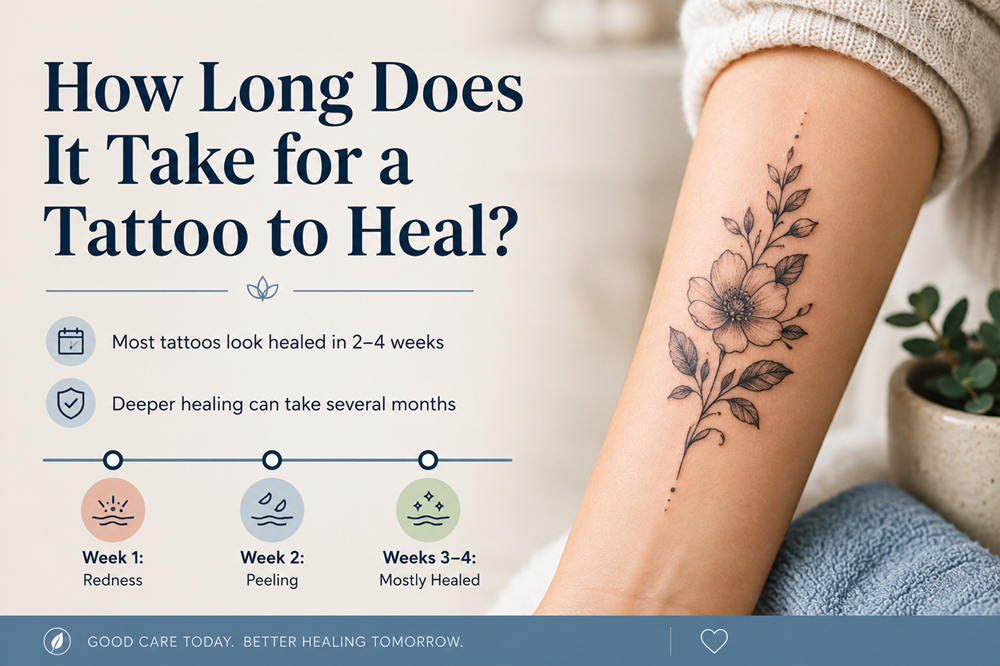
Most tattoos look mostly healed within two to four weeks, but that does not mean the skin has completely recovered. The top layer of skin may take around two months to heal, while the deeper layers can need several additional months.
The timeline is different for everyone. A small, lightly shaded tattoo may settle quickly, while a large or heavily colored design may remain sensitive for much longer. Your tattoo’s location, your skin, and the way you care for it can also affect the healing process.
The Cleveland Clinic’s tattoo aftercare guide explains that larger tattoos can take several months to heal fully. It also notes that the top layer of skin is typically healed around the two-month mark, while the lower layers may continue recovering after that.
The Short Answer
A typical tattoo healing timeline looks like this:
- Days 1 to 3: Redness, swelling, tenderness, and light oozing
- Days 4 to 7: Dryness, tightness, and early scabbing
- Week 2: Itching, peeling, and flaking
- Weeks 3 to 4: The tattoo looks mostly healed on the surface
- Around two months: The upper layer of skin is usually healed
- Several months: The deeper skin finishes recovering
You may move through some stages faster or slower than this. The important sign is steady improvement. Soreness, redness, and swelling should become less noticeable rather than worse.
Days 1 to 3: The Fresh Tattoo Stage
During the first few days, your tattoo is essentially a fresh skin injury. It may look bright, swollen, or slightly raised. The area can feel warm, tender, or similar to a mild sunburn.
You may also see a small amount of:
- Clear fluid
- Plasma
- Blood
- Excess tattoo ink
A little oozing is usually normal at this stage. Your tattoo artist will cover the area with plastic wrap or a medical adhesive bandage before you leave the studio. Follow the artist’s instructions about how long to keep it covered, since different bandages have different removal times.
By the third day, mild redness and soreness may still be present, but they should begin to calm down. A very large tattoo or a design that required a long session may stay swollen for slightly longer.
Days 4 to 7: Dryness and Scabbing Begin
Toward the end of the first week, the tattoo usually becomes less sore. The skin may begin to feel tight, dry, or slightly rough.
Thin scabs can form over parts of the tattoo. The design might also look darker, duller, or cloudier than it did when it was fresh. This can be alarming, but it is often caused by a thin layer of healing skin covering the ink.
Avoid judging the final color during this stage. The tattoo has not finished settling, and its appearance may continue changing over the following weeks.
Light scabbing is expected. Thick, painful scabs or areas that remain very wet may take longer to heal and should be watched carefully.
Week 2: Itching and Peeling
The second week is often the most annoying part of tattoo healing. The soreness usually improves, but itching and peeling can become more noticeable.
Small flakes of colored skin may come away from the tattoo. This does not usually mean the tattoo itself is falling out. The loose material is mainly dead surface skin mixed with small amounts of dried ink.
Do not scratch the area or pull off peeling skin. Picking can remove scabs before the skin underneath is ready, which may leave the tattoo looking patchy and extend the healing time.
The American Academy of Dermatology lists itching, flaking, scabbing, mild redness, swelling, and clear fluid among the changes that can occur during normal tattoo healing. These symptoms should gradually improve as the skin repairs itself.
Weeks 3 to 4: Mostly Healed on the Surface
By the third or fourth week, most of the peeling and scabbing should be finished. The tattoo should no longer feel very sore, and the surrounding skin should look closer to normal.
Some tattoos still appear slightly shiny, cloudy, or wrinkled during this stage. That thin, glossy look usually fades as the new skin becomes stronger.
At this point, many people describe their tattoo as “healed.” A better description is mostly healed on the surface. The visible skin may look normal, but the deeper layers are still repairing the tiny injuries created during tattooing.
Continue treating the area gently. The end of peeling does not necessarily mean the tattoo is ready for heavy exfoliation, prolonged soaking, or repeated sun exposure.
Around Two Months: The Top Layer Is Usually Healed
By around the two-month mark, the upper layer of skin should normally be healed. The tattoo should feel smooth, comfortable, and fully closed.
Its colors and fine details may also look clearer than they did during the cloudy or peeling stages. Dryness should be much less noticeable, although occasional moisturizing may still help.
A small tattoo may feel completely normal before two months. A larger tattoo, especially one with heavy shading or packed color, may take longer to settle.
Several Months: Deeper Healing Continues
Even when a tattoo looks perfect from the outside, the deeper layers of skin may still be recovering. Complete healing can take several months.
You will not necessarily feel this deeper healing. There may be no visible scabs, redness, or soreness. The skin is simply continuing its natural repair process underneath the tattoo.
This is why there is a difference between a tattoo that looks healed and one that is fully healed. For most everyday purposes, the tattoo may seem normal after a few weeks. Biologically, however, the complete process takes longer.
Why Do Some Tattoos Take Longer to Heal?
Several factors can change the healing timeline.
Tattoo Size
A small design creates less skin trauma than a full sleeve, chest piece, or large back tattoo. Bigger tattoos may remain sore, swollen, or flaky for longer because more skin has been worked.
Shading and Color
Heavy shading, solid blocks of color, and repeated passes over the same area can make healing slower. Fine-line tattoos may create less irritation, although they still require proper care.
Tattoo Location
Areas that bend, rub, or move often can take longer to settle. Tattoos near elbows, knees, ankles, waistbands, or other high-friction areas may stay irritated because of clothing and movement.
Hands and fingers can also be difficult because they are washed frequently and exposed to constant use.
Individual Healing Speed
Some people naturally heal faster than others. Sleep, hydration, smoking, stress, illness, certain medications, and existing health conditions may affect how efficiently the skin repairs itself.
Aftercare
Picking scabs, scratching, soaking the tattoo, wearing tight clothing, or constantly touching the area can slow healing. Proper care will not make the tattoo heal instantly, but it can help prevent unnecessary delays.
How Can You Tell When a Tattoo Is Healed?
A tattoo is probably mostly healed on the surface when:
- The redness has disappeared
- Swelling is gone
- The skin has stopped peeling
- No scabs remain
- The area is no longer sore or warm
- The tattoo feels smooth and closed
- There is no fluid or discharge
A little dryness may remain, but the tattoo should become more comfortable each day.
When Is a Tattoo Taking Too Long to Heal?
There is no exact deadline that applies to every tattoo. A large design can take longer than a small one without anything being wrong.
However, the symptoms should move in the right direction. Redness should shrink, soreness should improve, and swelling should go down.
Contact a healthcare professional if you notice increasing pain, spreading redness, worsening swelling, skin that feels very hot, yellow or green discharge, pus, fever, chills, open sores, or red streaks extending from the tattoo.
The FDA’s tattoo safety information notes that tattoo-related infections and reactions can sometimes be linked to contaminated inks.
The Bottom Line
A tattoo normally looks mostly healed within two to four weeks. The upper layer of skin may take around two months to recover, while deeper healing can continue for several more months.
Small and lightly shaded tattoos may heal faster. Large, heavily colored, or frequently irritated tattoos may take longer. As long as redness, soreness, swelling, and peeling steadily improve, the tattoo is generally moving through the normal healing process.