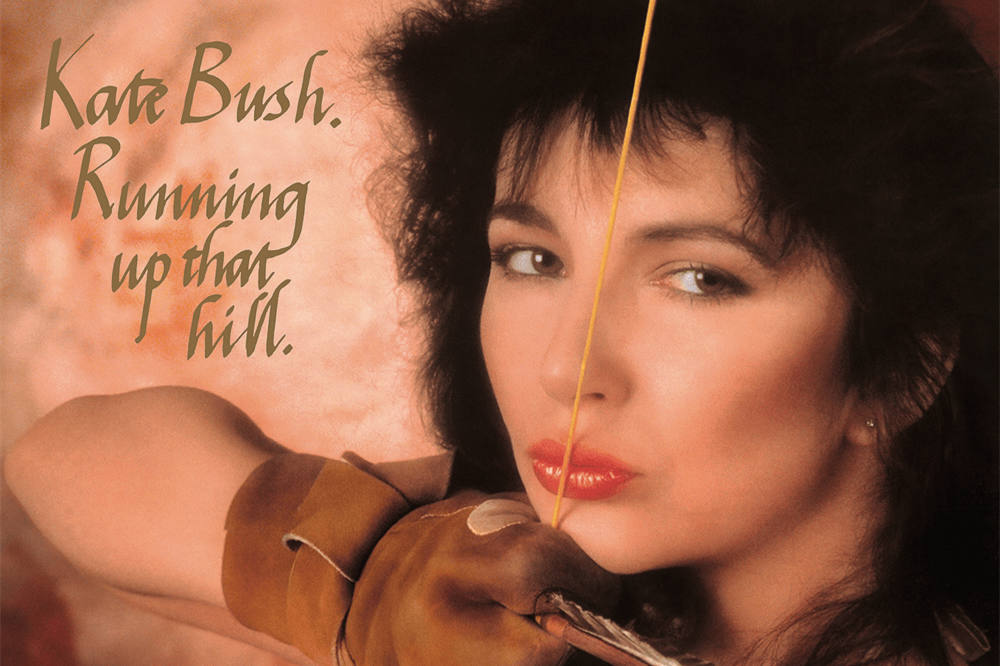
Kate Bush’s “Running Up That Hill” sounds urgent from its first few seconds. The heavy drumbeat keeps pushing forward while her voice moves between restraint and desperation. Beneath that dramatic sound is a surprisingly simple wish: to understand someone you love and to be understood in return.
Released in 1985 on the album Hounds of Love, the song was originally titled “A Deal With God.” Bush imagined a man and woman exchanging places so each could experience life from the other person’s perspective.
You can read the complete “Running Up That Hill” lyrics before exploring the song’s meaning, symbolism, and lasting appeal.
What Does “Running Up That Hill” Mean?
“Running Up That Hill” is about the emotional distance that can develop between two people in a relationship.
They may love each other, but they cannot completely understand how the other person thinks, feels, or experiences conflict. Each person is limited by their own perspective.
The narrator imagines making a deal with God that would allow her and her partner to swap places. By living inside each other’s experiences, they might finally understand the fear, frustration, and pain behind their actions.
The song is not about proving that one person is right. The wish goes both ways. She wants her partner to feel what she feels, but she is also willing to experience his side.
That balance gives the song its emotional depth. It is less about blame and more about the difficulty of seeing beyond your own hurt.
What Is the “Deal With God”?
The deal with God represents an impossible solution to a very human problem.
Ordinary conversation has not created the understanding the narrator wants. She feels that the only way to remove the distance between them would be through a supernatural exchange.
Kate Bush has explained that the song grew from the idea of a man and woman swapping roles to see what life felt like from the other side. She preferred the title “A Deal With God,” but her record company worried that it might limit radio play in some countries. Bush later discussed the song’s original title and meaning.
The religious image is not mainly about faith or worship. God is presented as the only being powerful enough to make the exchange possible.
The request also shows how difficult true empathy can be. We can listen to another person and believe them, but we can never feel their experience in exactly the same way. The narrator wants to remove that barrier completely.
Why Does She Want to Swap Places?
Swapping places would allow both people to understand what the relationship feels like from the opposite side.
One person may feel ignored while the other feels pressured. One may believe they are protecting themselves while the other experiences that behavior as rejection. Even when neither person wants to cause harm, they can still hurt each other.
The imagined exchange would reveal:
- How certain words and actions affect the other person
- Why one partner becomes distant or defensive
- What each person is afraid of losing
- How the same argument can feel completely different to each side
- How love can exist alongside anger and resentment
The song recognizes that intentions and impact are not always the same. Someone may not mean to cause pain, but that does not make the pain less real.
Rather than asking for a simple apology, the narrator wants complete emotional understanding.
What Does the Hill Symbolize?
The hill can be understood as the struggle to overcome emotional distance.
Running uphill takes effort. You may keep moving but still feel as though the destination is far away. That makes it an effective image for a relationship in which two people are trying to connect but keep meeting the same obstacles.
The song also mentions a road and a building. These images create a wider sense of effort and movement. The narrator is always trying to get somewhere—to reach the other person, escape the conflict, or find a different way forward.
The word “running” creates urgency. She is not slowly considering the problem. She wants change now.
That image also allows the song to speak to experiences beyond romantic relationships. Listeners may connect the hill to grief, depression, family conflict, trauma, or the exhaustion of explaining feelings that other people cannot easily see.
Love Does Not Always Create Understanding
One of the strongest ideas in “Running Up That Hill” is that love alone does not prevent people from hurting each other.
The narrator is not speaking about someone she hates. The conflict matters because the relationship matters. Emotional wounds often feel deeper when they come from a person we expected to understand us.
Two people can care about each other while still:
- Misreading each other’s intentions
- Reacting defensively
- Avoiding difficult conversations
- Focusing only on their own pain
- Expecting the other person to know what they need
The song does not offer an easy solution. Its central fantasy exists because communication has limits. Sometimes people explain themselves clearly and still feel unseen.
Yet the desire to exchange places suggests that the narrator has not given up. She still believes understanding could change the relationship.
How the Music Supports the Meaning
The production makes the emotional struggle feel physical.
A steady electronic drum pattern runs through the song, creating the sense of constant movement. It can sound like running feet, a racing heartbeat, or a person pushing forward without stopping.
The synthesizers create a wide, dreamlike space around Bush’s voice. Her delivery remains controlled in some moments, then rises with greater force as the song develops.
The music rarely provides a comfortable release. It keeps building and circling, much like a disagreement that has not been resolved.
That tension helps explain why the song remains powerful even before a listener studies the words. The sound communicates effort, pressure, and longing on its own.
How Stranger Things Revived the Song
“Running Up That Hill” reached a new audience after it was featured prominently in the fourth season of Netflix’s Stranger Things.
The song is connected to Max Mayfield, who is struggling with grief, guilt, and isolation. It becomes a link between Max and the people trying to reach her while she is under Vecna’s control. Netflix highlights the song’s importance in its feature on Max’s battle with Vecna.
The scene fits the original meaning unusually well.
Max feels trapped inside an experience her friends cannot fully understand. The music creates a path back to them. In that context, running up the hill becomes more than a relationship metaphor. It represents the effort to escape despair and reconnect with life.
The renewed attention pushed the song to number one on the UK Singles Chart in 2022, 37 years after its original release. It also gave Bush a 44-year gap between UK number-one singles, following “Wuthering Heights” in 1978.
On her official website, Bush thanked the Duffer Brothers and described how the show introduced the song to a new generation of listeners.
Its return was not only driven by nostalgia. Younger listeners found the same themes that had made the song meaningful in 1985: loneliness, emotional struggle, and the wish for someone else to understand what you are carrying.
Why the Lyrics Still Resonate
The song’s central wish is easy to recognize.
Most people have wanted a partner, parent, friend, or family member to experience a situation through their eyes. We do not only want them to know what happened. We want them to understand how it felt.
“Running Up That Hill” turns that feeling into an impossible bargain. If two people could exchange lives, even briefly, perhaps they would become less defensive and more compassionate.
The song does not claim that empathy is easy. It shows how badly people may want it when ordinary explanations fail.
That is why the meaning extends far beyond one couple. The hill can represent any difficult attempt to reach another person—or to return to yourself when pain has made the world feel distant.
“Running Up That Hill” remains moving because it captures both frustration and hope. The relationship is strained, but the narrator is still running. She still believes the distance between two people might be crossed.
Featured image source: https://genius.com/Kate-bush-running-up-that-hill-a-deal-with-god-lyrics